For years, fiber was considered one of the least exciting parts of nutrition advice. But recently, social media creators and health experts alike have started promoting “fibermaxxing,” a trend focused on increasing daily fiber intake through foods like oats, beans, fruits, and vegetables. Unlike many online wellness trends, this one has strong scientific support behind it.
In this lesson, we explore why fiber is receiving so much attention online and examine the health benefits associated with eating more of it. While experts support the general trend, they also warn that making sudden or extreme dietary changes can sometimes do more harm than good.
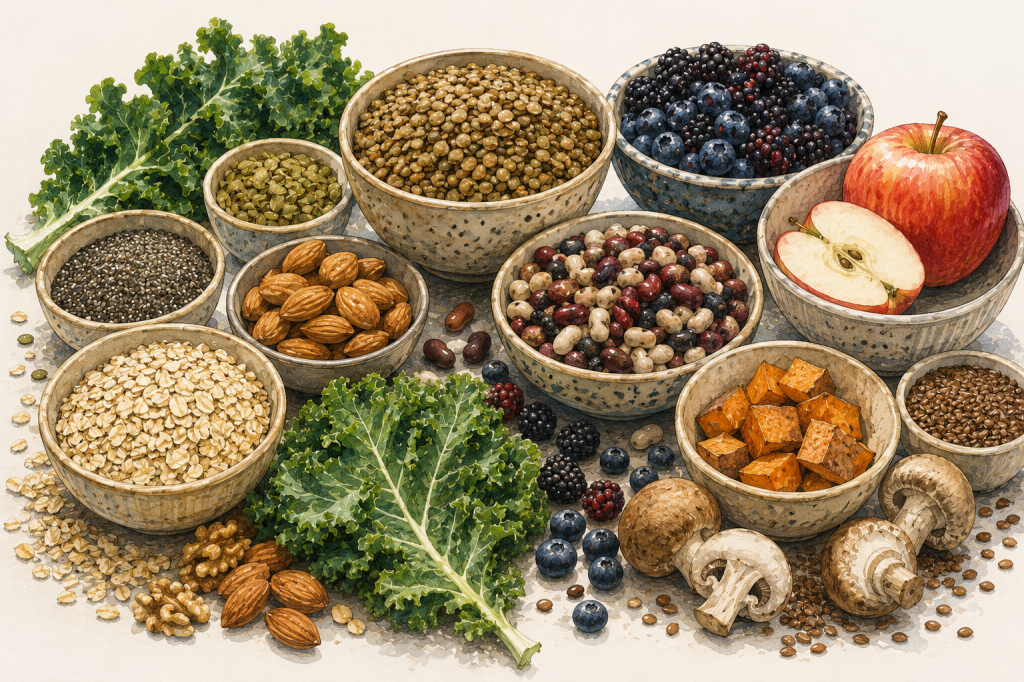
| The ‘fibermaxxing’ trend has health benefits worth the hype |
Warm-up question: Do you pay attention to how much fiber you eat? Why or why not?
Listen: Link to audio [HERE]
Read:
Host: There are a lot of wellness trends on social media that make health experts roll their eyes, but just about every expert can get behind a recent trend, with some caveats. It’s called fibermaxxing. NPR’s Maria Godoy has more.
Maria Godoy: Fiber is kind of like the Peter Parker of food nutrients. For a long time, most people ignored it as kind of boring. But it’s really a superhero when it comes to good health. And now, it’s finally having its moment. Social media is flooded with tips on how to maximize the fiber in your meals, like the TikTok creator who goes by “X-Tine Fit” and enthusiastically shares the fiber-rich foods she loves.
X-Tine Fit: Fibermaxxing is the new lookmaxxing. 100g of blackberries has 5g of fiber. 120g of sweet potato has 4g of fiber. Fiber is super important because it slows down the rate that sugar enters my bloodstream, which balances my energy throughout the day.
Maria Godoy: Other videos promote fiber as a way to improve gut health and reduce the risk of colorectal cancer, and even of dying prematurely. All these claims are backed by research, by the way. Hannah Holscher, a professor of nutrition at the University of Illinois, says it’s about time that fiber stepped into the spotlight.
Hannah Holscher: The truth of the matter is I kind of appreciate the trend because, generally, fiber’s just not really a—a sexy nutrient that people are paying attention to. And basically no one eats enough fiber.
Maria Godoy: We should be eating roughly 25 to 38 grams of fiber a day, but about nine out of ten Americans fail to meet that goal. And they’re missing out on lots of health benefits.
Hannah Holscher: And so they’re not getting those heart-healthy benefits, they’re not getting that reduced risk of developing overweight and obesity, so we really want to encourage eating more dietary fiber for most Americans.
Maria Godoy: The best place to get fiber is from plant foods. Some foods like whole grains, kale, nuts, and seeds are good sources of insoluble fiber, which helps keep digestion moving. Other foods are rich in soluble fiber, which is helpful for managing cholesterol and blood sugar levels. Registered dietitian Yasi Ansari says you can find this in lots of sources.
Yasi Ansari: We have the oats, the bran, the beans, lentils, mushrooms, chia seeds, apples, just to give you some examples.
Maria Godoy: She says the good news is many plant foods contain both types of fiber. And while fiber supplements can be helpful, Ansari says it’s best to get most of your fiber from whole foods.
Yasi Ansari: You’re also getting the antioxidants that those fiber-rich foods are providing us. So a lot of those micronutrients, the vitamins and minerals and the antioxidants that support our health.
Maria Godoy: And while aiming to eat more fiber is a lofty goal, there are some precautions. Candice Pumper is a staff dietitian with the Ohio State University. She says people with certain conditions like IBS or Crohn’s disease should talk to their doctor first. And in general, it’s best to ramp up fiber slowly, maybe just add a few grams to each meal to start. Too much too soon can lead to bloating and gas. And she says drink plenty of water.
Candice Pumper: Our bodies function best with balanced, gradual changes, not extremes. Which is why the goal should be meeting your daily fiber needs, not trying to max them out.
Maria Godoy: In other words, don’t go overboard. After all, the ultimate goal isn’t to jump on a trend, but to create a lifelong, sustainable fiber habit. Maria Godoy, NPR News.
Vocabulary and Phrases:
- roll (one’s) eyes: to react to something with annoyance, disbelief, or disapproval
- get behind: to support or approve of something
- caveats: warnings, limits, or important conditions to consider
- having a moment: becoming suddenly popular or receiving a lot of attention
- looksmaxing: an online trend focused on improving physical appearance as much as possible
- the truth of the matter: the real facts about a situation
- lentils: small round legumes that are high in protein and fiber
- lofty goal: an ambitious or difficult objective
- ramp up: to gradually increase something
- go overboard: to do too much or become excessive
Fill in the Blank Use the correct word or phrase from the vocabulary list.
- The proposal sounds good, but there are several important __________.
- Most doctors can __________ regular exercise as a healthy habit.
- It’s important not to __________ when starting a new diet or workout plan.
- Vintage fashion is really __________ right now on social media.
- Many teachers __________ when students use AI to write entire essays.
- __________ is that most people don’t get enough sleep.
- Soup made with beans and __________ can be very nutritious.
- Some influencers promote __________ as a way to improve confidence and appearance.
- Running a marathon is a __________ for many people.
- The company plans to __________ production later this year.
Comprehension Questions:
- Why do health experts generally support the fibermaxxing trend?
- How much fiber should most adults eat each day?
- What are two health benefits of eating more fiber?
- Why is it better to get fiber from whole foods rather than supplements alone?
- Why do experts recommend increasing fiber intake slowly?
Discussion Questions:
- Why? Why do some health trends become popular on social media while others do not?
- Do you think social media can positively influence people’s eating habits?
- Why do many people fail to eat enough fiber despite knowing it is healthy?
- What are some healthy habits people often “go overboard” with?
- Do you think trends like fibermaxxing lead to lasting lifestyle changes or temporary behavior?
 LanguageLeap