In today’s economy, many businesses are investing heavily in machines, software, and other equipment. At the same time, hiring new workers has slowed in some industries. Why are companies choosing to spend money on technology instead of expanding their workforce?
In this lesson, we listen to a report about a bicycle company in Colorado that is investing in expensive equipment and new software to improve efficiency. The report also explores how economic uncertainty and labor shortages are influencing business decisions across the United States.
As you listen, pay attention to why businesses sometimes prefer investing in equipment rather than hiring more employees.
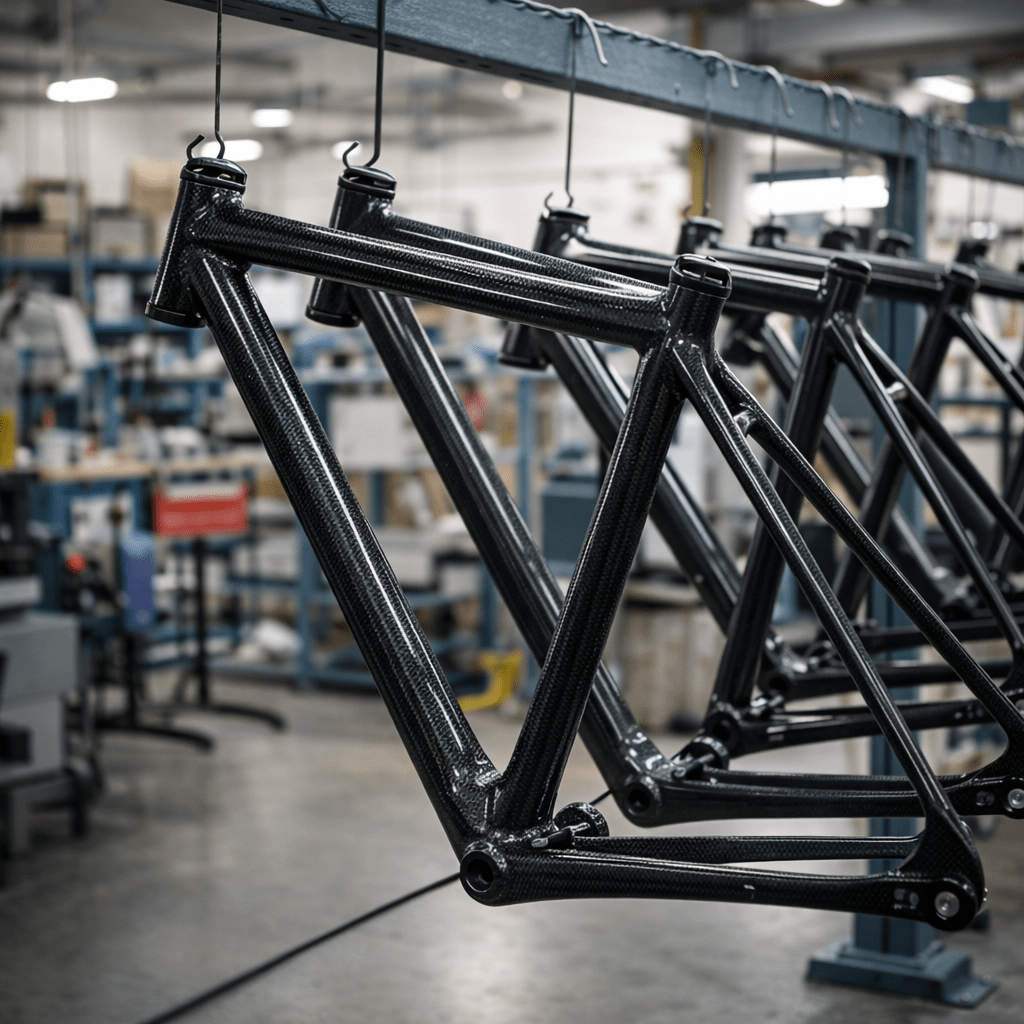
| Companies are choosing to spend on equipment instead of labor |
Warm-up question: Why might a company prefer to buy machines or software instead of hiring more workers?
Listen:
Read:
Sabri Ben-Achour: This is the Marketplace Morning Report. I’m Sabri Ben-Achour, in for David Brancaccio. We’ve seen a lot of evidence in recent months that businesses have been pouring money into new equipment. They have also been borrowing to do it—demand for business loans is up. But businesses have not been spending as much on people, hiring. So, Marketplace’s Justin Ho looked into why not.
Justin Ho: Over the last few months, a mountain bike company based in Colorado called Revel Bikes has been buying new molds for making carbon fiber bike frames.
Adam Miller: You know, it’s a big chunk of steel with our specific design that we can then put material in and turn that into a bike frame.
Justin Ho: Adam Miller owns Revel Bikes. He says the molds cost upwards of 120 grand a piece, but they’re worth it because sales have been strong.
Adam Miller: Year to date, our sales are about three times higher than what we had originally planned on, which is phenomenal news, but that also means we need to invest more money into buying more frame molds in order to keep up with that production.
Justin Ho: The company also just moved into a new headquarters closer to Denver. The move will save money on shipping. That’s the kind of efficiency Miller wants from every investment that Revel Bikes makes.
Adam Miller: We’re not buying a fancy new conference table for our new headquarters, but we are investing heavily in the latest and greatest inventory control software so that we can make sure we can build bikes efficiently and get them out the door efficiently.
Justin Ho: Miller says he’s focused on efficiency in large part because the economy’s so uncertain. Orin Klatchkin, an economist with Nationwide, says because of that uncertainty, a lot of companies are choosing to spend more on new equipment instead of hiring new employees.
Orin Klatchkin: With a piece of equipment, like, you kind of know what you’re going to get, right? When you hire someone, you know, you have to onboard that person, get them working into the existing structure, there’s obviously always a bit of uncertainty.
Justin Ho: Plenty of businesses do want to hire, but many of them are having trouble.
Shannon Seery Grein: We still continuously hear from the businesses that we talk to that one of the toughest challenges they face is finding skilled labor.
Justin Ho: Shannon Seery Grein at Wells Fargo says that’s partly because the workforce is aging and because the Trump administration has been cracking down on immigration. Either way, Grein says the tight labor market is motivating businesses to spend more on equipment and other capital expenditures.
Shannon Seery Grein: In some ways, we actually need CapEx and maybe even AI to offset some of the shortages in labor that we’re likely to experience over the next number of years.
Justin Ho: At Revel Bikes in Colorado, Adam Miller says some of the investments he’s made have already allowed him to cut labor costs. For instance, a few years ago, the company needed four people to plan purchasing, shipping, and logistics.
Adam Miller: And today, we have one person in that same job because we’ve invested in new software and systems that can do a lot of that better and more efficiently.
Justin Ho: Miller says decisions like that are meant to ensure that the company sticks around for the long run, whatever the economy ends up doing. I’m Justin Ho for Marketplace.
Vocabulary and Phrases:
- 120 grand: an informal way to say $120,000.
- Phenomenal: extremely good or impressive.
- Latest and greatest: the newest and most advanced version of something.
- Out the door: leaving the business or being sent to customers.
- Onboard: to train and integrate a new employee into a company.
- Capital expenditures: large investments that companies make in equipment, buildings, or technology.
- Offset: to reduce or balance the effect of something.
Fill in the Blank Use the correct word or phrase from the vocabulary list.
- The company spent ____________ on each new machine for making bike frames.
- Sales were ____________, so the company decided to invest more money in production.
- The business bought the ____________ inventory software to improve efficiency.
- The goal was to get products ____________ quickly and efficiently.
- Companies must ____________ new employees before they can fully contribute.
- Buying machines and software are examples of ____________.
- Some companies use technology to ____________ shortages of workers.
Comprehension Questions:
- What product does Revel Bikes manufacture?
- Why does the company need to buy more molds for bike frames?
- What type of software did the company invest in for its new headquarters?
- According to the economist interviewed, why are some companies buying equipment instead of hiring workers?
- How has technology changed the number of employees needed for planning and logistics at Revel Bikes?
Discussion Questions:
- Do you think investing in technology instead of hiring workers is a good strategy? Why or why not?
- In your industry, are companies investing more in people or in technology?
- What are some risks companies face when hiring new employees?
- How might AI and automation change the workforce over the next ten years?
- Do you think machines will replace many jobs in the future, or will they create new ones?
 LanguageLeap