In this lesson, we look at how a major global company is responding to changes in consumer behavior. PepsiCo is facing a situation where people are buying fewer snacks and drinks, even though the company is still making strong profits. The story explores why this is happening and how rising prices, inflation, and health trends are influencing what people choose to buy. As you listen and read, pay attention to how companies use pricing and marketing to try to change consumer habits and stay competitive.
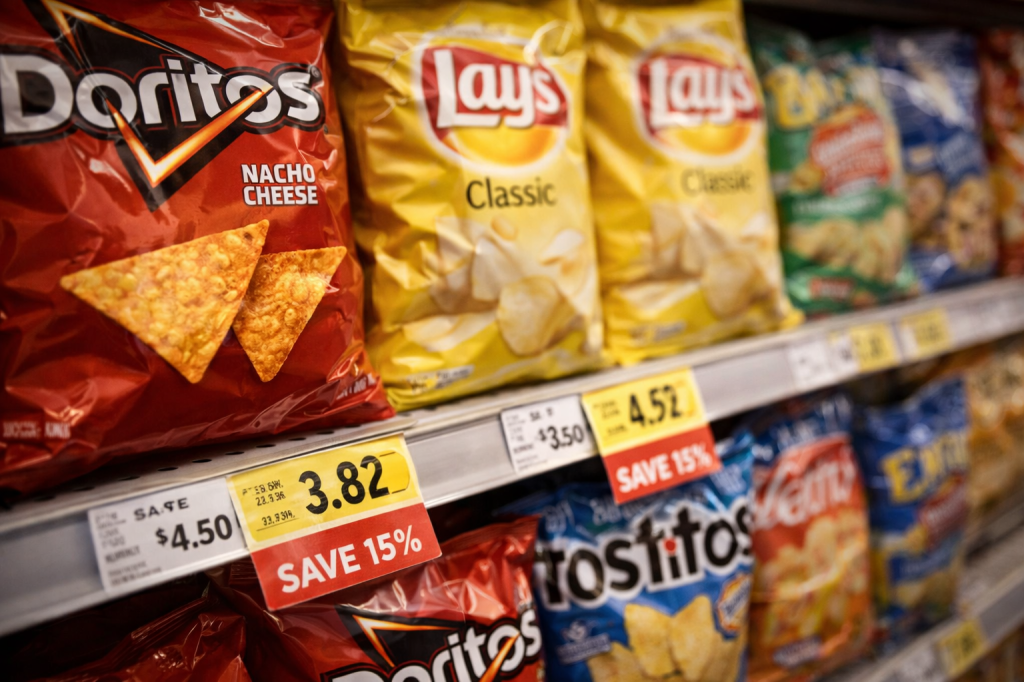
| PepsiCo slashes prices on snacks in bid to boost sales |
Warm-up question: When you are at the supermarket, do you find yourself reaching for “all-natural” or “high-protein” snacks even if they are processed? How much does a brand’s health marketing influence your shopping cart?
Listen:
Read:
KAI RYSSDAL, HOST: Corporate story number two comes to us from the food and beverage aisle by way of the snack counter. PepsiCo reported profits this morning. Did quite fine, thanks—beat expectations even as it has been selling fewer drinks and snacks in North America. The company’s been getting some pressure from some of its big investors to turn things around, which is going to be no mean feat as shoppers are becoming both more cost-conscious and more health-conscious. Marketplace’s Daniel Ackerman has more on this modern Pepsi challenge.
DANIEL ACKERMAN: The name PepsiCo might call to mind a bottle of cola, but many of the company’s products are actually salty snacks, says Errol Schweizer, publisher of The Checkout grocery update.
ERROL SCHWEIZER: They control more than 50% market share in packaged snacks in many major metro areas.
ACKERMAN: That’s largely through Pepsi’s ownership of Frito-Lay.
SCHWEIZER: You know, Doritos, Cheetos, Fritos, Tostitos.
ACKERMAN: But even with the delightful rhymes, the snacks haven’t been selling all that well. There are two big reasons for that, says Peter Galbo, an analyst with Bank of America. The first:
PETER GALBO: It’s about affordability.
ACKERMAN: Pepsi raised its snack prices during the pandemic, when a lot of people were at home, apparently snacking. But now, with food inflation elevated, Galbo says consumers are less willing to spend on chips and pretzels. The company announced it’s slashing prices by 15% on some of its snacks effective this week.
GALBO: The timing is not coincidental to this being, you know, the largest snack holiday.
ACKERMAN: A snack holiday also known as the Super Bowl. Pepsi wants to make sure fans stock up on its products before the game. Pepsi is also trying to boost sales by positioning its brands as healthy, says Errol Schweizer—or at least, healthier.
SCHWEIZER: They’re looking at selling a Doritos with enhanced protein, because everybody’s obsessed with protein these days.
ACKERMAN: He says some of the changes are marketing more than anything else.
SCHWEIZER: If you look at their packaging, they’re advertising like a product like Lay’s is minimally processed, as healthier or all-natural, without really doing much to actually change the product.
ACKERMAN: Plain old potato chips are basically just potatoes, oil, and salt. And when it comes to PepsiCo’s flagship cola, well, Duane Stanford, publisher of Beverage Digest, says:
DUANE STANFORD: They have been lagging behind in recent years Coca-Cola.
ACKERMAN: Stanford says to address its arch-rival, Pepsi will be airing an ad during the Super Bowl featuring a taste test done by a polar bear.
STANFORD: And of course, it’s Coca-Cola’s iconic polar bear, and it chooses Pepsi.
ACKERMAN: Stanford says the drinks in the ad are the zero-sugar varieties—a sign, perhaps, of where Pepsi sees its consumers shifting. I’m Daniel Ackerman for Marketplace.
Vocabulary and Phrases:
- The food and beverage aisle: The specific section of a supermarket where drinks and food items are organized.
- No mean feat: An idiom meaning a very difficult task or a great achievement.
- Cost/health conscious: Being aware of and intentional about the amount of money spent (cost) or the nutritional value of food (health).
- Call to mind: To cause someone to remember or think of something.
- Affordability: The extent to which something is priced at a level that people can manage to pay.
- Slashing prices: A dramatic and sudden reduction in the cost of products.
- Coincidental: Occurring by chance at the same time.
- Flagship: The most important or leading product, brand, or location owned by a company.
- Lagging behind: Failing to keep up with the pace or progress of a competitor.
- Arch-rival: A primary or most significant competitor.
- Iconic: Widely recognized and well-established as a symbol of something.
Fill in the Blank Use the correct word or phrase from the vocabulary list.
- To take on its ________________ Pepsi will be airing an ad featuring a taste test.
- The company announced it’s ________________ by 15% on some of its snacks effective this week.
- The ad features Coca-Cola’s ________________ polar bear choosing a Pepsi instead.
- Corporate story number two comes to us from ________________ by way of the snack counter.
- When it comes to PepsiCo’s ________________ cola, they have been ________________ Coca-Cola in recent years.
- According to Peter Galbo, the first reason snacks aren’t selling is about ________________.
- Turning the company around is going to be ________________ as shoppers are becoming both more ________________ and more ________________
- The reporter notes that the timing of these price cuts is not ________________ to the upcoming Super Bowl.
- The name PepsiCo might ________________ a bottle of cola, but many of the company’s products are actually salty snacks.
Comprehension Questions:
- What paradoxical financial result did PepsiCo report this morning regarding their North American sales?
- Why is it currently a “no mean feat” for PepsiCo to turn around its business with modern shoppers?
- What is the “first big reason” Peter Galbo gives for why snacks haven’t been selling well recently?
- Why did the reporter describe the Super Bowl as a “snack holiday”?
- What marketing strategy is Pepsi using for brands like Lay’s and Doritos to appeal to “health-conscious” buyers?
- What specific creative choice did Pepsi make for their Super Bowl ad to challenge Coca-Cola?
Discussion Questions:
- The Price of Loyalty: Pepsi raised prices during the pandemic because people were “apparently snacking” more at home. Now that inflation is high, they are slashing prices to win people back. Does this “up-and-down” pricing affect your loyalty to a brand?
- Marketing vs. Reality: Errol Schweizer suggests that Pepsi labels products like Lay’s as “minimally processed” or “all-natural” without actually changing the ingredients much. Is this a clever business strategy or a deceptive one?
- The Arch-Rival War: Pepsi is using Coca-Cola’s “iconic” polar bear in its own advertising. In your industry, is it common to directly reference your arch-rival’s symbols, or is it considered too aggressive?
- The Shift to Zero: With the Super Bowl ad focusing on “zero-sugar varieties,” it seems Pepsi is betting on a healthier future. Do you think the original “flagship” sugary drinks will eventually become obsolete?
 LanguageLeap