Greenland is often described as a land rich in untapped natural resources, especially rare earth minerals that are increasingly important to global technology and national security. But discovering valuable minerals is very different from successfully mining them. This lesson examines one geologist’s long journey toward developing a rare earth mine in Greenland—and why experts remain skeptical that the island holds an easy economic treasure.
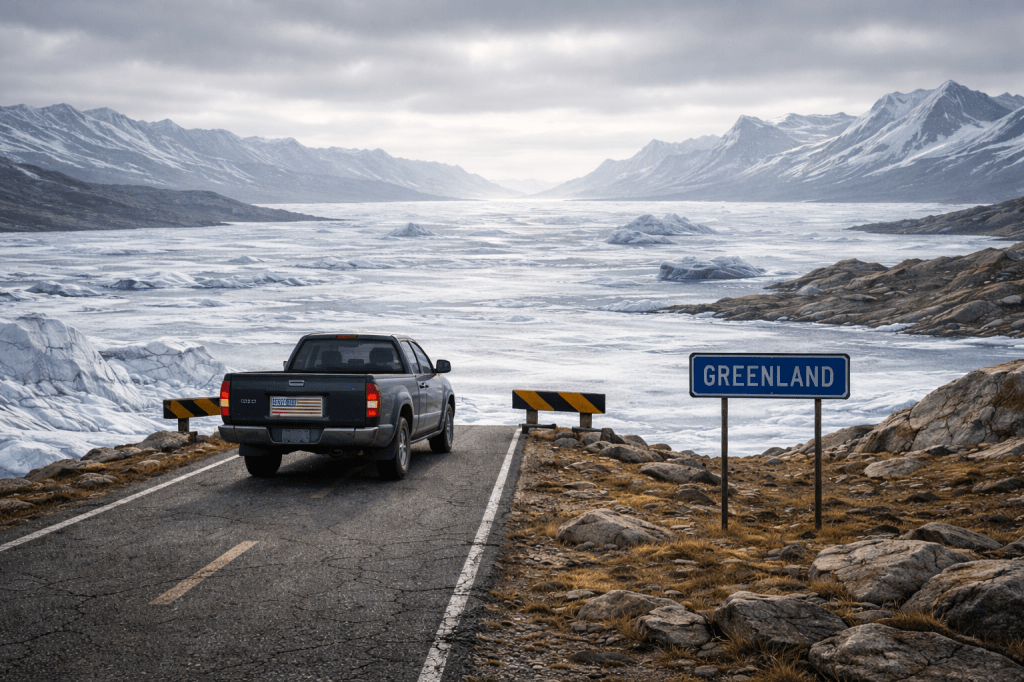
| Is Greenland really a land of untapped riches? A geologist went looking in the 1990s |
Warm-up question: Would you support a mining project near where you live if it promised jobs but carried environmental risks? Why or why not?
Listen: Link to audio [HERE]
Read:
SCOTT DETROW, HOST:
President Trump says the alleged new framework for a Greenland deal involves U.S. access to mineral rights, but is it really a land of untapped riches? The Indicator’s Darian Woods and Wailin Wong talked to a geologist who went looking for these minerals himself.
DARIAN WOODS: When Greg Barnes was at college in Australia, he decided to study geology because the other subjects ended too late in the day.
WAILIN WONG: Greg’s geology career took him all over the world. He made a lot of money fixing up old mines. Eventually, he started exploring Greenland in the 1990s. There, he found a mineral deposit unlike any other he’d seen.
GREG BARNES: This one stood out like a sore thumb. In fact, of all the geology deposits on Earth, this would be one that every geologist should go to before he dies. There’s hundreds of minerals – all unique, all very big.
WOODS: What excited Greg so much was a mineral called eudialyte. Basically, think of a shiny red or pink gemstone. What he knew was that this contains rare earth elements.
WONG: Greenland has large deposits of rare earth minerals but no commercial rare earth mining.
WOODS: And outside of China, processed rare earth elements are in short supply. It’s only a little bit of an exaggeration to say that China froze the trade war with the U.S. simply by pulling down the lever on its rare earth exports. So even in the 1990s, the possibility of a rare earths motherlode was tantalizing for Greg.
WONG: Greg eventually got an exploration license for the site, but to make actual money, he needed an exploitation license from the Greenlandic government. And that meant a lot of money over years, proving that what he was sitting on was viable.
BARNES: I spent 50 million of my own money. I never spent 50 million of my own money on anything before.
WOODS: Then there’s also the community consent situation. So would a majority of Greenlanders support a mine that dug up their land and potentially risked toxic pollution? Rare earths mining in particular is challenging because they’re often found with radioactive materials. In Greenland, this is uranium.
WONG: To the community, Greg emphasized the relatively low concentration of uranium in his deposits compared to others in Greenland, and this approach seemed to pay off. In 2020, he was granted an exploitation license – basically, a license to start extracting rocks if certain conditions were met over the next several years.
WOODS: Today, Greg’s plan is starting to come into focus.
BARNES: That mine will go into production sometime this year or next, producing rare earths.
WONG: Now, Gracelin Baskaran has strong doubts about whether Greg’s story is representative of a wider treasure trove of mineral wealth in Greenland. She’s a critical minerals expert at the Center for Strategic and International Studies, and she’s written about Greg’s project.
GRACELIN BASKARAN: The difficulty with Greenland is you can have a lot of good geology that doesn’t necessarily make sure that it’s economically viable to extract. Eighty percent of Greenland is still under ice. There are 93 miles of roads. There is not enough energy. It is the lowest population density in the world. And quite frankly, a lot of people in Greenland don’t want mining.
WOODS: This skepticism is echoed by a lot of other minerals experts. As Greg’s story shows, even getting to the cusp of production is a project that can take decades. Darian Woods.
WONG: Wailin Wong, NPR News.
Vocabulary and Phrases:
- Alleged: Claimed to be true but not yet proven.
- Untapped: Not yet used or developed, despite having potential value.
- Stood out like a sore thumb: Was extremely noticeable or different from everything else.
- In short supply: Available only in small amounts; scarce.
- Motherlode: A very large and valuable source of something.
- Tantalizing: Very appealing or exciting, especially because it seems just within reach.
- Exploitation: The act of using land or resources for economic gain.
- Come into focus: Become clearer or more understandable over time.
- Treasure trove: A collection or source of valuable things.
- Economically viable: Capable of being profitable when costs and risks are considered.
- Echoed: Repeated or supported by others with similar opinions.
Fill in the Blank
Use the correct word or phrase from the vocabulary list.
- Many deposits may exist but are not __________ to extract.
- Greenland is often described as a land of __________ mineral resources.
- Over time, Greg’s mining plan began to __________.
- The mineral deposit Greg Barnes found __________ compared to others he had seen.
- Rare earth elements outside of China are __________.
- President Trump referred to an __________ framework for a deal involving Greenland.
- The possibility of a rare earths __________ was highly attractive to investors.
- The idea of mining rare earths in Greenland was __________ but difficult to realize.
- Some experts doubt Greenland is a true __________ of mineral wealth.
- This skepticism is __________ by other minerals experts.
- Barnes needed an __________ license to begin mining operations.
Comprehension Questions:
- Why did Greg Barnes initially become interested in Greenland’s mineral deposits?
- What makes eudialyte an important mineral?
- Why are rare earth elements strategically important outside of China?
- What challenges did Barnes face in getting approval to mine in Greenland?
- Why is rare earth mining particularly controversial in Greenland?
- Why do some experts doubt Greenland’s potential as a major mining center?
Discussion Questions:
- Do you think access to critical minerals justifies environmental risks? Why or why not?
- Why might a resource-rich region still struggle to benefit economically from its resources?
- How important should community consent be in large mining projects?
- Do geopolitical concerns (like dependence on China) change how we should view mining projects?
- What industries today rely heavily on resources that are “in short supply”?
- Based on this story, do you think Greenland’s mineral future is promising or overstated?
 LanguageLeap