This lesson explores new research on ultraprocessed foods and their impact on global health. A team of international scientists reviewed more than a hundred studies and found strong evidence linking these foods to chronic diseases such as Type 2 diabetes, obesity, and heart disease. The researchers argue that governments should take action—similar to past efforts against Big Tobacco—to reduce how much ultraprocessed food ends up in our diets. At the same time, some nutrition experts warn that the category of “ultraprocessed” is imprecise, which could lead to confusion about what is truly healthy. In this lesson, you’ll learn key vocabulary and discuss the challenges of balancing health, convenience, and industry influence.
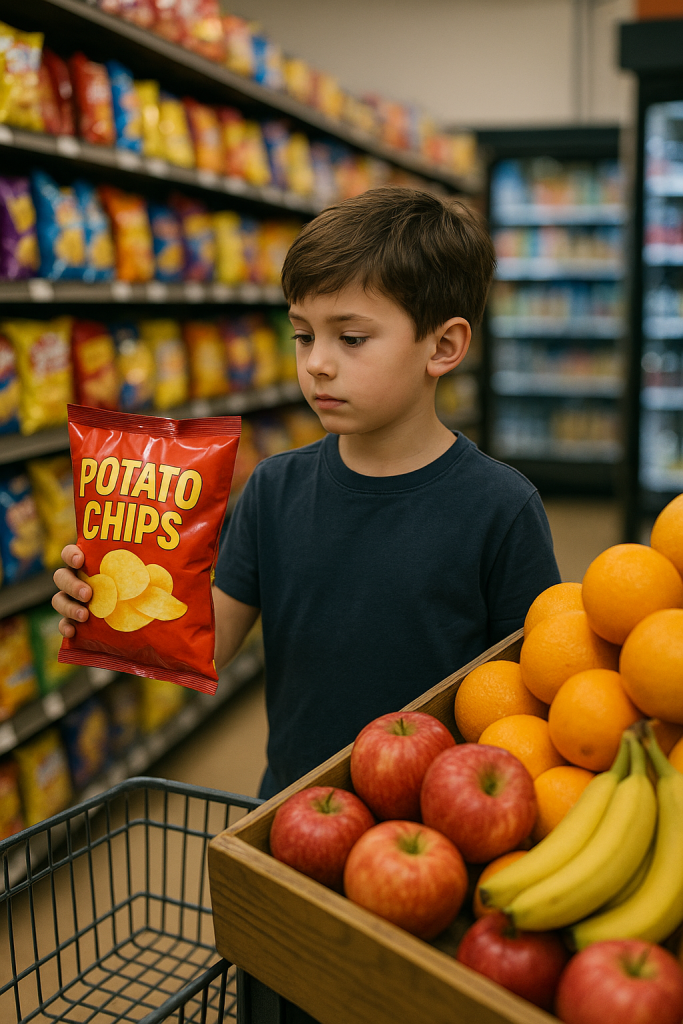
| Ultra-processed foods are a threat to public health, scientists say |
Warm-up question: Think about the food you ate yesterday. How much of it do you think was “ultraprocessed,” and why are these foods so common?
Listen: Link to audio [HERE]
Read:
JUANA SUMMERS, HOST:
Go into any grocery store, and the shelves are packed with ultraprocessed food. You know, sugary sodas, salty snacks, prepackaged meals. They’re really hard to avoid. Well, now an international team of researchers says governments need to act urgently. They say the evidence is clear that this food is driving chronic disease around the world. And NPR’s Maria Godoy is here with more. Hi.
MARIA GODOY, BYLINE: Hi, Juana.
SUMMERS: Maria, what is new about this research?
GODOY: Well, it brings together a huge amount of data. There are three papers, they’re published in The Lancet, and they reviewed years’ worth of evidence, more than a hundred studies which have linked ultraprocessed foods to poor health outcomes, including an increased risk of Type 2 diabetes, obesity, chronic kidney and heart disease, even depression. Dozens of scientists reviewed this research, and they say there’s enough evidence now to say that ultraprocessed foods are a major problem. Here’s one of the paper’s authors, Barry Popkin of the University of North Carolina.
BARRY POPKIN: We can say now that truly ultraprocessed food represents a clear global threat to our health – not only our physical health but also mental health in terms of its impacts on depression.
GODOY: Popkin and his co-authors called on governments to do something to reduce ultraprocessed foods in the food supply.
SUMMERS: What kinds of policies are they calling for?
GODOY: Yeah, they say it’s time to use a playbook similar to what was used against Big Tobacco, so things like taxes on sodas, warning labels on packaged foods, a ban on marketing these foods to kids and removing ultraprocessed foods from big institutions like schools and hospitals. Another study author is Marion Nestle, a nutrition researcher from NYU. She says countries like Chile have adopted some of these policies, and they’re working. She says some have been proposed in the U.S. without success.
MARION NESTLE: They never get anywhere because the industry fights back. It’s time to take on the industry. They got to stop.
SUMMERS: Maria, do we expect the Trump administration to take this on?
GODOY: Well, Health Secretary Robert F. Kennedy Jr. has said ultraprocessed foods are, quote, “poisoning Americans,” and he’s taken credit for getting industry to voluntarily get rid of some food dyes from their products. But again, it’s voluntary. The federal dietary guidelines are expected to come out soon, and many expect them to tackle ultraprocessed foods for the first time. These guidelines influence things like what’s served in school lunches, but they’re not regulation. And some nutrition experts like Dr. David Ludwig of Harvard, point out that lots of food is considered ultraprocessed, and not all of it is unhealthy. So some yogurts, packaged whole wheat bread and jarred pasta sauces are in the same ultraprocessed category as a big bag of potato chips.
DAVID LUDWIG: By focusing on a – such an imprecise target as ultraprocessed foods, there’s a risk of demonizing perfectly healthy foods, giving a health halo to patently unhealthy foods and opening the door for industry manipulation.
GODOY: In a statement to NPR, the International Food & Beverage Alliance said that policies that are overly broad in targeting ultraprocessed foods would, quote, “reduce the availability of safe, affordable, shelf-stable options globally.”
SUMMERS: Interesting. Do they have a point?
GODOY: Well, ultraprocessed foods dominate the U.S. diet. One reason why is that they’re cheap and convenient. Research suggests they’re more than 70% of what you find in grocery stores. So if you’re going to limit them, the papers’ authors say you also need government policies that make minimally processed or whole foods like fruits and vegetables and lean meats more affordable and accessible, especially for-low income people.
SUMMERS: NPR’s Maria Godoy, thank you.
GODOY: My pleasure.
Vocabulary and Phrases:
- Chronic disease: a long-lasting health condition that usually develops slowly and continues for months or years.
- Evidence: facts, data, or information that show something is true or support a conclusion.
- Playbook: a set of strategies or actions that people follow to solve a problem or reach a goal.
- Imprecise: not exact or clear; lacking specific details.
- Demonizing: describing something or someone as evil or harmful, often in an exaggerated way.
- Halo (health halo, in this context): when something seems healthy or good just because of one positive feature, even if it isn’t truly healthy.
- Patently: clearly and obviously; easy to see or understand without doubt.
- Shelf-stable: able to be stored at room temperature for a long time without spoiling.
Fill in the Blank Use the correct word or phrase from the vocabulary list to complete each sentence.
- Researchers say the __________ shows a strong link between ultraprocessed foods and poor health outcomes.
- Governments may need a policy __________ similar to the one used against Big Tobacco.
- Many ultraprocessed foods are cheap and __________, making them easy to keep in stores and homes.
- Some experts warn that targeting ultraprocessed foods is too __________ and may cause confusion.
- Dr. Ludwig says there’s a danger of __________ healthy foods that are actually fine to eat.
- A health __________ can make a food seem good for you even if it is not.
- Some products are __________ unhealthy, even if advertising makes them look better.
- Ultraprocessed foods have been linked to many types of __________, including heart disease and diabetes.
Comprehension Questions:
- What does the new research say about the relationship between ultraprocessed foods and chronic disease?
- Why do the researchers compare their recommended policies to the “Big Tobacco” playbook?
- According to Marion Nestle, why do U.S. policy proposals about ultraprocessed foods often fail?
- What concern does Dr. David Ludwig raise about targeting ultraprocessed foods as a category?
- What reasons are given for why ultraprocessed foods dominate the U.S. diet?
- What alternative government actions do the papers’ authors say are needed if ultraprocessed foods are limited?
Discussion Questions:
- Do you think governments should tax or label ultraprocessed foods the way they did with tobacco? Why or why not?
- Should companies be allowed to market ultraprocessed foods to children? Where should the line be drawn?
- Do you think it’s possible to reduce ultraprocessed foods in modern diets, or are they too convenient and affordable?
- How might limiting ultraprocessed foods affect low-income communities differently from high-income ones?
- What counts as “healthy” food for you personally, and how do you decide what to buy at the store?
 LanguageLeap