As the holiday season approaches, many people are preparing for office parties, family gatherings, and the search for the perfect outfit. But with inflation and tariffs pushing clothing prices higher, buying new pieces—especially for one-time events—has become more complicated. Instead of letting dresses and party outfits languish in their closets, more shoppers are turning to rental fashion for affordable access to high-quality clothing. In this lesson, you’ll explore the vocabulary and economic trends behind this shift, read about how rental platforms are navigating rising costs, and practice discussing how fashion, finances, and holiday traditions intersect.
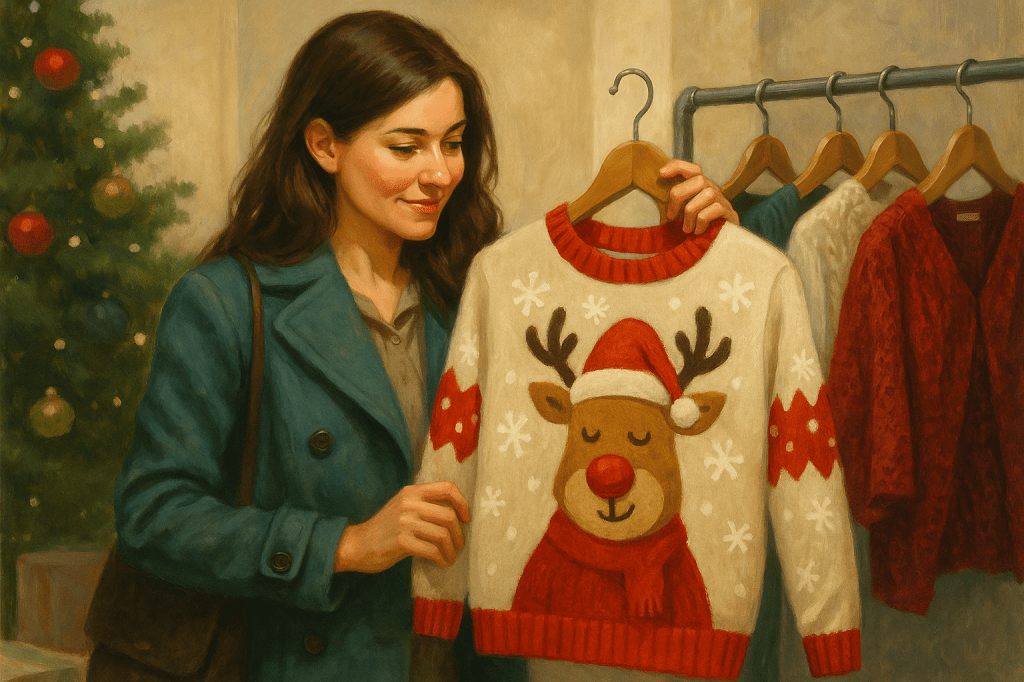
| More women are renting dresses, coats and ugly sweaters as clothing prices tick up |
Warm-up question: Have you ever had clothing in your closet that you rarely wear? What do you usually do with items you no longer use?
Listen: Link to audio [HERE]
Read:
AILSA CHANG, HOST:
It’s almost the holidays, and with it comes office parties, family gatherings and the dreaded question of what to wear to those things. NPR has been explaining the forces driving up prices in our series Cost of Living: The Price We Pay. And today, we look at clothing. Rising inflation and tariffs are complicating the hunt for this year’s hottest ugly sweater. But as NPR’s Kristian Monroe explains, there’s an alternative to buying it.
KRISTIAN MONROE, BYLINE: Two years ago, Lydia Patel made a big decision. The pharmacist, content creator and mom of three was sick of seeing all the clothes she used to wear to kids’ birthday parties and events languishing inside her closet.
LYDIA PATEL: I go to work in scrubs. I don’t dress up for work anymore. So I really don’t need a whole lot of new clothes.
MONROE: So she decided to stop buying them.
PATEL: I don’t really want to hang on to pieces forever. By the time I have something else to go to, the trends will have changed. My taste might have changed.
MONROE: But that didn’t mean no new clothes. She decided, why not rent instead? Patel joins thousands of women borrowing high-end, premium clothes like dresses, jeans and even winter coats each month for a fraction of the original price. She says renting has opened up a whole new world, a world of luxury fabrics.
PATEL: I now get to wear silk items that I otherwise would never bother – cleaning and, like – I don’t even know what you do with – I don’t know what you do with silk, and I don’t want to.
MONROE: The popularity of rental fashion has been fueled by fears that inflation and tariffs could be back in vogue. While clothing prices are up 9% since the start of COVID, that pales in comparison to the rise of overall inflation over that same period. But what the future holds for the cost of clothing, well, that remains unclear. Nearly all clothing in the United States is made overseas in countries like China and Vietnam, which face up to 20% in additional taxes imposed by the Trump administration this year. As these tariffs settle in, Sky Canaves, principal analyst at EMARKETER, says they’ll make their way through the supply chain and into shopping bags.
SKY CANAVES: As brands and retailers have to pay more to import clothing, they will have to pass on those costs – at least some of those costs – to consumers.
MONROE: That could affect rental fashion, which isn’t immune to the impact of tariffs. One of the biggest rental platforms is Nuuly, owned by the same company that owns Urban Outfitters, Anthropologie and Free People. And it’s working to tackle the challenge of tariffs.
DAVE HAYNE: We’re definitely trying to manage through it and doing a lot to manage through.
MONROE: That’s Nuuly president Dave Hayne. He says buying wholesale, working alongside his popular sister brands, is helping. And if customers are happy with their clothes, Nuuly’s happy to sell it to them at a discount. The goal – to save the holidays from the tariff grinch. But not so fast, Cindy Lou Who. The holidays are just one of the busiest times of year for renting, and that added demand could mean the odds of getting your hands on that light-up Rudolph sweater might be harder than you thought. Companies like Rent the Runway and Nuuly are trying to avoid running out of items, but Hayne admits it’s hard to get those numbers right.
HAYNE: One of the most important things for this business to be successful is trying to kind of balance inventory levels with subscriber levels.
MONROE: Hayne says if you are hoping to dress to impress at your office party, rent as soon as you can. So renting is what Lydia Patel is planning to do this busy holiday season.
PATEL: I don’t miss buying stuff. I – seeing what I have in my closet, I do not want to add anything else to it.
MONROE: While she’s not sure if she’ll be competing with other renters to grab that must-have, fun ugly sweater or wearing something a bit more traditional, odds are, she’ll be returning it in January.
Kristian Monroe, NPR News.
Vocabulary and Phrases:
- Ugly sweater: A brightly colored, intentionally tacky holiday sweater often worn for fun at parties.
- Languishing: Sitting unused, wasting away, or not being taken care of.
- Scrubs: Simple medical uniforms worn by doctors, nurses, and other healthcare workers.
- In vogue: Popular, fashionable, or trendy at a particular time.
- Pales in comparison: Seems much smaller, weaker, or less significant when compared to something else.
- Grinch: A person (or metaphor) who spoils the fun of the holidays; based on the character from Dr. Seuss.
- Dress to impress: To wear attractive, stylish, or eye-catching clothes in order to look your best for an event.
Fill in the Blank Use the correct word or phrase from the vocabulary list to complete each sentence.
- Lydia realized many of her old party outfits were just __________ in her closet, untouched for years.
- At the holiday office party, some people really plan to __________ with bold colors and stylish accessories.
- Doctors, nurses and pharmacists often wear __________ instead of regular clothes to work.
- A price increase of 9% may seem large, but it __________ next to overall inflation since COVID.
- Some people joke that tariffs could be the “holiday __________,” ruining everyone’s shopping plans.
- In many workplaces, wearing a bright, silly __________ has become a fun seasonal tradition.
- Rental fashion has become more popular recently, especially as concerns about rising prices come back __________.
Comprehension Questions:
- Why did Lydia Patel decide to stop buying new clothes?
- What did Patel choose to do instead of purchasing new pieces?
- Why does Patel say renting allows her to wear luxury fabrics like silk?
- What economic factors are putting pressure on clothing prices?
- How might tariffs affect both consumers and rental fashion platforms?
- Why might it be difficult to get a specific holiday item, like an ugly sweater, from rental platforms?
- What advice does Nuuly’s president give to people who want to “dress to impress” this holiday season?
Discussion Questions:
- Would you consider renting clothes for a special event? Why or why not?
- How do you feel about buying items you only use once or twice? Is renting a better option?
- Have rising prices affected the way you shop for clothing? In what ways?
- Do you think “ugly sweater” traditions and holiday clothing trends are fun or unnecessary? Why?
- How do tariffs or supply chain issues influence your trust in fashion brands or retailers?
- What’s more important to you during the holidays—comfort, affordability, or fashion? Why?
 LanguageLeap