This lesson explores how millions of children born during the COVID-19 pandemic are starting kindergarten and what challenges they may face. Students will learn useful vocabulary, practice reading comprehension, and discuss how early childhood experiences shape development. Perfect for adult English learners, the material includes definitions, comprehension questions, and discussion prompts to build both language skills and critical thinking.
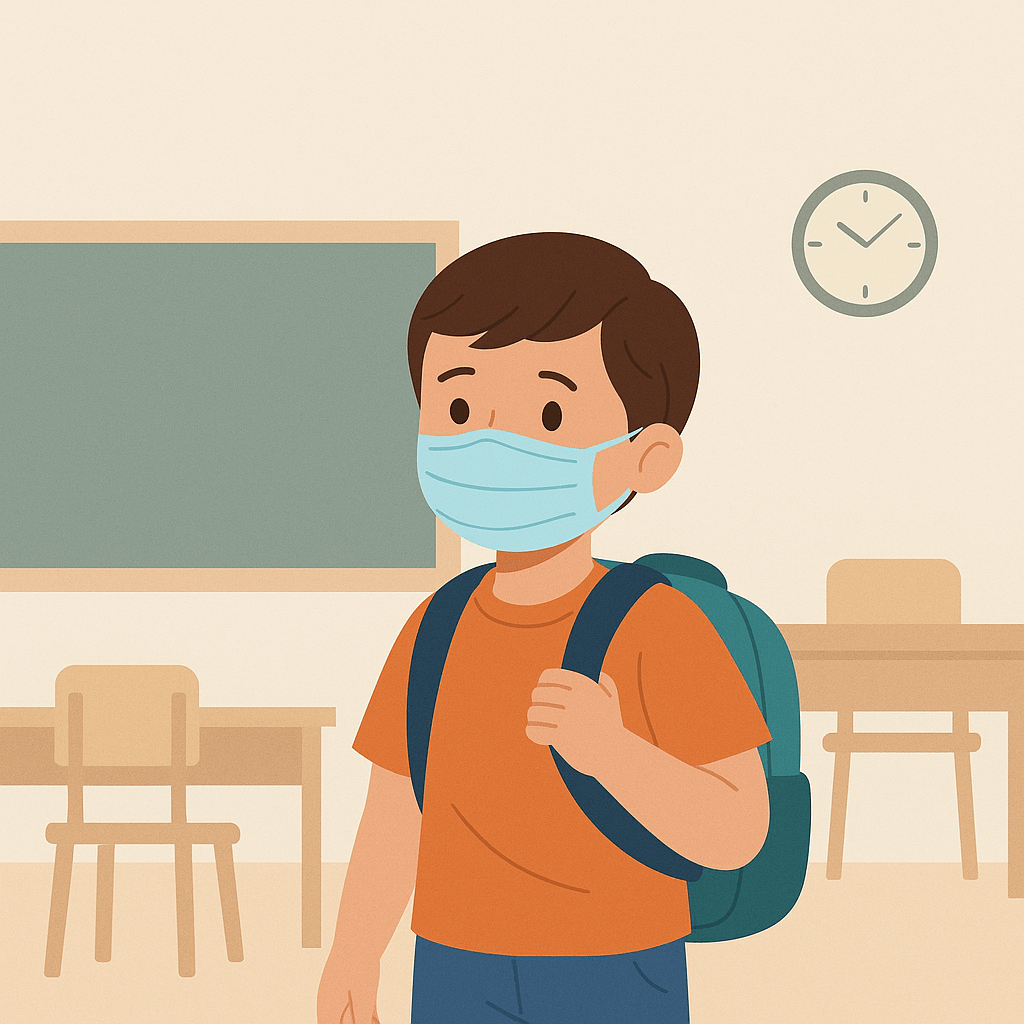
| Are ‘COVID kindergartners’ ready for school? |
Warm-up question: Do you remember your first day of school? How did you feel? Nervous, excited, or both?
Listen: Link to audio [HERE]
Read:
LEILA FADEL, HOST:
Millions of children born during the COVID pandemic start kindergarten this year. NPR’s Vanessa Romo went to find out – are the nation’s 5-year-olds ready for school?
VANESSA ROMO, BYLINE: Last Wednesday was a big day for the Sussman and Frankel family. It was 5-year-old Eli Frankel’s first day of school at California Creative Academy, a charter school in Los Angeles. Mollie Sussman, his mom, told me about the day sitting at her kitchen table while the Hot Wheels-obsessed boy played next to us.
MOLLIE SUSSMAN: As parents, every single milestone you go through feels like the biggest deal when you’re in it. And then afterwards, you’re like, oh, like, we got through it. It’s totally fine.
Among her fears was that Eli might feel overwhelmed by the transition from a small preschool to a bigger school. She worried that he wouldn’t be able to handle the structure or just cry. But to her surprise, only her husband teared up.
ROMO: The Sussman and Frankels are not alone in their anxiety. Three-point-six million children were born in 2020 as the coronavirus ushered in one of the most extraordinary periods in modern history. And scientists are still trying to figure out how this generation may be different.
DANI DUMITRIU: First of all, I’d say we’re way too early, right? Like, trying to say something about 5-year-olds right now is scientifically impossible because science lags by at least a couple years.
ROMO: That’s Dani Dumitriu at Columbia University. She’s the co-chair of an ongoing study on pandemic newborns. One of their first findings, published in 2023, was that 6-month-old infants born during the early months of the pandemic showed slight developmental delays in their motor skills. That was particularly troubling, Dumitriu said, because there’s ample research showing that early childhood experiences can have lasting effects on development and growth. But the good news is that those infants quickly caught up, she said.
DUMITRIU: The early child brain is extraordinarily malleable, and any measure that we use in that very early phase is not really predictive. It’s just an indicator of that child in that moment.
ROMO: Kristen Huff has been tracking the academic growth of K-through-12 kids since before the pandemic. Huff is head of measurement at Curriculum Associates, which provides national-grade-level testing. Their latest study, which covers the 2023-24 school year, found that…
KRISTEN HUFF: Even students who were not in school because they were too young to be in kindergarten during the pandemic are coming into kindergarten less prepared than their pre-pandemic peers.
ROMO: According to the report, just 81% of 5-year-olds are arriving kindergarten-ready in reading. That’s down from 89% in 2019. And scores dropped 14 points in math. Still, Huff is optimistic about the future.
HUFF: We know what is needed in classrooms and schools and to support teachers. And when those things are in place, these schools, they can buck the trend.
ROMO: That’s just going to take a lot of commitment from the grown-ups, she said.
Vanessa Romo, NPR News.
Vocabulary and Phrases:
- Charter school: a publicly funded school that operates independently from local school rules, often with its own educational approach or curriculum.
- Milestone: an important event, stage, or achievement in life.
- Teared up: started to cry or became emotional.
- Ushered in: caused or marked the beginning of something new.
- Lags: delays or moves more slowly than expected.
- Ample: more than enough; plenty.
- Malleable: easily shaped or changed; adaptable.
- Buck the trend: to do something different from what most people are doing or what is expected.
Comprehension Questions:
- Where does Eli Frankel go to school, and what type of school is it?
- How did Eli’s parents feel about his first day of school?
- What major event does the report say “ushered in one of the most extraordinary periods in modern history”?
- What did scientists discover about babies born during the pandemic?
- Why is the early childhood brain described as “malleable”?
- What percentage of 5-year-olds are currently kindergarten-ready in reading compared to 2019?
- What does Kristen Huff mean when she says schools can “buck the trend”?
Discussion Questions:
- How do you think the COVID-19 pandemic might affect this generation of children in the future?
- Do you believe starting kindergarten later or earlier affects a child’s development? Why?
- How should schools support children who are “lagging” behind in reading or math?
- Do you think your early childhood experiences affected who you are today? How?
 LanguageLeap