As artificial intelligence finds its way into refrigerators, vacuums, and washing machines, consumers are raising eyebrows rather than racing to buy. This lesson explores growing skepticism toward AI-powered home appliances, drawing from an NPR report on how companies like Samsung and LG are experimenting with smart features that many users find unnecessary or overpriced. With real-world vocabulary, listening practice, and critical discussion questions, students will reflect on the intersection of innovation, marketing, and consumer trust in the age of connected living.
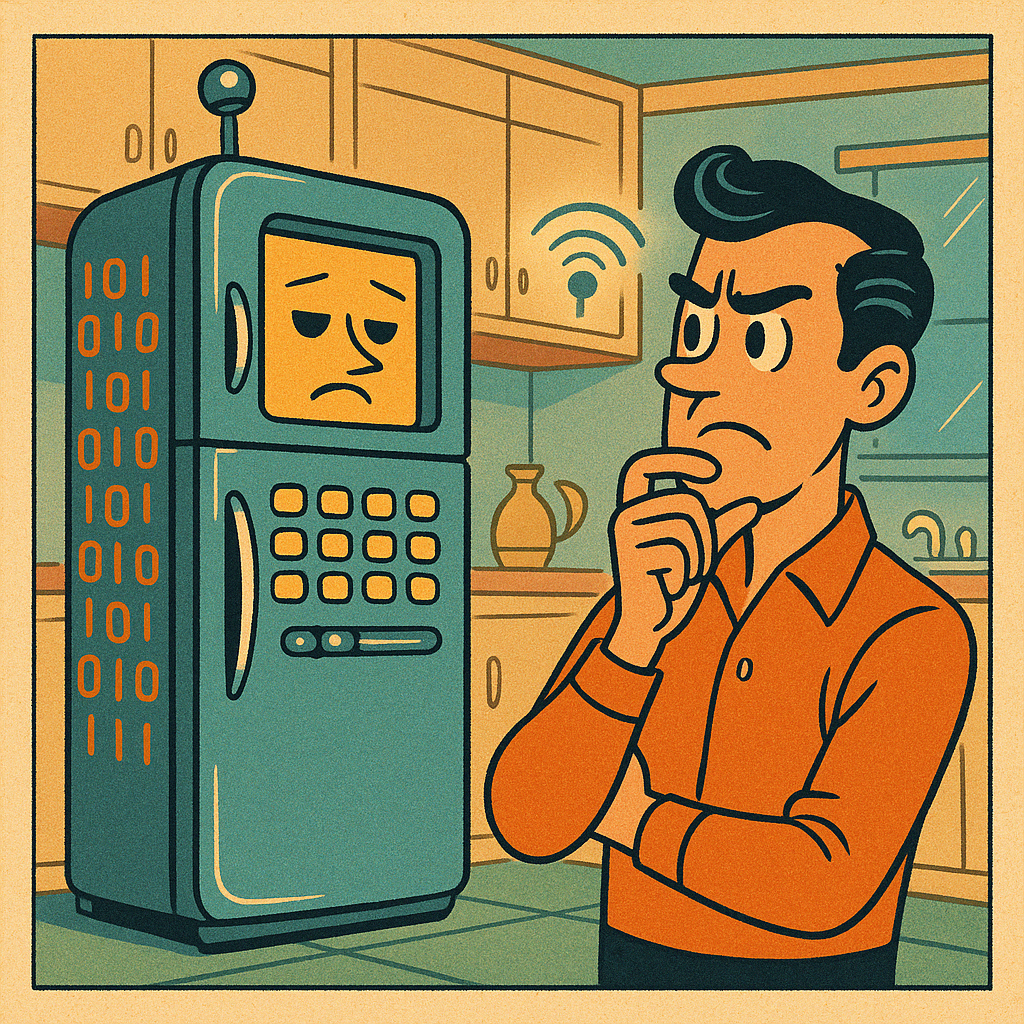
| AI in Your Fridge? Not Everyone’s Buying It |
Warm-up question: Can you think of a time when a product or technology promised something exciting but didn’t really deliver? How did it affect your opinion about similar products?
Listen: Link to audio [HERE]
Read:
A MARTÍNEZ, HOST: Manufacturers are rushing to put artificial intelligence and other smart features into their home appliances. Sometimes, though, it’s not clear how useful it is. Here’s NPR’s James Doubek.
JAMES DOUBEK, BYLINE: Samsung has a new vacuum with an unexpected feature. It can alert you to incoming calls and texts. The company’s new washer and dryer can also make phone calls. The appliances are part of a new AI product line, and Samsung isn’t alone. LG, GE and others are also pushing AI in their home devices. But do consumers want AI in a vacuum cleaner? Online reviews have been skeptical, suggesting the features aren’t worth the premium price, and only 15% of households own a smart large appliance. Some experts say companies are just throwing out ideas to see what works.
RICK KOWALSKI: The industry looks at these new features. They’re – a lot of cases, they’re testing out the new use cases, so seeing what might stick in the years to come, what customers might be interested in.
DOUBEK: That’s Rick Kowalski, an industry analyst with the trade group the Consumer Technology Association. Some of these AI features could be useful, like a fridge that gives you recipe recommendations based on what’s inside, and from the manufacturer’s standpoint, they want data. If you connect an appliance to the internet, then the manufacturer could track how it’s used over time. Samsung did not immediately respond to NPR’s request for comment. Elizabeth Parks is a market researcher who works with some appliance companies. She says, connected devices help create an ongoing customer relationship.
ELIZABETH PARKS: It creates a service model, right? You sell the large appliance, the refrigerator, or the washer dryer, and then maybe you sell the maintenance that goes with it. And there’s your service plan.
DOUBEK: There’s a long way to go before most people own a smart refrigerator or washer. Parks’ surveys found customers don’t see a lot of value in smart features when they add on costs. Customers also have security concerns. Stacey Higginbotham, a policy fellow at Consumer Reports, thinks more transparency is needed there. She says, at some point, your home smart devices stop getting software updates from manufacturers.
STACEY HIGGINBOTHAM: When they stop providing security updates, I’m going to have a vulnerable device on my network, so I will need to take it offline.
DOUBEK: Experts say most appliances’ core function should remain even if the device is offline. Still, Higginbotham says that when it comes to AI and smart appliances…
HIGGINBOTHAM: The manufacturers talk a pretty good game about this but the features they deliver are not really there yet.
DOUBEK: James Doubek, NPR News.
Vocabulary and Phrases:
- Unexpected feature – A function or ability that was not anticipated or commonly found in similar products.
- Skeptical – Doubting or not easily convinced about the truth or usefulness of something.
- Premium price – A higher price than usual, often charged for added features or brand value.
- Throwing out ideas – Trying different options without knowing what will work, to test what people like.
- Use case – A specific situation or purpose for which a product or service is used.
- Track – To monitor or follow how something is used or how it changes over time.
- Maintenance – Routine care or repair work to keep a machine or system working properly.
- Security concerns – Worries about the safety and protection of private information or systems.
- Transparency – The practice of being open, clear, and honest about how something works or is used.
- Vulnerable – Open to being harmed or attacked, especially due to weak protection.
- Talk a good game – To speak confidently or impressively about something, often without delivering results.
- Not there yet – Not fully developed or functional; still in progress or lacking key features.
Comprehension Questions:
- Why did researchers decide to develop an AI therapy bot?
- What shortage does clinical psychologist Nick Jacobson describe?
- How did the AI bot perform in the randomized clinical trial?
- What kinds of mental health conditions did participants in the study have?
- What warning has the American Psychological Association given about AI therapy?
- Why is this new AI bot different from other unregulated therapy tools?
- What are some examples of smart features companies are adding to appliances?
- According to the report, why are some consumers skeptical about AI in home devices?
- What do manufacturers hope to gain from connecting appliances to the internet?
- What concerns do customers have about smart appliances?
- Why does Stacey Higginbotham say that transparency is important in these devices?
- According to the experts, are AI appliance features truly ready for wide use?
Discussion Questions:
- Do you think AI is necessary in appliances like refrigerators or vacuums? Why or why not?
- What are the benefits and drawbacks of connecting everyday devices to the internet?
- Would you be willing to pay a premium price for a smart appliance? What features would make it worth it for you?
- How can companies build trust with consumers when introducing new technology?
- Have you ever had to stop using a digital product or device because it was no longer supported? How did it affect you?
 LanguageLeap