Once a dominant force in malls across America, Forever 21 is now facing its second bankruptcy—this time, possibly for good. The brand, which thrived in the early 2000s with trendy, budget-friendly clothing, struggled to keep up with changing consumer preferences, online competition, and concerns over fast fashion’s environmental impact. Despite efforts to reinvent itself, including a partnership with Shein, Forever 21 failed to regain its relevance. This lesson explores the rise and fall of Forever 21, the evolution of the fashion industry, and what this means for retail trends. Perfect for advanced English learners, this material enhances vocabulary on business, fashion, and economic shifts while encouraging discussion on brand loyalty, sustainability, and market adaptation.
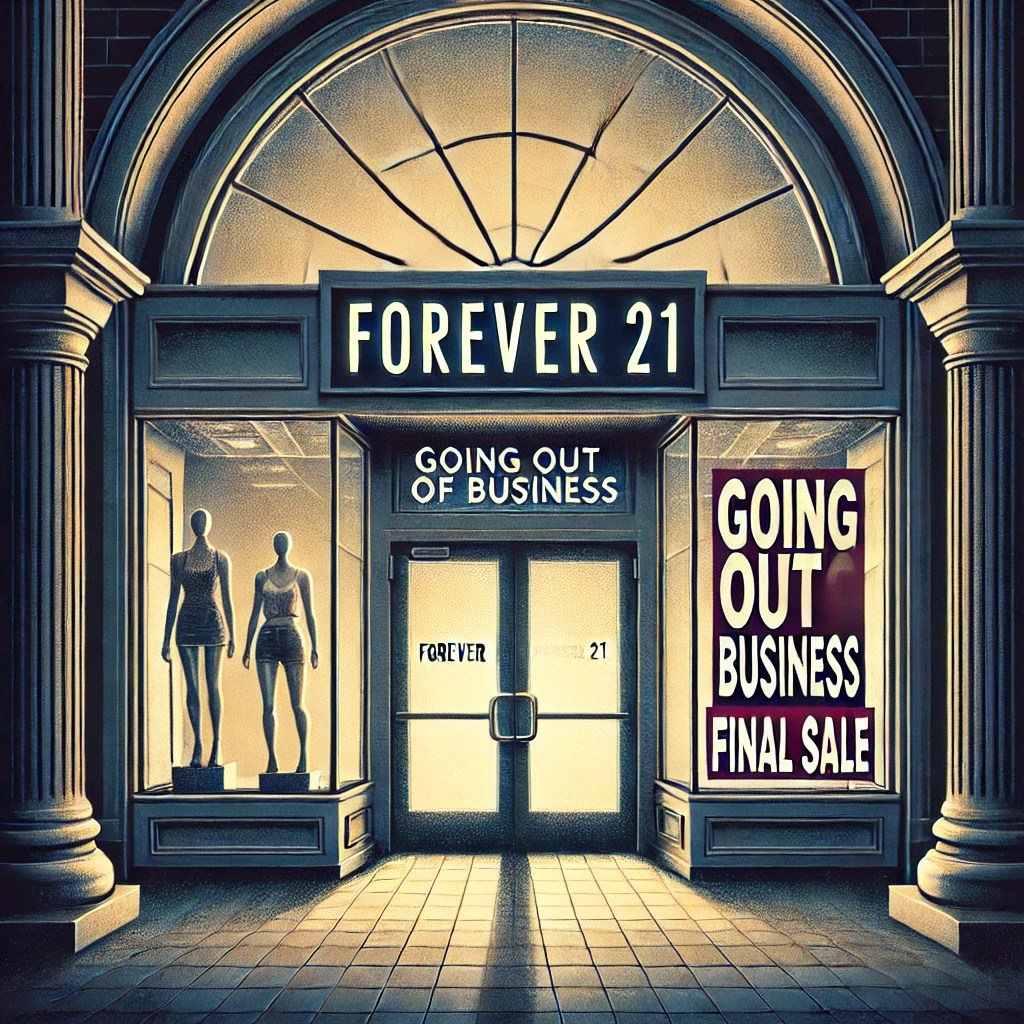
| Forever 21 is bankrupt, again. This time actually could be forever |
Warm-up question: Have you ever had a favorite store or restaurant close down? How did it make you feel, and why do you think it happened?
Listen: Link to audio [HERE]
Read:
A MARTÍNEZ, HOST:
Forever 21 has filed for bankruptcy again. And this time, it could actually be forever as the company prepares to close all stores and wind down operations. Here’s NPR’s Alina Selyukh.
ALINA SELYUKH, BYLINE: Peak Forever 21 was in the early 2000s, when no self-respecting mall could go without the store. Vast and bright and chaotic, overrun by cute tank tops, tight skirts and graphic tees.
TASHA LEWIS: I think it just had this really big, kind of bodacious presence in the mall.
SELYUKH: Tasha Lewis teaches fashion and retail studies at the Ohio State University. Forever 21 was often the draw, the reason young people came to the mall, a moment in time that had many millennials on TikTok reeling this week from the news of the store’s demise.
ZIAJENAE: I’m so sad. I don’t really shop here that often, but, you know, it’s sad when stores you grew up with go out of business.
SELYUKH: I’m sad, but I don’t really shop there, says TikTokker Ziajenae. And that is the basics of what went wrong with Forever 21. Greg Portell, who advises retailers as a partner at the consulting firm Kearney, says the chain did not keep up with its shoppers.
GREG PORTELL: So if we think about that first time when Forever 21 caught magic, you know, it was among a particular consumer group. That consumer group changes and ages.
SELYUKH: And you either choose to age with them, or you fight for younger shoppers again and again and again.
PORTELL: You’re only as good as your last season.
SELYUKH: Forever 21 rose at the dawn of the fast fashion era, one of its original giants who would take styles you’d see on runways or magazine pages and bring them to your local mall in a blink of an eye and cheaply. It expanded aggressively. By 2010s, Lewis says she remembers trying to figure out the company’s unique angle.
LEWIS: I never really got a sense of what their brand story was or what they were trying to say in terms of a fashion perspective. There was just a lot of stuff.
SELYUKH: A lot of stuff for a little money. The main appeal was price.
LEWIS: And if that is your value proposition, you are vulnerable because someone else may figure out how to do it cheaper. And they did.
SELYUKH: First came online rivals like Boohoo and ASOS and Fashion Nova. Forever 21 was losing money and shoppers. Some soured on fast fashion and the environmental impact. Others found competitors with fresher styles or higher quality. In 2019, the company declared bankruptcy for the first time. It survived as a shell of itself, bought out in a deal of two big mall operators and a brand licensing company. Then came the pandemic that shuttered stores and the rise of Temu and Shein, shipping clothes from China straight to American shoppers even cheaper, even faster than Forever 21.
PORTELL: They just got beat.
SELYUKH: Retail consultants Portell again.
PORTELL: Yes, they were good. But what makes you good 10 years ago doesn’t necessarily make you good today in retail. And that caught up with them.
SELYUKH: Forever 21 tried another maneuver by partnering with Shein, giving Shein access to physical stores and Forever 21 a new online audience. That didn’t help. One of the new Forever 21 owners later said that buying it was probably his biggest mistake. Today, what’s left of the chain is back on the auction block, and it’s unclear if anyone wants to buy what it has to offer.
Alina Selyukh, NPR News.
Vocabulary and Phrases:
- Wind down operations – To gradually close or shut down a business or organization.
- Self-respecting – Having self-esteem or dignity; used here to emphasize that every good mall had a Forever 21 store.
- Bodacious – Bold, impressive, or remarkable.
- The draw – The main attraction or reason people are interested in something.
- Reeling – Feeling shocked, upset, or confused, often due to surprising or bad news.
- Demise – The end, failure, or downfall of something, especially a business or institution.
- Fast fashion – A business model where clothing companies quickly produce cheap versions of trendy styles.
- In a blink of an eye – Very quickly; almost instantly.
- Value proposition – The main reason customers choose a product or service over competitors.
- Soured on – Lost interest in or became disillusioned with something.
- Shuttered – Closed permanently or temporarily, often referring to businesses.
- Caught up with (them) – To have negative consequences finally affect someone or something after a delay.
- Maneuver – A strategic move or action to gain an advantage.
- On the auction block – Available for sale, often referring to struggling businesses or assets.
Comprehension Questions:
- When was Forever 21 at its peak, and why was it so popular?
- What role did fast fashion play in Forever 21’s rise?
- Why did some customers sour on fast fashion?
- What major maneuver did Forever 21 try with Shein? Did it work?
- How did newer competitors like Shein and Temu catch up with and surpass Forever 21?
- What does it mean that Forever 21 is now on the auction block?
Discussion Questions:
- Do you think fast fashion is sustainable in the long run? Why or why not?
- What could Forever 21 have done differently to survive in today’s market?
- Some people feel nostalgic when old brands or stores shut down. Why do you think certain businesses hold sentimental value for customers?
- How do social media trends influence fashion brands today? Do you think it’s easier or harder for a fashion company to stay successful now?
- Have you ever soured on a brand or company because of its business practices? What made you stop supporting them?
 LanguageLeap