Smartphones have become an essential part of daily life, but could spending less time on them actually improve your well-being? A recent study found that taking a break from scrolling and social media can have significant mental health benefits, including improved focus, better sleep, and reduced feelings of stress and depression. Participants who limited smartphone internet use for just two weeks reported feeling happier and more connected to their surroundings. This lesson explores the impact of excessive screen time on mental health and introduces practical strategies to take small, manageable breaks. Perfect for advanced English learners, this material enhances vocabulary related to psychology, technology, and daily habits while sparking discussions on digital well-being.
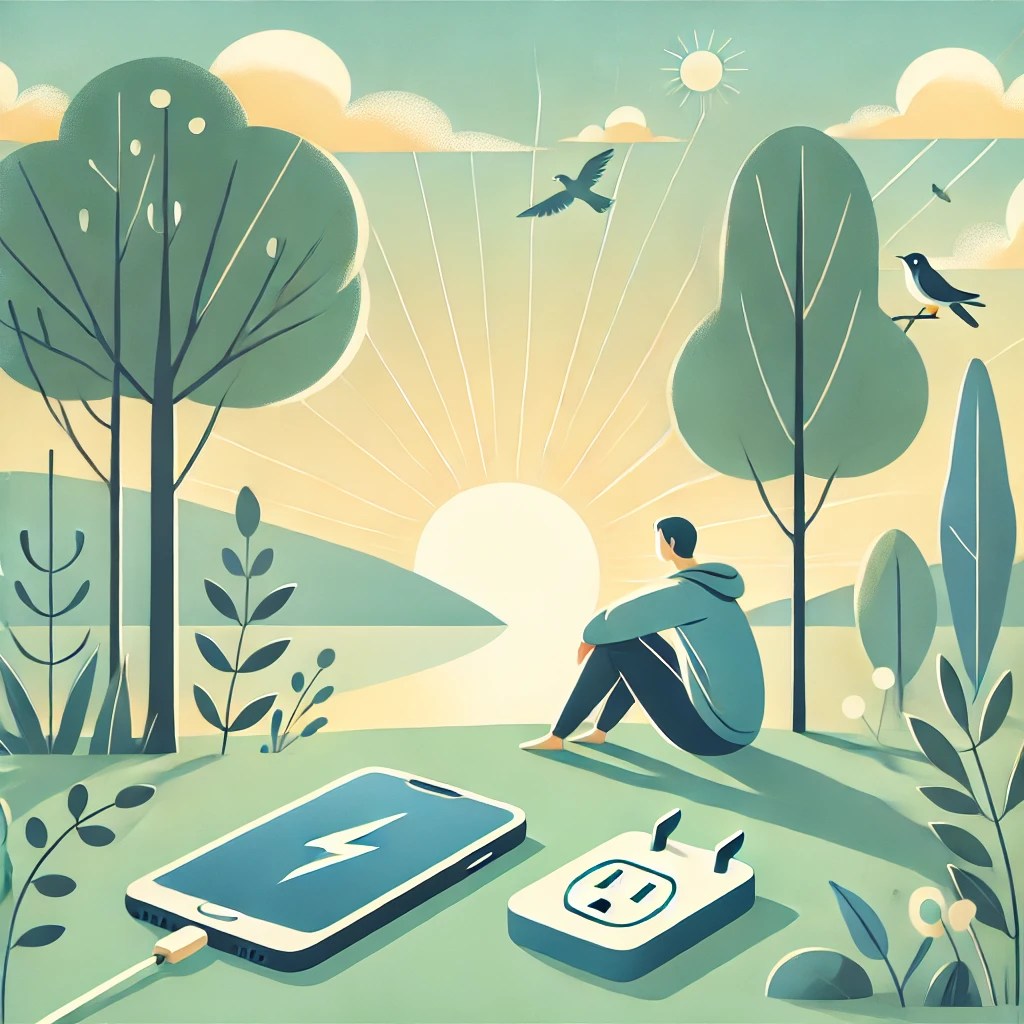
| A break from your smartphone can reboot your mood. Here’s how long you need |
Warm-up question: How do you feel when you spend a lot of time on your phone? Have you ever tried taking a break from it?
Listen: Link to audio [HERE]
Read:
A MARTÍNEZ, HOST:
If you ordered coffee on a mobile app while scrolling your feeds this morning, this next story is for you. Researchers decided to find out what would happen to people’s moods and attention spans if they turned off their smartphones. NPR’s Allison Aubrey tells us how long it took to make a difference.
ALLISON AUBREY, BYLINE: At a time when more than 90% of Americans have a smartphone, we tend to forget that having a supercomputer at our fingertips all the time is a new phenomenon. Adrian Ward is a psychologist at the University of Texas at Austin. He’s in his late 30s, and he remembers having a dial-up connection.
ADRIAN WARD: When I was a boy, the internet – you know, we didn’t have it at first, but then it lived in a room in our house. And you used it at specific times because you had limited minutes, and you had to make sure nobody else was on the phone line.
AUBREY: So what would it feel like to go back to those days when we didn’t have constant connection to everything? He and his collaborators decided to find out. They recruited 467 participants who agreed to block the internet from their smartphones for two weeks. That means no social media scrolling, no streaming, no online shopping on their phones. And it turns out most people – 91% of the participants – seemed to feel better.
WARD: What we found was that people had better mental health, better subjective well-being and better sustained attention.
AUBREY: For example, when participants were asked to perform a task to measure how long they could pay attention, they did better. And when it came to questions such as, how often in the past week have you felt little interest or pleasure in doing things, their responses pointed to a significant lift in mood. Ward says the study results suggest a reduction in symptoms of depression on par with what other studies have found with antidepressant medications.
WARD: Not saying it’s the same as an antidepressant. Who knows how long-lasting this effect is? But that suggests that it’s something worth looking into.
AUBREY: His hypothesis on what actually improves moods isn’t about what was taken away from people. After all, they could still use computers at work or home, and they could talk on their phones. It has more to do with what they added back into their lives.
WARD: So it’s not that you stop using the internet, and magically, you just feel better. It’s that you do other things. And so people reported that they spent more time in nature, more time socializing, more time doing hobbies. They got more sleep.
AUBREY: They felt more socially connected. Dr. Judith Joseph is a psychiatrist and leads a women in medicine initiative at Columbia University. She says she’s not surprised by the findings. Many people don’t want to be tethered to their devices.
JUDITH JOSEPH: They know their phones are a problem. They just can’t stop. So helping people to retrain their brain to derive joy from healthy places has an antidepressant effect, and that’s why I’m not surprised.
AUBREY: A lot of the participants in the study found that they had to break the rules – for example, when they were in their cars and needed to use a map app for directions or log on to a Zoom meeting for work. It’s a reminder of how dependent we’ve become. So even if you can’t turn off the internet, Dr. Joseph recommends taking little breaks, beginning with baby steps.
JOSEPH: Slowly, over time, if you can do this even for 30 minutes here, 20 minutes there, build up. Try to see if you can increase these increments on a weekly basis.
AUBREY: Or here’s one idea to get started – if you go out for a walk after dinner, leave your smartphone behind and see how you feel.
Allison Aubrey, NPR News.
Vocabulary and Phrases:
- Scrolling: Moving through content on a screen by swiping or dragging.
- Feeds: A continuously updated stream of content, such as social media posts ornews articles.
- Phenomenon: An observable event or trend, often something new or unusual.
- Collaborators: People who work together on a project or study.
- On par with: Equal to or comparable with something else.
- Hypothesis: A theory or explanation that is tested through research.
- Derive: To obtain or take something from a source.
- Increments: Small increases or gradual steps.
Comprehension Questions:
- What was the main goal of the research study?
- How did the researchers prevent participants from using the internet on their smartphones?
- What percentage of participants felt better after blocking the internet from their phones?
- How did removing smartphone internet access affect participants’ attention and mood?
- What activities did people do more of when they spent less time on their phones?
- What does Dr. Judith Joseph suggest as a way to take small breaks from smartphone use?
Discussion Questions:
- Have you ever taken a break from social media or your phone? If so, how did it affect you?
- Why do you think many people struggle to reduce their screen time even if they know it might improve their well-being?
- Do you think smartphone use should be limited in certain places, such as schools or workplaces? Why or why not?
- If you had to block the internet from your phone for two weeks, what activities would you replace it with?
- How can small changes, like taking breaks in increments, help people reduce screen time without feeling overwhelmed?
 LanguageLeap