Governments worldwide use sovereign wealth funds to invest national reserves and build long-term economic stability. Now, President Trump has proposed the idea of creating one for the United States. While such a fund could strengthen the country’s financial position, critics argue that it may be difficult to fund and could become politically controversial. This lesson explores the purpose of sovereign wealth funds, how other countries use them, and the potential impact of establishing one in the U.S. Ideal for advanced English learners, this material introduces key financial and policy-related vocabulary while encouraging critical discussion on global economic strategies.
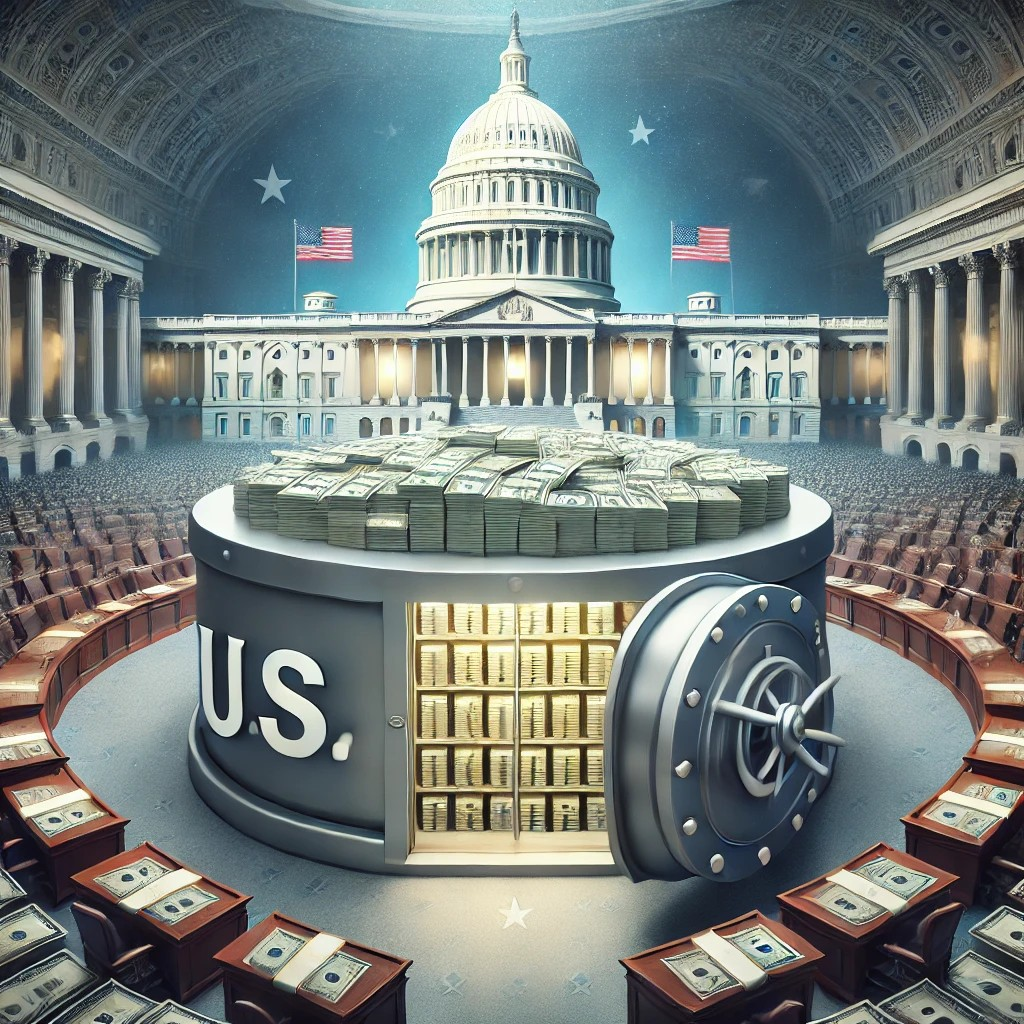
| What is a sovereign wealth fund and why does President Trump want one? |
Warm-up question: If you suddenly received a large amount of money to invest, what would you do with it? Would you play it safe or take risks?
Listen: Link to audio [HERE]
Read:
MICHEL MARTIN, HOST: President Trump recently issued an executive order to develop a plan for a sovereign wealth fund.
PRESIDENT DONALD TRUMP: We’re going to create a lot of wealth for the fund. And I think it’s about time that this country had a sovereign wealth fund.
MARTIN: But what exactly is a sovereign wealth fund, and why does Trump want one? NPR White House correspondent Asma Khalid explains.
ASMA KHALID, BYLINE: Trump first floated this idea when he was campaigning. Here he was in September, speaking at the Economic Club of New York.
TRUMP: Why don’t we have a wealth fund? Other countries have wealth funds. We have nothing. We have nothing.
KHALID: Trump points to countries like Saudi Arabia that have large sovereign wealth funds, and Brad Setser, with the Council on Foreign Relations, explains why.
BRAD SETSER: So a classic sovereign wealth fund we sort of set up to manage oil wealth.
KHALID: Countries like Saudi Arabia or Norway make a lot of money from natural resources, and they want to put that revenue somewhere. They could put it into a savings account – low risk but also low reward. So Setser, who was previously an economist in the Treasury Department, told me instead, they created these government-owned government-run funds.
SETSER: They tend to invest in equities in companies. Sometimes, that’s in traded equity, like the stock market. Sometimes, that’s in actually owning domestic companies. Sometimes, that’s investing in companies outside your home country.
KHALID: But Setser says if Saudi is Trump’s guide, there are some hiccups. How does he fund this fund?
SETSER: The big constraint is that the U.S. doesn’t actually have any money to invest in a sovereign wealth fund. We don’t have an oil surplus. We don’t have a budget surplus. Borrowing money to buy riskier assets is, by definition, risky.
KHALID: A White House official said one option being explored is leveraging current assets. Trump has also mentioned revenue from tariffs. And Setser does point out that this idea of a sovereign wealth fund has spread far beyond just oil-rich countries. China has one. So do G7 nations like France and countries with a lot of debt like Italy also have one. But Mark Sobel says people are focused too much on the financing and not enough on how this thing would actually be governed. Sobel is a veteran of the Treasury Department. He worked there for nearly four decades.
MARK SOBEL: If we were to have one, which I don’t think is a great idea, but if we were to have one, who’s going to decide what the money is for?
KHALID: When Trump announced his plan the other day, he alluded to TikTok. But experts question how it would be fair to other tech companies for the U.S. to have a stake in the profits of one social media site. But for all the questions, it is worth pointing out that the broad idea of an American sovereign wealth fund is somewhat bipartisan. Last year, the Biden administration was quietly working on a similar idea. Daleep Singh was behind the effort.
DALEEP SINGH: We’re in this really intense geopolitical competition that’s playing out through economics.
KHALID: Sing worked on international economic issues in the Biden White House, and their thinking was that this fund could jump-start investment in critical industries that the private sector might be hesitant to invest in. But industries, they felt, nonetheless, were vital for national security.
SINGH: If all of our competitors have strategic investment vehicles, if they can stroke a check to lock up a cobalt mine in Congo, that’s going to be a critical node in an EV supply chain. And if it takes us months, we’re going to fall behind.
KHALID: But the idea of a sovereign wealth fund is vague enough that it’s not clear Democrats and Republicans have the same intention for its use. Trump has described it as a vehicle to invest in, quote, “great national endeavors.” And for Sobel, there are still a lot of questions.
SOBEL: Do I trust the Trump administration to give them a huge pot of money that they can use at their discretion? No. I wouldn’t trust the Biden administration either.
KHALID: And one big question. How do you prevent the fund from becoming a political piggy bank for the president in power? Asma Khalid, NPR News.
Vocabulary and Phrases:
- Executive order: A directive issued by a president or government leader that has the force of law.
- Sovereign wealth fund: A government-owned investment fund that manages national reserves, often derived from natural resources or trade surpluses.
- Float an idea: To suggest or propose an idea informally to see how people react.
- Equities: Stocks or shares that represent ownership in a company.
- Hiccups: Small problems or delays that disrupt progress.
- Leveraging: Using existing assets or resources to gain financial advantages or maximize returns.
- Allude to: To refer to something indirectly without stating it explicitly.
- Bipartisan: Supported by or involving both major political parties.
- Jump-start: To take action to quickly improve or revive something that is struggling or slow-moving.
- Hesitant: Unsure or reluctant to act due to uncertainty or doubt.
- Stroke a check: To write and issue a check, often referring to making a large financial commitment.
- At (one’s) discretion: When something is left up to someone’s judgment or decision.
- Piggy bank: A metaphor for a fund or resource that someone can dip into for personal or political use.
Comprehension Questions:
- What is a sovereign wealth fund, and why do some countries have them?
- Why does Trump believe the U.S. should have a sovereign wealth fund?
- What challenges would the U.S. face in setting up such a fund?
- How does the idea of a sovereign wealth fund relate to national security concerns?
- What concerns do experts have about giving politicians control over a large investment fund?
Discussion Questions:
- Do you think the U.S. should create a sovereign wealth fund? Why or why not?
- Should governments be involved in large-scale investing, or should they leave that to private companies?
- If you were in charge of a sovereign wealth fund, what industries or projects would you invest in?
- How can a country prevent government funds from being misused for political purposes?
- Have you ever made a financial investment? How did you decide where to put your money?
Vocabulary Practice
Fill in the blanks using the target vocabulary words/phrases.
- The president signed an ________ to provide emergency funding for infrastructure repairs.
- The government’s ________ is expected to invest billions in clean energy projects.
- The CEO ________ the idea of expanding into international markets to see how investors would react.
- Many investors prefer to put their money into ________ because they offer higher potential returns.
- The company faced a few ________ when launching its new product, but overall, the rollout was a success.
- By ________ its existing partnerships, the business was able to secure better deals.
- The senator did not mention the policy change directly but ________ it in her speech.
- The new law had strong ________ support, with both Republicans and Democrats voting in favor.
- The government hopes to ________ the economy by investing in infrastructure projects.
- Many people are ________ to invest in cryptocurrency due to its unpredictable nature.
- The billionaire was able to ________ and buy the struggling company within days.
- The decision to approve the project was left entirely ________ the city council.
- Critics worry that the new government fund could become a political ________ if not properly managed.
 LanguageLeap