As the United States considers a ban on TikTok, the platform’s creators face an uncertain future. For many, TikTok isn’t just a social media platform—it’s a primary source of income and a way to connect with communities. This lesson explores how influencers are preparing for a possible shutdown, from diversifying their platforms to downloading years of content. Dive into the economic and personal impact of the proposed ban, and discover how creators are navigating this unprecedented challenge in the digital age.
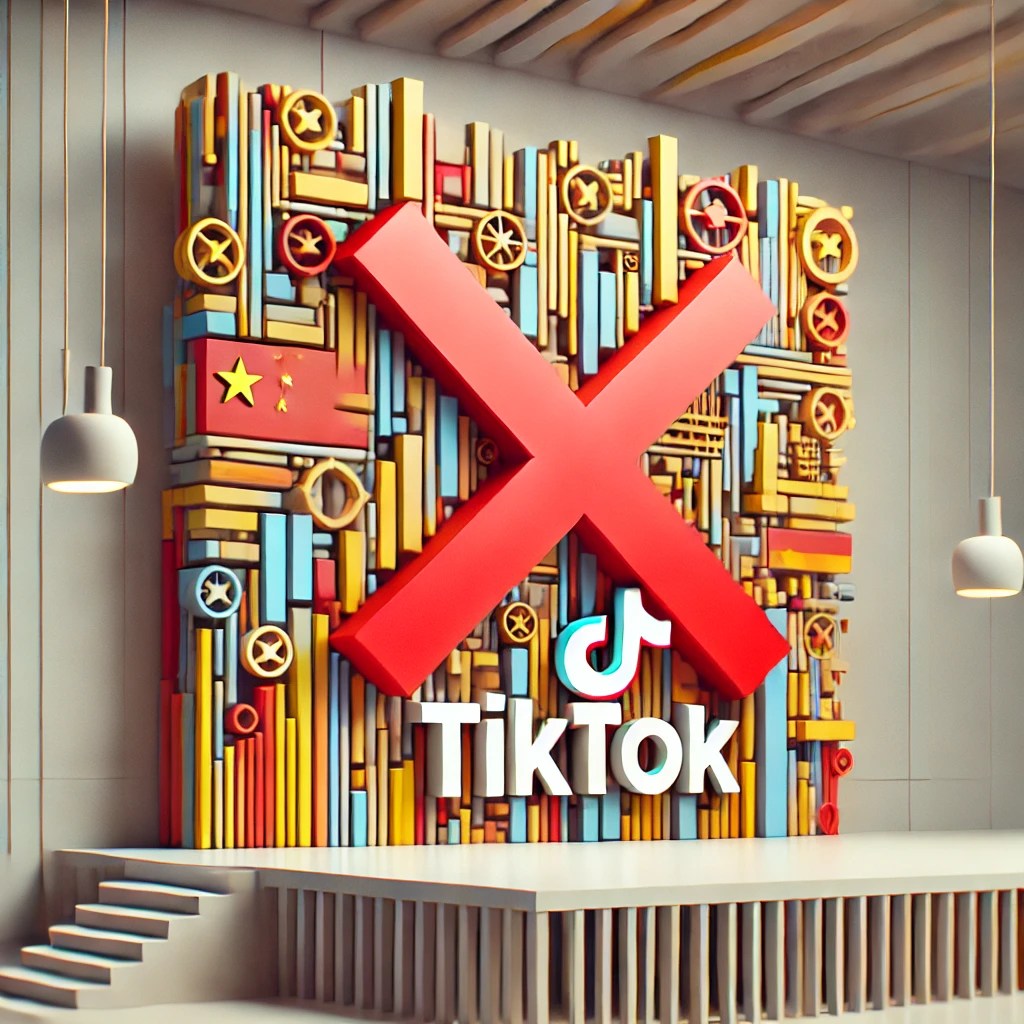
| Here’s how TikTok creators are preparing for a TikTok ban |
Warm-up question: Do you rely on a specific platform or tool for work or a hobby? What would happen if you suddenly couldn’t use it anymore?
Listen: Link to audio [HERE]
Read:
STEVE INSKEEP, HOST:
TikTok creators are preparing for a potential TikTok ban. The video sharing app will be shut down in the United States this month unless it’s sold to a company outside China, or unless the Supreme Court does something. NPR’s Claire Murashima spoke with content creators about what a potential TikTok ban would mean for them.
CLAIRE MURASHIMA, BYLINE: For some creators, the end of TikTok would mean losing their main source of income. Cora Lakey quit her six-figure job in talent acquisition and project management in October because she was able to make a living on TikTok.
CORA LAKEY: I was, I would say, equaling my corporate salary for about three months before I took the leap to quit.
MURASHIMA: TikTok allowed her to pay off a bunch of her student debt, and unlike her corporate job, have autonomy over how she spends each hour of her day. But recently, she seen comments that a TikTok ban might force influencers like her to, quote, “get a real job.” She responded, of course, by making a TikTok video.
LAKEY: Influencers aren’t out of touch for crying about the TikTok ban. You’re out of touch for not realizing this is a real industry.
MURASHIMA: And women have the most to lose. Eighty-four percent of influencers are women, according to a 2024 report from Influencer Marketing Hub, which follows the social media industry.
NICOL TURNER LEE: Some would argue with TikTok shutting down that they could wipe out about 1.3 billion in U.S. small business revenue within just one month.
MURASHIMA: Nicol Turner Lee is a senior fellow in governance studies at the Brookings Institution.
LEE: The creator economy is valued at $250 billion globally.
MURASHIMA: President Biden signed the bill that could ban TikTok, citing threats to national security. The app gathers a lot of information from users, and lawmakers say they worry about that information falling into the hands of the Chinese government. But Adam Aleksic, who goes by @etymologynerd on TikTok, isn’t buying it.
ADAM ALEKSIC: It’s not about China. It’s about the fact that they can’t control mass communication anymore, which has also been obvious since the war in Gaza started.
MURASHIMA: Aleksic echoes a theme a lot of TikTok users share about the ban.
ALEKSIC: Gatekeepers hate this, but they know they can’t stop us from using all of social media. Instead, they can just try to limit us to the platforms they have the most control over.
MURASHIMA: Among users, there’s also a feeling of loss.
RISHIKA VINNAKOTA: Disappointed just because I’ve built a community.
RALPH TYNDALL: I’ve kind of just been ignoring it, knowing that I don’t really have any control.
ANNA VATUONE: I’m not as worried as I am disappointed.
MURASHIMA: TikTokers Rishika Vinnakota, Ralph Tyndall and Anna Vatuone. Vatuone coaches people on developing their personal brands online and finds most of her clients through TikTok. She’s telling her 180,000 followers to find her on Instagram and Substack.
VATUONE: Rule one of personal branding is don’t put all your eggs in one basket. Diversify and make sure that you’re in a lot of different places ’cause the truth is we don’t own our profiles anywhere.
MURASHIMA: Rishika Vinnakota is a TikTok influencer who posts about her life as a college student. She has three on-campus jobs, but makes most of her income from TikTok partnerships and brand deals.
VINNAKOTA: It’s a little sad to go through and relive all my videos and download them and plan to post them on another platform.
MURASHIMA: While she can upload her TikTok videos to other social media sites, it won’t be as lucrative because she doesn’t have nearly as many followers.
VINNAKOTA: All of this could have been dealt with in a much better way.
MURASHIMA: She doesn’t want to be a full-time influencer once she graduates college in the spring but hopes to keep making videos for as long as she can.
VINNAKOTA: I’m still going to take content, film, post, edit. I’m going to do everything I do, it just might not be on TikTok anymore.
MURASHIMA: Even if her wallet won’t be as influenced. Claire Murashima, NPR News.
Vocabulary and Phrases:
- Six-figure job: A job that pays a salary in the range of $100,000 to $999,999 annually.
- Make a living: To earn enough money to support oneself financially.
- Took the leap: Made a significant or risky decision to pursue something new.
- Autonomy: The ability to make decisions and manage one’s activities independently.
- Out of touch: Unaware of current trends, realities, or experiences.
- Fall into the hands of: To come under the control or possession of someone or something.
- Not buying it: A phrase meaning to not believe or accept something as true or valid.
- Echoes: Repeats or reflects similar ideas or sentiments.
- Gatekeeper: Someone or something that controls access to a resource, opportunity, or platform.
- Lucrative: Producing a great deal of profit or financial gain.
Comprehension Questions:
- Why did Cora Lakey decide to quit her corporate job, and how has TikTok impacted her career?
- What concerns do lawmakers have about TikTok, and what reasons do they give for supporting a ban?
- How does Anna Vatuone suggest influencers prepare for potential platform shutdowns?
- What do influencers like Rishika Vinnakota plan to do if TikTok is banned?
- How is TikTok’s creator economy significant to the U.S. economy, according to the report?
Discussion Questions:
- What do you think about the idea of people making a living as influencers? Is it a sustainable career path?
- Do you think governments should have the power to ban social media platforms? Why or why not?
- How would losing a platform like TikTok impact not only creators but also its users?
- Have you ever had to adapt to a significant change in your work or personal life? How did you handle it?
- Do you believe the concerns about national security surrounding TikTok are valid? Why or why not?
Vocabulary Practice
Fill in the blanks using the target vocabulary words/phrases.
- After years in a corporate role, she finally ________ and started her own business.
- The hacker’s goal was to ensure sensitive data would ________ malicious actors.
- Many people argue that large corporations often act as ________, limiting access to opportunities.
- He managed to ________ by freelancing and taking on multiple part-time gigs.
- The startup became highly ________, attracting several investors in just a few months.
- Her response ________ the concerns many others in the industry have voiced.
- The politician’s outdated views made it clear that he was completely ________ with modern issues.
- Despite the high risks, the project’s leader decided it was time to ________ and try something bold.
- I’m ________ their explanation for the delay; it doesn’t seem credible.
- The job offered her a level of ________ she hadn’t experienced before, allowing her to work on her own terms.
 LanguageLeap