In response to the two seismic changes reshaping the automotive industry—electrification and the rise of Chinese automakers—Honda and Nissan are exploring the possibility of a merger. This move comes as both companies struggle to keep up with the rapid transition to electric vehicles and the increasing competition from Chinese car manufacturers. By combining their resources and expertise, Honda and Nissan hope to become more competitive in the global market and better positioned to face these transformative shifts. This lesson explores the factors driving the merger talks, the challenges posed by the electric vehicle revolution, and the growing influence of Chinese automakers on the global stage.
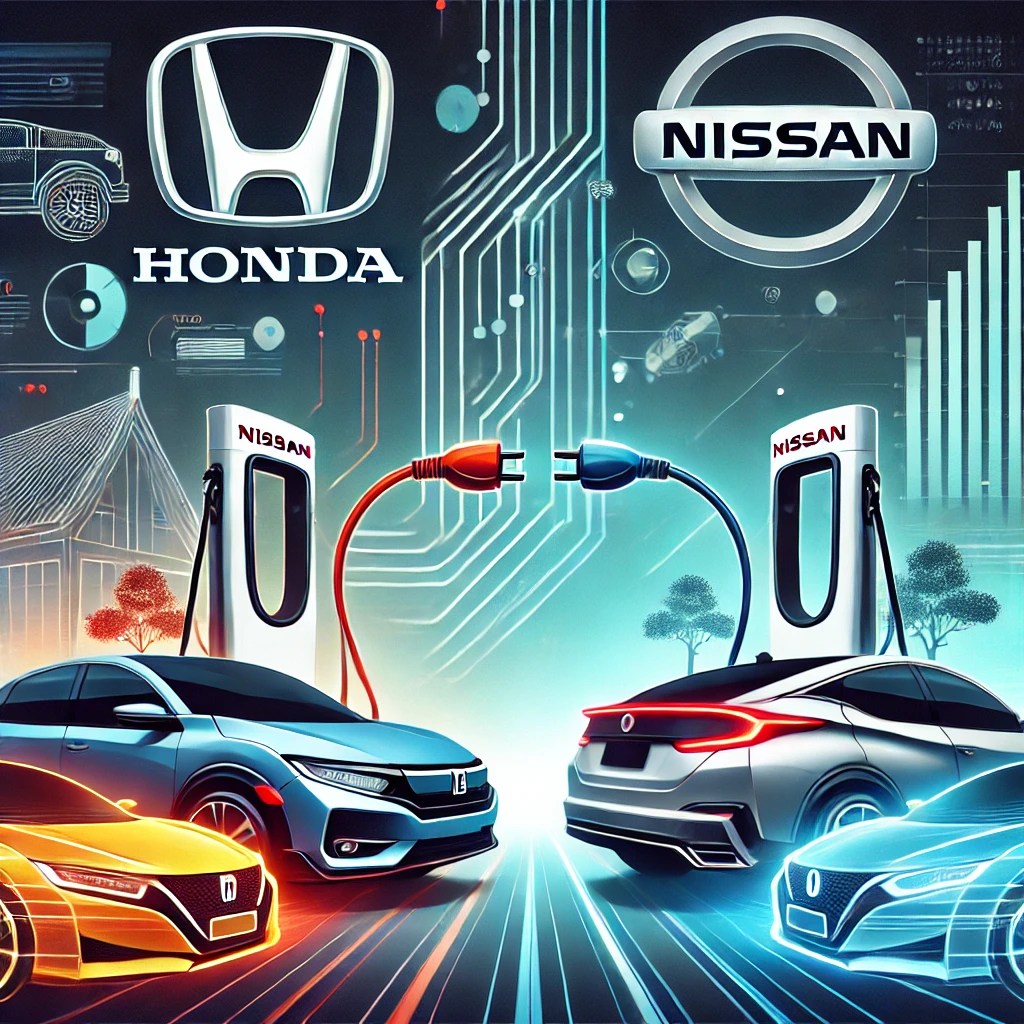
| Two seismic changes pushing Honda and Nissan into merger talks |
Warm-up question: When making big purchases like a car, do you focus more on the price, the brand, or the technology?
Listen: Link to audio [HERE]
Read:
SARAH MCCAMMON, HOST:
The auto sector is in the midst of two seismic changes, the rise of electrification and the surge of Chinese automakers. That means many existing companies will need to adapt. Honda and Nissan say they’re beginning talks about a merger, and those companies probably won’t be the only ones looking for new partnerships. Joining me now to talk about it is NPR senior business editor Rafael Nam. Hey there.
RAFAEL NAM, BYLINE: Hey, Sarah.
MCCAMMON: So these are two really well-known automakers with very long histories and reputations. Why would they want to merge?
NAM: Yes, these are definitely two big companies, especially in the U.S. The CR-V from Honda, for example, is one of the bestselling cars in the country. And Nissan has cars like the Rogue SUV. And the reason why these talks are happening is because of these two transformative changes you just mentioned, Sarah. Let’s tackle the first one, the pivot to electric vehicles. Nissan and Honda have had trouble producing the buzzy EVs that Tesla or South Korean automakers like Hyundai and Kia have produced, so a combination would make sense. It allows the two companies to pool their expertise and their production together.
And the hope is that they will become stronger. It’s why both companies said this week they are exploring a merger and talks have started. Although both Honda and Nissan are well-known, they’re not among the very, very top players in the industry. A merger, though, would change that. It would make them the third biggest automaker in the world behind just Toyota and Volkswagen.
MCCAMMON: Not only that – right? – but presumably a merger would also make these companies, both of which are based in Japan, more competitive against Chinese automakers. Why is that important?
NAM: Yes, indeed, it would make them more competitive both in China and outside of China. And it’s important because I think for people in the U.S., it’s kind of hard to see the threat posed by Chinese automakers like BYD because the U.S. has managed to prevent them from coming in with big tariffs and other restrictions. But in Europe, where I’m from, you can really see how successfully Chinese companies have pivoted to producing EVs, the future of the car industry I was telling you about. You can see it literally from the time you land at an airport, where you can see their ads everywhere. And of course, you’re seeing more and more of their EVs on the roads. They are not only selling these EVs cheaper, their quality has improved dramatically. And they’re also hyperfocused on software, which is becoming critical for cars.
MCCAMMON: You know, there was a time back in the 1980s when Japan was really emerging as a global force in the auto sector. Are Chinese companies now stepping into that kind of role in the industry?
NAM: Yes, except now it’s the Japanese automakers that are playing defense. But it’s not just Japan. Just like the ’80s, companies in the U.S. and Europe now see Chinese rivals as existential threats. Here’s how Sam Abuelsamid, an auto analyst based in Detroit, put it to me.
SAM ABUELSAMID: There are some brands that have been around for a long time that may well not be part of the landscape 10 years from now, five or 10 years from now, just because they don’t have enough scale to compete against either the big Western players or the Chinese companies.
NAM: So the name of the game could be size – get bigger or get left behind. It’s why analysts believe we could see more deals happening over the next few years. It may be the best way to tackle these two seismic changes taking place, the pivot to electrification and the emergence of China.
MCCAMMON: That’s NPR’s Rafael Nam. Thank you so much.
Vocabulary and Phrases:
- Sector: A distinct part or division of a society or economy, often referring to a specific industry or area of activity (e.g., the auto sector).
- Seismic changes: Extremely significant or transformative changes that have a major impact, similar to how an earthquake disrupts the ground.
- Tackle: To confront or deal with a problem or challenge directly.
- Buzzy: Something that is popular, exciting, or generating a lot of interest and attention.
- Pool together: To combine resources, efforts, or expertise for a common goal.
- Hyperfocused: Extremely concentrated on a specific area, detail, or task, often to the exclusion of other concerns.
- Existential threat: A danger or challenge that could cause the end of an entity or its ability to function.
- The name of the game: The central or most important aspect of a situation; what matters most.
Comprehension Questions:
- What are the two major changes currently impacting the auto sector?
- Why are Honda and Nissan exploring a merger?
- How have Chinese automakers become more competitive in the global market?
- Why are Japanese automakers seen as “playing defense” in the current auto industry landscape?
- What does the phrase “the name of the game” mean in the context of this story?
Discussion Questions:
- Have you noticed an increase in electric vehicles on the road where you live? What do you think about the shift to EVs?
- In your opinion, how important is it for companies to adapt to new technologies, even if it requires significant changes?
- How do you think competition from Chinese automakers will shape the future of the global auto industry?
- Do you believe mergers between companies, like Honda and Nissan, are a good strategy for tackling major industry changes? Why or why not?
- How would you feel about buying a car that is heavily focused on software and technology? Would it influence your purchasing decision?
Vocabulary Practice
Fill in the blanks using the target vocabulary words/phrases.
- The tech __________ is growing rapidly, with new startups emerging every year.
- The company is undergoing __________ changes as it shifts to renewable energy sources.
- To reduce costs, the neighbors decided to __________ their resources and buy a communal lawnmower.
- Electric vehicles are the latest __________ trend in the auto industry.
- The team was __________ on improving their new software design before the launch.
- The loss of funding was seen as an __________ to the future of the project.
- In a competitive market, efficiency and adaptability are __________ if you want to stay relevant.
- The government has plans to __________ the housing crisis with new reforms.
 LanguageLeap