South Korea, often seen as a model democracy in Asia, faces a political crisis that has raised concerns about its democratic integrity. President Yoon Suk Yeol’s controversial declaration of martial law and the subsequent impeachment attempts have plunged the nation into political turmoil. Critics argue that Yoon’s actions undermine the checks and balances essential to democracy, while his defenders claim he acted within constitutional bounds. This lesson delves into the unfolding crisis, examining the implications for South Korea’s democratic institutions and the broader lessons for governance and accountability.
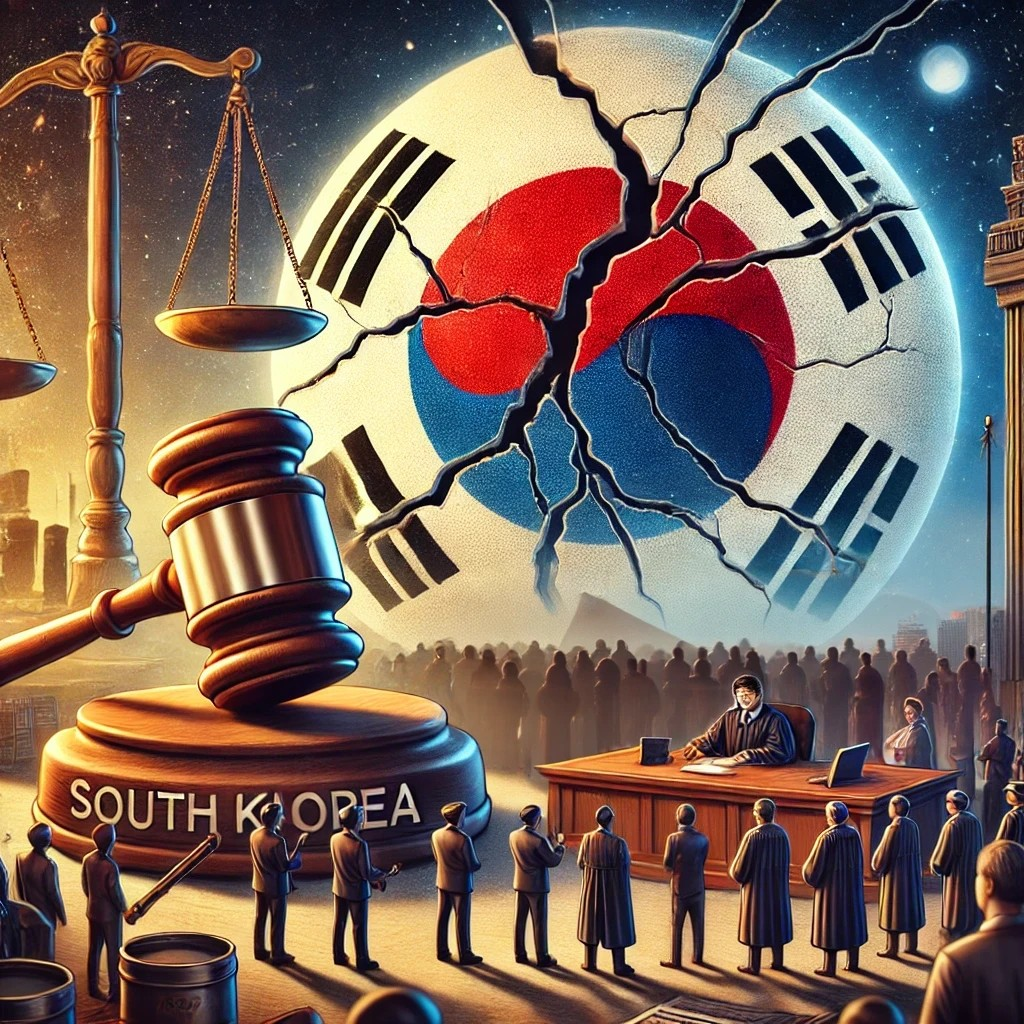
| South Korea’s political crisis mars its image as one of Asia’s leading democracies |
Warm-up question: How do you feel about the idea that tiny plastic particles, like microplastics, might be present in your body? Does it surprise or concern you?
Listen: Link to audio [HERE]
Read:
STEVE INSKEEP, HOST:
Lawmakers in South Korea seem ready to try again to impeach their president. Yoon Suk Yeol, as you may recall, declared martial law the other day and failed and then narrowly survived an impeachment effort. But this drama is not over, even though the president remains defiant. NPR’s Anthony Kuhn is covering this from Seoul. Hey there, Anthony.
ANTHONY KUHN, BYLINE: Morning, Steve.
INSKEEP: OK. So when the president says he’s going to fight to the end, what does that mean as he defends his declaration of martial law?
KUHN: Well, what he said was that martial law is a legitimate tool of governance, and it’s in line with the nation’s constitution. Here’s how he put it.
PRESIDENT YOON SUK YEOL: (Speaking Korean).
KUHN: He said, “How can a president’s constitutional decision and act of governance, which he made because he believed it was the only way to go, be an insurrection?” So basically, he was doubling down on the arguments he made when he imposed martial law – that opposition politicians are blocking his budgets in parliament, they’re paralyzing the work of the government, and they are North Korean sympathizers. Now, legal scholars generally agree that martial law can only be applied when there’s a war going on or public order has somewhere broken down, and that was not at all the case. Yoon’s critics say that opposition lawmakers were not trying to paralyze the government. They’re just providing checks and balances on the president’s power, as they’re supposed to do in a democracy.
INSKEEP: OK, amazing – he is still defending this failed declaration of martial law. He did survive one impeachment effort, but only by a handful of votes. Now they’re going to try again. The lawmakers are going to try again. Are they likely to succeed?
KUHN: Well, last week, they were just a few votes short of the two-thirds majority they needed to pass the bill. But since then, they’ve gotten more votes. What happened last week was ruling-party lawmakers boycotted the vote. Ruling-party lawmakers are now split. The head of the party says Yoon should be impeached. Yoon loyalists disagree. The opposition says they’re going to keep on submitting impeachment motions every week until they win.
INSKEEP: In the United States, you cannot really just arrest a president, but I gather there’s an attempt to arrest the president in South Korea on the charge of insurrection. Where does that stand?
KUHN: That’s right. You can do that if he’s accused of insurrection. Now, insurrection in South Korea means sending the military to interfere with constitutionally mandated bodies like the Election Commission, the parliament – which Yoon did – and to suspend people’s rights. So police and prosecutors have been trying to collect evidence. They tried to raid Yoon’s offices yesterday, but they were turned away by presidential security. They tried a second time today. And parliament today impeached the chief of national police for being part of the insurrection and impeached the minister of justice for not doing enough to try to stop the insurrection.
INSKEEP: Oh, interesting. Well, if they had the votes to impeach those guys, they may well have it for the president, as well. So if Yoon does get impeached or arrested, what happens next?
KUHN: Well, then his presidential duties will be suspended. And if the country’s Constitutional Court rules against Yoon, he’ll be removed from office, and an election for a new president will have to be held. That could take months. I don’t think that’s the end of the story for South Korean democracy. Although citizens and institutions mobilized quickly and effectively to thwart this threat of martial law, Yoon’s planning and execution of martial law was so inept and ham-fisted. What if, in future, there is a similar ruler who’s tougher and has better planning?
INSKEEP: NPR’s Anthony Kuhn, as always, with unimpeachable reporting from Seoul, South Korea. Thanks so much.
Vocabulary and Phrases:
- Impeach – To formally charge a public official, such as a president, with misconduct while in office, often leading to a trial and potential removal from their position.
- Legitimate – Conforming to established rules, laws, or standards; considered valid or acceptable.
- Insurrection – A violent uprising against an authority or government, typically involving an attempt to overthrow it.
- Double down – To strongly reaffirm a position or belief, often in the face of criticism or opposition.
- Paralyze – To bring to a standstill or make unable to function or act.
- Checks and balances – A system that ensures no one branch of government becomes too powerful, allowing each branch to oversee and limit the powers of the others.
- Boycott – To refuse to participate in or engage with an activity, organization, or entity as a form of protest.
- Suspend – To temporarily stop or delay an activity, right, or privilege.
- Mobilize – To organize and prepare a group or resources for action, often in response to a challenge or threat.
- Thwart – To prevent someone or something from accomplishing a goal; to frustrate efforts.
- Inept – Lacking skill or competence; ineffective or clumsy.
- Ham-fisted – Awkward or clumsy, often in a way that is ineffective or heavy-handed.
- Unimpeachable – Completely trustworthy, reliable, and beyond doubt or criticism.
Comprehension Questions:
- What reasons did President Yoon give for declaring martial law, and how did critics respond to his justification?
- Why do opposition lawmakers believe impeachment is necessary, and how close were they to succeeding previously?
- What actions did law enforcement attempt to take against President Yoon, and what obstacles did they face?
- What would happen if President Yoon were impeached or arrested, according to South Korean law?
- How did South Korean citizens and institutions respond to Yoon’s declaration of martial law?
Discussion Questions:
- Do you think impeachment is an effective way to hold leaders accountable? Why or why not?
- In your opinion, should there be limits on how leaders can use emergency powers like martial law?
- How important is the role of checks and balances in a functioning democracy?
- If a government leader acts ineffectively or clumsily, should they face the same level of accountability as those who act intentionally?
- What are the risks and benefits of citizens and institutions mobilizing quickly in response to government actions?
Vocabulary Practice
Fill in the blanks with the appropriate vocabulary word:
- The journalist’s reporting was so __________ that no one could question its accuracy.
- Activists decided to __________ the company by refusing to buy its products.
- The opposition party worked to __________ the president’s plan, which they believed was unconstitutional.
- The political system’s __________ ensured that no single branch could dominate.
- After the government’s __________ handling of the crisis, public trust declined sharply.
- The protesters were able to __________ quickly and organize a massive demonstration.
- Declaring martial law was criticized as a __________ move that undermined democracy.
- The president tried to __________ his controversial decision despite widespread criticism.
 LanguageLeap