Microplastics—tiny plastic particles found in our food, water, and even the air we breathe—have made their way into our bodies, lodging in organs like the lungs, liver, and even the brain. But what does this mean for our health? This lesson explores the science behind microplastics, the challenges researchers face in understanding their impact, and the actions individuals and policymakers can take to reduce exposure. Dive into this pressing issue to learn how these hidden particles are shaping our understanding of environmental and personal health.
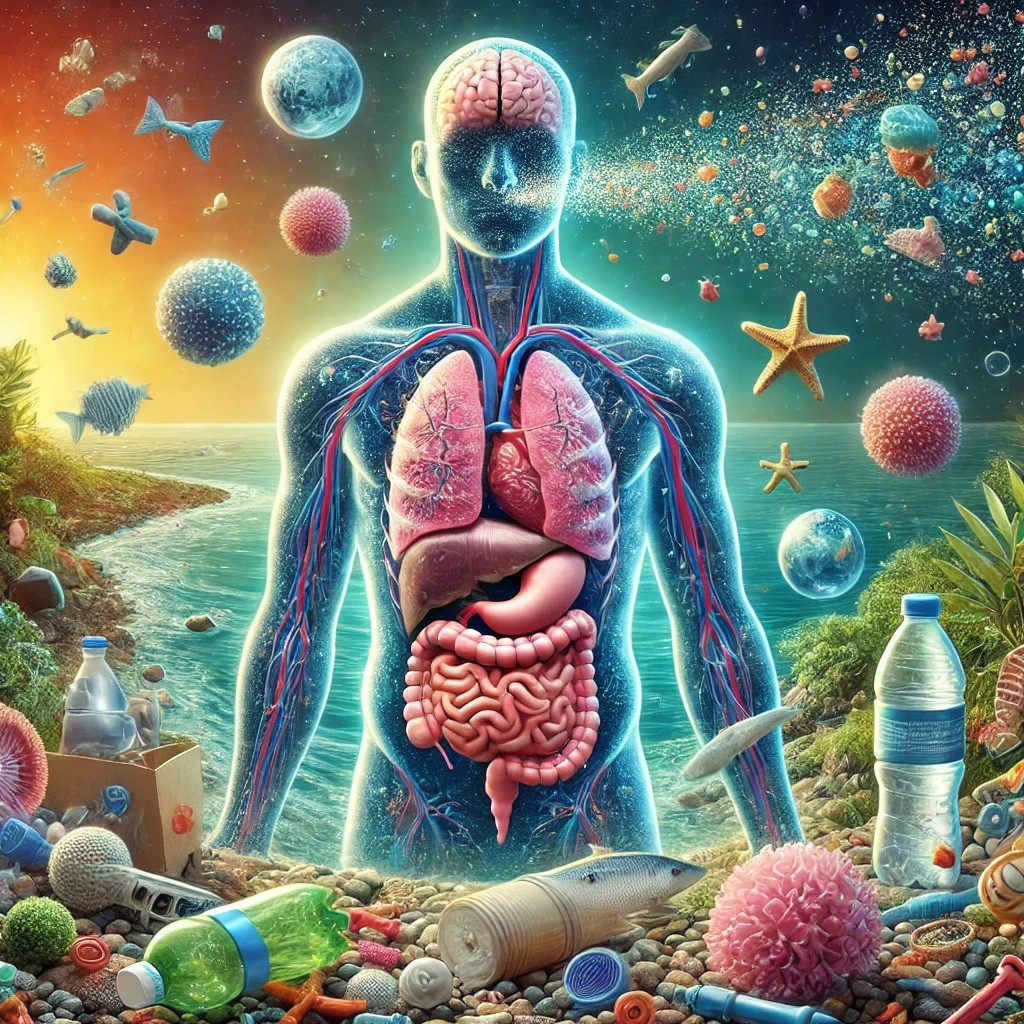
| Microplastics research probes the type of dangers they may pose to our bodies |
Warm-up question: How do you feel about the idea that tiny plastic particles, like microplastics, might be present in your body? Does it surprise or concern you?
Listen: Link to audio [HERE]
Read:
LEILA FADEL, HOST: It’s a disturbing thought that we are constantly bombarded with plastic. And studies show microplastics are inside us – in our lungs, liver, heart, brain. The list goes on. NPR health correspondent Will Stone is here to tell us what this means. Hi, Will, I feel like you’re going to be telling me things I don’t know that I want to know, based on all the plastic in my house. But let’s start with what microplastics are exactly.
STONE: Yeah, so this term encompasses quite a lot, actually. It’s any plastic particle under the size of 5 millimeters – so you can imagine a pencil eraser – and this stretches all the way down to nanometers. They come in all shapes, sizes, with different mixtures of chemicals. Some of this has built up in the environment over a long time. Some of it is being newly formed in our daily lives, whether that’s from food packaging, clothing, tires – really, you name it.
FADEL: So plastic is being found deep in our bodies. Do we know how it’s getting there?
STONE: So it’s in our food, our water. It’s in the air we breathe. And size really matters here. The bigger particles we ingest are expected to kind of pass through our gut and exit during some trip to the bathroom. Our respiratory system will also filter some of them out, but the smaller pieces will get absorbed into our body. I spoke to Heather Leslie about this. She’s a scientist in the Netherlands. And her team was the first to detect microplastic in the blood, several years ago.
HEATHER LESLIE: The problem with plastics for your body is that our enzymes that are normally cleaning up stuff like that – they can’t really attack this. So they try, but the plastic doesn’t mind at all. This becomes, like, a constant opponent for your immune system.
STONE: And once these plastics are in our bloodstream or lodged in our organs or tissue, she says, you know, we don’t really know their fate, how long they stick around. And remember, we are always being exposed to more of them.
FADEL: What do we know about what it actually does, what the harms might be?
STONE: Yeah, Leila, obviously, this is what we all want to know, and it’s not clear-cut. Doug Walker, who’s at Emory University, says the field is still wrestling with some fundamental questions like how to properly measure these particles inside of us. Many are so small, it’s hard to even find them.
DOUG WALKER: Do the exposures represent a health risk? We don’t know that about microplastics yet. We do know that plastic-related chemicals – like the phthalates and bisphenols and other chemicals – have been linked to different adverse health outcomes.
STONE: So those chemicals are used in plastics. They’ve been widely studied. These could be leeching out of microplastics.
FADEL: So even if researchers aren’t sure, do they have any idea?
STONE: They do. There are some recent human studies. One that made a big splash earlier this year found people who had microplastics in the plaque in their arteries were more likely to have a heart attack, stroke or die. There are also some small studies showing higher levels in people with inflammatory bowel disease, also in liver disease. These are associations, to be clear. They don’t prove microplastics are responsible, but there are real concerns here. And opinions among scientists do vary.s
FADEL: Why are some more worried than others?
STONE: Research in animals and human cells in the lab suggests microplastics can be harmful, depending on the dose. There are limits to how much you can apply this to humans. But Susanne Brander says we need to take this data seriously. She studies microplastics at Oregon State University.
SUSANNE BRANDER: We know enough to act because the other option is to wait another 30, 40 years. We have all of the data and a completely crystal-clear picture. And then that picture is probably going to say, oh, OK, we’re kind of screwed because we should have reduced our exposure in 2025.
STONE: Brander points to animal studies showing microplastics lead to what’s known as oxidative stress. This can damage proteins in DNA. There’s also evidence of increased inflammation and data on fertility problems, neurological diseases, harms to metabolic health and changes that could signal an increased risk of cancer.
FADEL: Is there anything we can do?
STONE: So on a policy level, Brander supports an effort to pass a global plastics treaty that would reduce waste. On a personal level, she says you can take relatively simple actions. Avoid cooking with plastic, heating up plastic containers. Use a stainless steel mug, not those disposable coffee cups. You can swap your plastic containers for glass. Try not to buy household cleaners and cosmetics that are in plastic. These are just a few things she does in her life to try to reduce her exposure.
Vocabulary and Phrases:
- Disturbing thought: An idea or realization that causes unease, worry, or discomfort.
- Bombarded with: Exposed to a continuous or overwhelming amount of something, such as information or stimuli.
- Encompasses: Includes or contains within its scope; covers a range or area.
- Stretches to: Extends as far as; reaches a particular point or limit.
- Absorbed: Taken in or assimilated, often referring to substances or information entering a system.
- Lodged: Stuck or embedded firmly in a place or position.
- Fate: The outcome or final condition of something, often seen as predetermined orinevitable.
- Clear-cut: Easy to understand or definite; not ambiguous.
- Adverse: Harmful or unfavorable; having a negative effect.
- Leeching out of: Gradually escaping or seeping out from something, especially a liquid or substance.
- Make a big splash: To attract a lot of attention or cause a significant impact.
- Screwed: (Informal) In trouble or in a bad situation.
- Swap: To exchange one thing for another.
Comprehension Questions:
- What are microplastics, and how are they defined in terms of size?
- How do microplastics enter the human body, according to the transcript?
- What challenges do researchers face when studying the effects of microplastics on human health?
- What recent study findings have raised concerns about the presence of microplastics in human bodies?
- What are some personal steps people can take to reduce their exposure to microplastics?
Discussion Questions:
- Do you think people are doing enough to minimize plastic use in their daily lives? Why or why not?
- How does the idea of microplastics being in our bodies make you feel? Does it change how you view plastic products?
- What steps, if any, have you taken to reduce plastic use in your home or workplace?
- Do you believe stricter policies should be implemented to reduce plastic waste globally? Why or why not?
- Have you noticed any changes in how companies or governments are addressing plastic waste? Are these changes effective in your opinion?
 LanguageLeap