What motivates someone to donate a kidney to a stranger? In a world often focused on self-interest, extraordinary altruism stands out. This lesson explores the stories of individuals who have made life-saving organ donations, delving into the neuroscience behind their actions. Discover how empathy, brain structure, and a sense of purpose drive such selfless decisions. This fascinating intersection of science and humanity will inspire you to reflect on the profound impact of generosity.
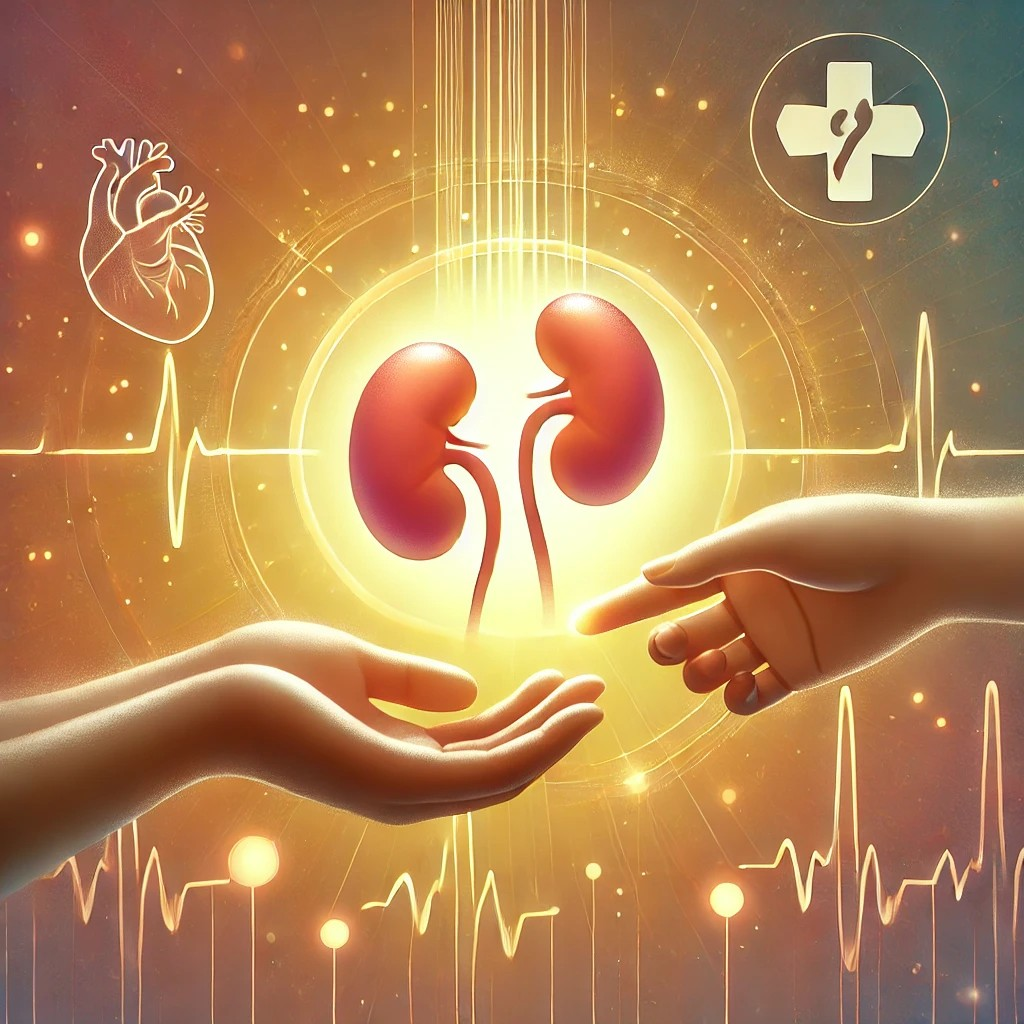
| The science behind the selfless act of donating a kidney to a stranger |
Warm-up question: Have you ever helped someone in need, even if it was a small act of kindness? How did it make you feel?
Listen: Link to audio [HERE]
Read:
ARI SHAPIRO, HOST:
In this season of thanks, there’s a small group of people who are especially deserving. Known as altruistic organ donors, they literally have given up a part of themselves to save the life of a stranger. As reporter Stephanie O’Neill tells us, their generosity has even prompted brain research into why some people give in such a big way.
STEPHANIE O’NEILL, BYLINE: Renee Bruens of Clarksville, Tennessee, was 33 years old, a wife and mother of two young boys, when a walk through a local parking lot changed her life.
RENEE BRUENS: I passed this car that has a magnet on his driver’s side door, and it said, O-negative-type blood kidney donor needed. Call this number. And I was like, huh, I, in fact, have O-negative blood.
O’NEILL: So she snapped a photo of the magnetic sign and didn’t give it much more thought. Then the following day, while on a break at work, she began scrolling through the pictures on her phone.
BRUENS: I’m like, that picture – oh, yeah. I tell somebody at work, and they’re like, you’re crazy. But I just figured I would go ahead, and let me just do the initial testing, and if that is a match, then I feel like it’s meant to be.
O’NEILL: Turned out Bruens, now 39, was a perfect match. And after learning that a healthy person needs only one functioning kidney to thrive, she was sold. But her family – not so much.
BRUENS: That’s the craziest part about it was really convincing everyone else. I already knew this is what I wanted to do, but it’s getting everyone else on board.
O’NEILL: Kidney donation involves minimally invasive surgery. Still, the act of giving an organ to a complete stranger requires an uncommon level of generosity, one that qualifies as extraordinary altruism, says Georgetown University neuroscientist Abigail Marsh.
ABIGAIL MARSH: Extraordinary altruism, I define as altruism that is usually very risky or costly and is not normative. It’s something that you very rarely see people engage in.
O’NEILL: Marsh first began studying altruistic kidney donors in 2010. Her early research found the size of their right amygdala, a region in the brain that processes emotions, to be larger than average, suggesting a greater capacity for empathy.
MARSH: We’ve done other research that’s shown that altruistic kidney donors are more empathic to other people’s pain. The patterns of brain activity we see when they’re experiencing pain look very similar to the patterns when they’re watching a stranger experiencing pain.
O’NEILL: Meaning, says Marsh, they care deeply about the welfare of others, including those who have no connection to them.
MARSH: And the behavioral research that we’ve done suggests that that is because they’re actually less selfish.
O’NEILL: Each year, about 300 Americans donate a kidney to someone they don’t know. And then there are those who become two-time organ donors. Sixty-year-old Tom O’Driscoll of Sugar Land, Texas, is one of only about five dozen Americans who’ve done so, donating his kidney and a portion of his liver.
TOM O’DRISCOLL: In 2010, I donated my left kidney to a stranger at Cedars-Sinai Hospital in Los Angeles.
O’NEILL: Then, two years ago, he donated 60% of his liver, an organ that regenerates itself, to help save a different person he didn’t know. His reason for donating twice, he says, is simple.
O’DRISCOLL: The need is very, very great. There are over 100,000 Americans currently on the list waiting for a kidney or a liver, and approximately 17 Americans die every day for want of an organ.
O’NEILL: O’Driscoll says his ability to donate healthy organs has given important purpose to the years spent keeping himself in top shape as a triathlete. And he says organ donation has not stopped him from competing.
O’DRISCOLL: So I’ve done all 10 of my Ironman races with one kidney, and I’ve done my tenth one nine months after my liver donation surgery.
O’NEILL: And as might be expected of extraordinary altruists, both Tom O’Driscoll and Renee Bruens say, in the season of thanks, they remain grateful for the opportunity to help save the lives of strangers.
Vocabulary and Phrases:
- Altruistic: Showing selfless concern for the well-being of others.
- Literally: Exactly as stated; without exaggeration.
- Functioning: Working or operating as expected or required.
- On board: In agreement or willing to participate.
- Normative: Relating to standards or rules of behavior that are considered normal or typical.
- Portion: A part or share of something.
- Regenerate: To regrow or restore to an original state.
- Triathlete: A person who competes in a triathlon, a race involving swimming, cycling, and running.
Comprehension Questions:
- What inspired Renee Bruens to consider becoming a kidney donor?
- How did Renee convince others to support her decision to donate a kidney?
- What did neuroscientist Abigail Marsh discover about the brains of altruistic kidney donors?
- How many Americans, on average, donate a kidney to a stranger each year?
- What unique achievement has Tom O’Driscoll accomplished as an organ donor and triathlete?
Discussion Questions:
- Would you ever consider donating an organ to a stranger? Why or why not?
- How do you think empathy plays a role in extraordinary acts of kindness?
- What are some ways to encourage more people to consider organ donation?
- How do you maintain a healthy lifestyle, and why is it important for long-term well-being?
- In your opinion, what motivates people to perform selfless acts for others?
 LanguageLeap