With the reelection of Donald Trump, the future of the electric vehicle (EV) industry faces a major shift. As Trump plans to roll back EV incentives and environmental regulations, auto manufacturers are recalibrating their strategies. This lesson explores how these changes could slow down the rollout of EVs, affect consumer incentives, and lead to potential legal battles. We’ll also examine the industry’s efforts to stay competitive amidst these challenges and the broader implications for climate policy and global markets.
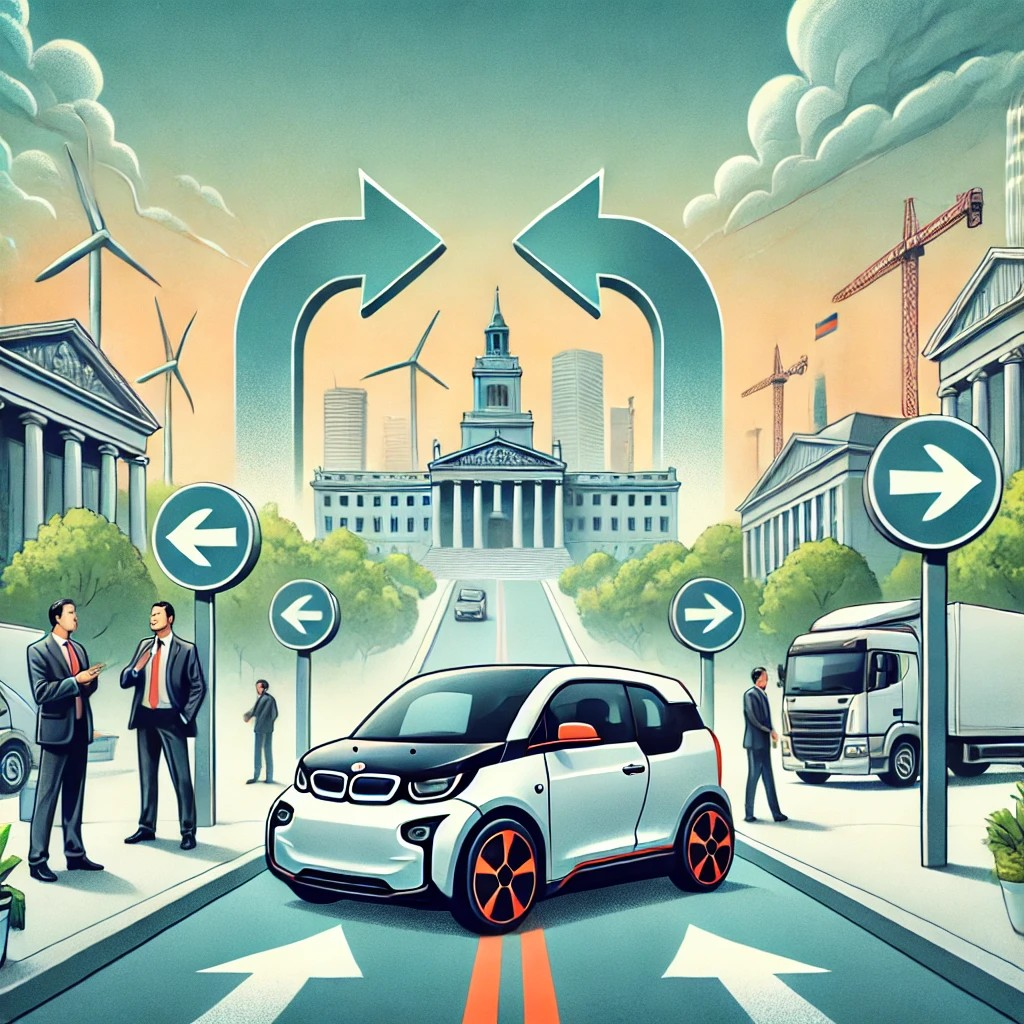
| What Trump’s win means for electric vehicle manufacturers |
Warm-Up Question: How do you feel about the future popularity of electric vehicles (EVs) and their role in our transportation?
Listen: Link to audio [HERE]
Read:
LEILA FADEL, HOST:
The auto industry has embarked on a multibillion-dollar effort to build more electric vehicles. Now, with the reelection of Donald Trump, the industry is…Recalculating.
FADEL: See what we did there? NPR’s Camila Domonoske reports on how this redirection could change the vehicles Americans buy.
CAMILA DOMONOSKE, BYLINE: President-elect Donald Trump dismisses climate change. He’s promised to cut EV requirements and incentives. And he campaigned saying things like this at a rally in May.
DONALD TRUMP: If you want to take a nice trip from, let’s say, New Jersey, and you want to go and visit me at the White House in a little while, don’t go buy an electric car. You won’t make it.
DOMONOSKE: So what does this mean for cars? After talking with folks across the auto industry, here are three takeaways. First, it’s not the end of EVs. Billions of dollars have already poured into EV projects – projects which support a lot of jobs and are seen as key to competing with China. Automakers are hoping that nobody will want to lose that money, those jobs or that competitive advantage. And some shoppers simply want to buy EVs, whether to save the planet or just save on gas. Here’s Toyota exec Jack Hollis.
JACK HOLLIS: There’s going to be a need, ’cause the customers are asking us for BEVs.
DOMONOSKE: BEVs, or battery electric vehicles. Now, Toyota has long favored hybrids over EVs, but even Toyota is planning to keep some all-electric vehicles in their lineup.
HOLLIS: Regardless of who is the president and what rules and what country we’re going to, we were going to do that as our own pathway.
DOMONOSKE: But second point – this does almost certainly slow down the rollout of EVs in the U.S. The auto industry was already slowing down some EV plans after disappointing sales. And that was with Biden policies supporting the cars – a $7,500 consumer tax credit, requirements that vehicles pollute less, funding for factories and chargers. And there’s state mandates, too. Now the Trump administration is poised to throw things in reverse.
TERRY O’DAY: It’s clear that these regulations and incentives are under threat.
DOMONOSKE: Terry O’Day is the COO of InCharge, a company that installs chargers for fleets like electric vehicles owned by delivery companies. He’s preparing to pivot, focusing less on adding new chargers and more on taking care of ones that are already built. Long-term, he’s confident EVs will outcompete gas on price, but for now, this hurts.
O’DAY: Some companies might not make it across the line if some of these incentives and regulations change to the degree that we’re hearing that they might.
DOMONOSKE: Third point – this’ll get messy. There will be lawsuits. There will be lobbying. And there will be different timelines for the changes under Trump. Kenny Stein is with the Trump-supporting group, the Institute for Energy Research.
KENNY STEIN: Some things can be within the first 100 days.
DOMONOSKE: Like executive actions promoting EVs. Those can be undone almost immediately. Others will take action from Congress or comment periods, then lawsuits – a year at a minimum. Meanwhile, the auto industry, by its nature, has to plan things years in advance. So take, say, the rules about tailpipe pollution for the next couple of years.
STEIN: Carmakers are already making investments to try and comply with those things. So they can’t try and do the 2025 model year. That’s already happening.
DOMONOSKE: And then there are two total wild cards. One is what happens with tariffs. The other is how Elon Musk, Tesla CEO and a key Trump adviser, uses his influence. Exactly how this U-turn will unfold? Well, we’re about to find out.
Vocabulary and Phrases:
- Embark: To begin a journey, project, or endeavor.
- Redirection: A change in focus or direction.
- Incentives: Rewards or benefits that motivate people to take certain actions.
- Takeaways: Main points or conclusions that can be drawn from a discussion or experience.
- Mandates: Official orders or regulations requiring specific actions or behaviors.
- Poised: Ready or prepared for a specific action or change.
- Pivot: To make a significant change in strategy, direction, or focus.
- Make it across the line: To successfully complete a goal or reach the end of a difficult process.
- By its nature: Due to its inherent characteristics or essential qualities.
- Wild card: An unpredictable or uncertain factor that can influence a situation in unexpected ways.
Comprehension Questions:
- What impact might the reelection of Donald Trump have on the production and sale of electric vehicles (EVs) in the United States?
- Why are some companies worried about changes to EV-related incentives and regulations?
- How did the auto industry respond to Biden’s policies that supported electric vehicles?
- What are some factors that make it difficult for car manufacturers to quickly adjust to changing regulations?
- What challenges might the auto industry face if EV policies and incentives are changed under a new administration?
Discussion Questions
- How do you think government policies can affect the popularity and production of electric vehicles?
- What do you think motivates people to buy electric vehicles—savings, environmental impact, or something else?
- How important do you think it is for businesses to have a stable regulatory environment? Why?
- Do you believe new technologies like electric vehicles should rely on government support to become more common? Why or why not?
- What do you think the future holds for the transition to electric vehicles in the U.S. and globally?
 LanguageLeap