As the demand for AI technology grows, so does the energy needed to power it. Major tech companies like Google, Amazon, and Microsoft are looking to renewable energy sources, including wind, solar, and even nuclear, to reduce the environmental impact of their data centers. This lesson explores the ambitious climate goals of these tech giants, the challenges they face with high-energy AI operations, and the innovative solutions they’re considering to achieve sustainable growth.
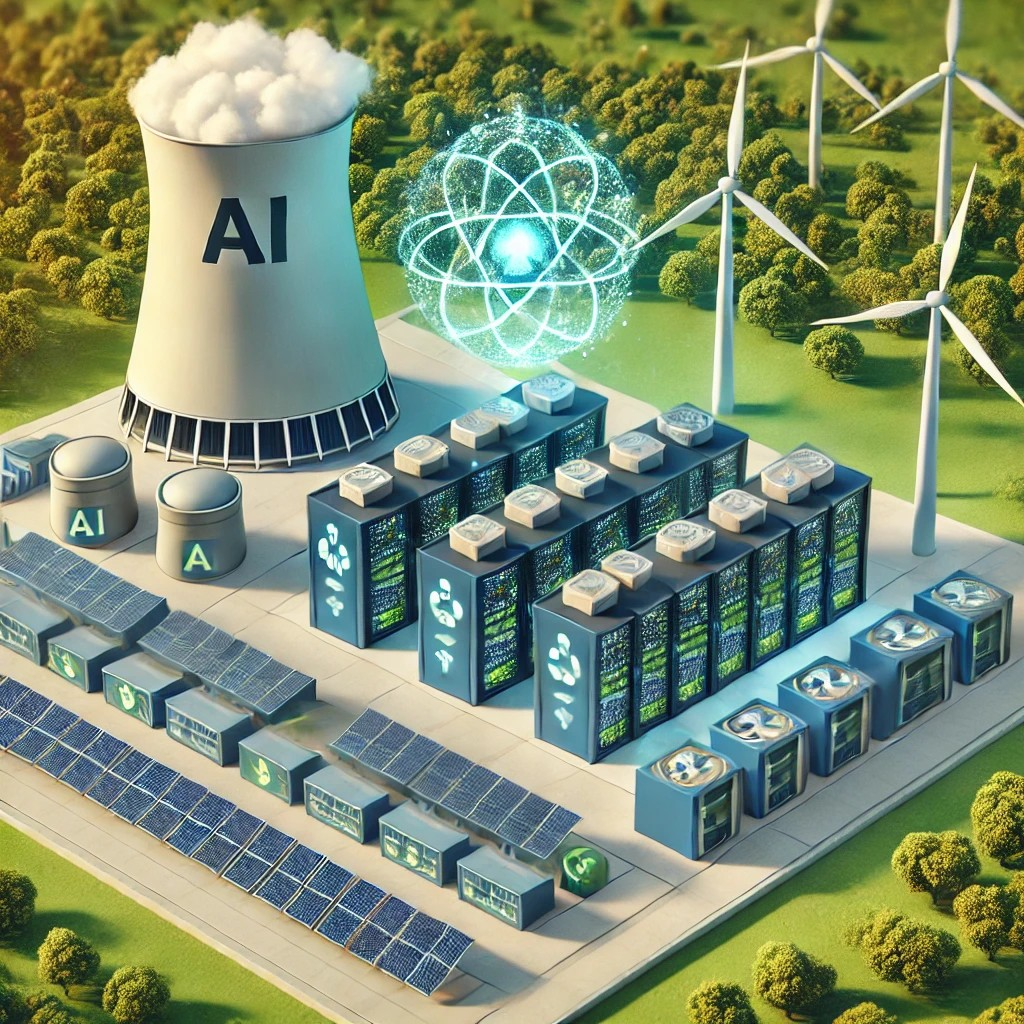
| Tech companies look to renewable energy to power AI |
Warm-up question: Have you ever thought about how much energy technology like AI or data centers might use? What are some ways you think companies could reduce their energy impact?
Listen: Link to audio [HERE]
Read:
A MARTÍNEZ, HOST:
There is an arms race for artificial intelligence. Every major tech company is working on it. The downside? Well, AI uses a lot of energy, far more than your typical web search. Now some companies are planning to bring back a surprising source of energy – nuclear power. NPR tech reporter Dara Kerr is here to talk about it. Dara, why does this sound like the plot to some end of the world movie where AI and nuclear power get together?
DARA KERR, BYLINE: Yes, this is about AI’s energy usage, and all the companies are working on AI right now, and it just eats up power. For example, a ChatGPT query uses about 10 times as much energy as a Google search. And that energy mostly comes from traditional power plants, which, as we know, are highly polluting. And they release greenhouse gases into the air. So the tech companies are looking at alternative power sources to help fuel their AI. Earlier this month, Amazon and Google both announced they’re investing in small nuclear reactors. And another big tech company, Microsoft, says it’s planning to revive Three Mile Island. You remember Three Mile Island, right? It’s that power plant in Pennsylvania that infamously had a partial meltdown in the ’70s.
MARTÍNEZ: I do remember Three Mile Island. Wow. So why are they doing this?
KERR: All of the tech companies say they’re doing this to help meet their climate goals. All of the top five tech companies have the ambitious goal of reaching net zero emissions by 2030. That includes Google, Amazon, Microsoft, Apple and Facebook parent Meta. So nuclear energy doesn’t release greenhouse gases. It also doesn’t burn fossil fuels like coal and gas, and fossil fuels are the primary driver of climate change. And unlike other renewable energies such as wind and solar, nuclear delivers a lot of energy all of the time. And that’s important to these companies who need huge amounts of power 24/7 to feed their AI.
MARTÍNEZ: So it sounds like a good thing for addressing climate change. I mean, how long will all this take?
KERR: That’s the thing, A. It’s expected to take at least a decade or even more. Building nuclear reactors or reviving old ones like Three Mile Island is expensive and time-consuming. They’re heavily regulated to ensure safety, and that means everything takes a while. And these small, modular power plants that Amazon and Google are looking at are really a different kind of technology. We don’t have any operating in the U.S. yet. I spoke to Ivy Main, who’s been researching the energy usage of data centers for years. She says she’s skeptical of these companies’ plans.
IVY MAIN: One of the problems here is that the demand is now. And these small, modular reactors, assuming they pan out, are 10 years from now. So this is a situation of, I will gladly pay you Tuesday for a hamburger today.
KERR: Main says a fix for AI energy consumption needs to come now, not in several years.
MARTÍNEZ: I love the Wimpy reference from the Popeye cartoons. Now, you know, in the meantime, are tech companies looking at other types of renewable energy?
KERR: Yes. So all of the major tech companies use solar and wind power in at least some of their data centers, but solar and wind aren’t reliable 24/7. They’re also looking at other types of renewables. Google, for example, is working with a startup in Nevada that uses geothermal heat as an energy source. But a lot of these companies’ climate change commitments came before the AI boom. Both Google and Microsoft say their emissions have skyrocketed over the last couple of years, and they attribute that specifically to AI. And that’s the tension. These data centers that fuel AI are creating a lot of pollution right now, and the proposed solutions are years on the horizon.
MARTÍNEZ: That’s NPR’s Dara Kerr. Thank you very much.
Vocabulary and Phrases:
- Arms race: A competition between countries or companies to achieve superiority, often in technology or resources.
- Query: A question or request for information, often used in technology for a search or command.
- Revive: To bring something back to life or use after it has been inactive.
- Infamously: Known widely, often for a negative reason or something controversial.
- Ambitious: Having a strong desire to achieve big goals or accomplish difficult tasks.
- Modular: Designed with parts that can be easily replaced or combined.
- Skeptical: Doubting or questioning something.
- Tension: A situation of conflict, stress, or pressure.
- On the horizon: Something expected to happen or appear soon.
Comprehension Questions:
- Why are tech companies considering nuclear power as an energy source for AI?
- How much more energy does a ChatGPT query use compared to a Google search?
- Why are companies looking at modular reactors, and what challenges do they face?
- Why is Ivy Main skeptical about the tech companies’ plans for nuclear energy?
- What tension do tech companies face between their climate goals and the growth of AI?
Discussion Questions:
- What do you think about tech companies investing in nuclear energy to support their AI growth? Is it a good idea or risky?
- Why might AI require so much energy? How could companies balance innovation with environmental impact?
- Do you think companies should wait for solutions on the horizon like small nuclear reactors, or should they focus on immediate fixes?
- How do you feel about using renewable energy sources like wind and solar for powering data centers?
- Do you believe the tech industry can reach ambitious climate goals while also expanding in areas like AI?
 LanguageLeap