While chronic stress is often seen as a negative, new research highlights that short bursts of stress, known as acute stress, can actually be beneficial. This lesson explores how embracing stress in challenging moments—like taking a test, preparing for a job interview, or facing a big presentation—can boost your performance. By learning to reframe and reappraise stressful situations, you can turn what feels like anxiety into a source of motivation and energy. Dive into the science behind stress and discover how to make it work for you instead of against you.
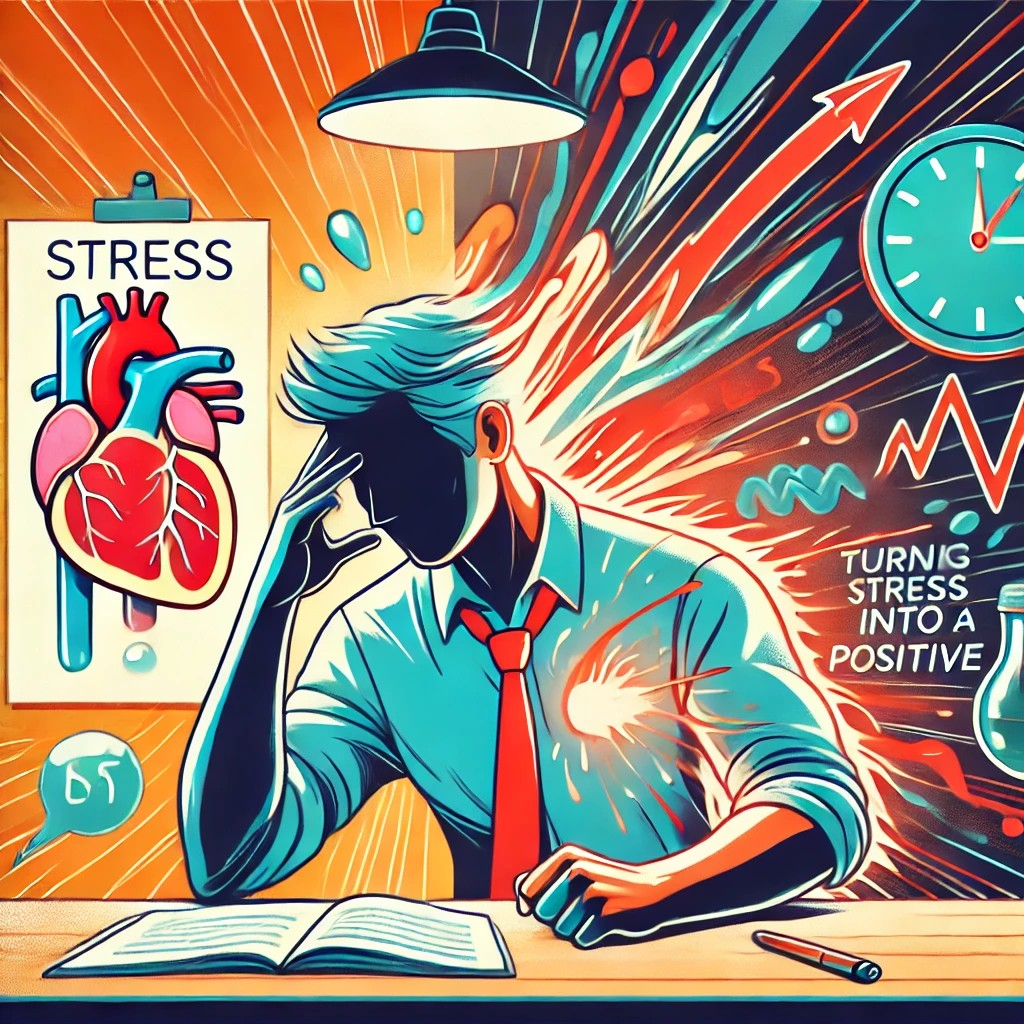
| Stress isn’t all bad. Here’s when it can help |
Warm-up question: Think about a time when you felt really stressed before doing something important. How did you handle it, and did it help you perform better?
Listen: Link to audio [HERE]
Read:
STEVE INSKEEP, HOST:
OK, it’s unrealistic to think you’re going to eliminate stress in your life, but we can manage it. Sometimes that means reframing how we think about it. As part of our Stress Less series, NPR’s Allison Aubrey set out to answer this question – when can stress be good for you?
ALLISON AUBREY, BYLINE: There’s no doubt that chronic stress is bad for our health, but acute stress in the moments amid a challenging situation is different. You know that feeling when your palms get a little clammy and your heart rate speeds up, just before you do something that you’re nervous to do? Dan Harris describes this is the way he felt before a recent TV appearance.
DAN HARRIS: In the seconds before I went on, just kind of pacing around backstage, still nervous, just reminding myself over and over again stress and anxiety are totally normal.
AUBREY: The appearance went great. And that’s probably not a surprise given all his experience. Harris is a former TV reporter and now hosts a podcast, “10% Happier.” So why did he experience some of the classic signs of a stress response? Well, he’s come to think of sweaty palms and nerves as his body’s way to prepare him to perform.
HARRIS: Instead of telling yourself a story that you’re having crippling anxiety, you can tell yourself a more empowering story, which is, I’m excited.
AUBREY: Interpreting these physiological signs of stress as a kind of excitement puts a more positive spin on acute stress. And researcher Jeremy Jamieson of the University of Rochester says stress can have real functional benefits. It can be a source of fuel.
JEREMY JAMIESON: Increasing our heart rate, the purpose of that is to get oxygenated blood to our brain and to our periphery. Oxygen is very good for helping us process information quickly. It’s very good helping us perform.
AUBREY: Humans have long faced threats from predators, and our fight-or-flight response developed to help us handle these threats. But the kinds of stressful situations we face today have shifted. Jamieson says some of our stress comes from situations or challenges that can actually be growth opportunities, say, a job interview, asking someone out on a date, giving a presentation.
JAMIESON: These are contexts where we have to do something. Maybe we have an exam; we have a job interview, and we have to marshal our resources. Our stress responses are going to help us take on those challenges. In those situations in particular, you actually use your stress to help you drive forward.
AUBREY: Research going back decades suggests that stress can boost performance in students taking tests. Researcher Wendy Berry Mendes of Yale University points to studies from Scandinavia where they measured students’ stress hormones.
WENDY BERRY MENDES: Those who had a greater increase in catecholamines – that’s your epinephrine, norepinephrine – the greater the increase in catecholamines the morning of the test was associated with better performance on that test.
AUBREY: Here’s the challenge. Not everyone responds to stressors in the same way. Test anxiety is real for some, and this can work against performance. So Jamieson says one workaround is to help people reappraise their stress. In his research, he and his collaborators studied community college students who were told about the potential benefits of stress before they took a test. Then they actually tended to do better.
JAMIESON: By informing people about the benefits of stress responses in these settings, they latched on to this idea that I don’t need to waste this time and resources dampening my stress. I can lean into my stress. I can use my stress, actually, as fuel that’s going to help me do important things.
AUBREY: It’s a lesson Dan Harris has learned from experience.
HARRIS: What I love about this idea is that even just knowing that there’s such a thing as good stress is empowering.
AUBREY: It’s an opportunity to flip the script and reappraise a stressful situation as an opportunity.
Allison Aubrey, NPR News.
Vocabulary and Phrases:
- Reframing: Changing the way you think about a situation to see it in a different, more positive light.
- Chronic: Continuing or persisting for a long time, often referring to ongoing problems or illnesses.
- Acute: Intense or severe, but lasting for a short time.
- Clammy: Slightly wet and cold, often describing sweaty palms.
- Pacing: Walking back and forth nervously or anxiously.
- Crippling: Something that causes serious problems or prevents normal functioning.
- Physiological: Related to the body and its processes.
- Periphery: The outer edges or boundaries of an area or field of view.
- Marshal: To gather or organize resources to use them effectively.
- Reappraise: To look at or consider something in a new or different way.
- Latch on to: To accept or adopt an idea or belief strongly.
- Lean into: To embrace or accept something rather than avoiding it.
- Flip the script: To completely change the way something is perceived or approached.
Comprehension Questions:
- How does Dan Harris describe the way he felt before a recent TV appearance?
- According to the research mentioned, how can stress be beneficial during challenging situations?
- What are some physiological signs of stress, and why might they help a person perform better?
- Why do some people experience crippling test anxiety, and how might reappraising stress help them?
- What did Jamieson’s research with community college students reveal about teaching them the benefits of stress?
Discussion Questions:
- How do you usually react when you feel nervous or stressed before an important event? Do you think trying to reframe stress as excitement could help?
- Why might seeing stress as a source of energy or motivation change the way you handle tough situations?
- Have you ever noticed physiological signs of stress, like sweating or a racing heartbeat, before a big moment? How did it impact your performance?
- What do you think about the idea of leaning into stress instead of trying to ignore it or calm down?
- How might knowing that some stress can be good for you help you flip the script on your feelings during high-pressure situations?
 LanguageLeap