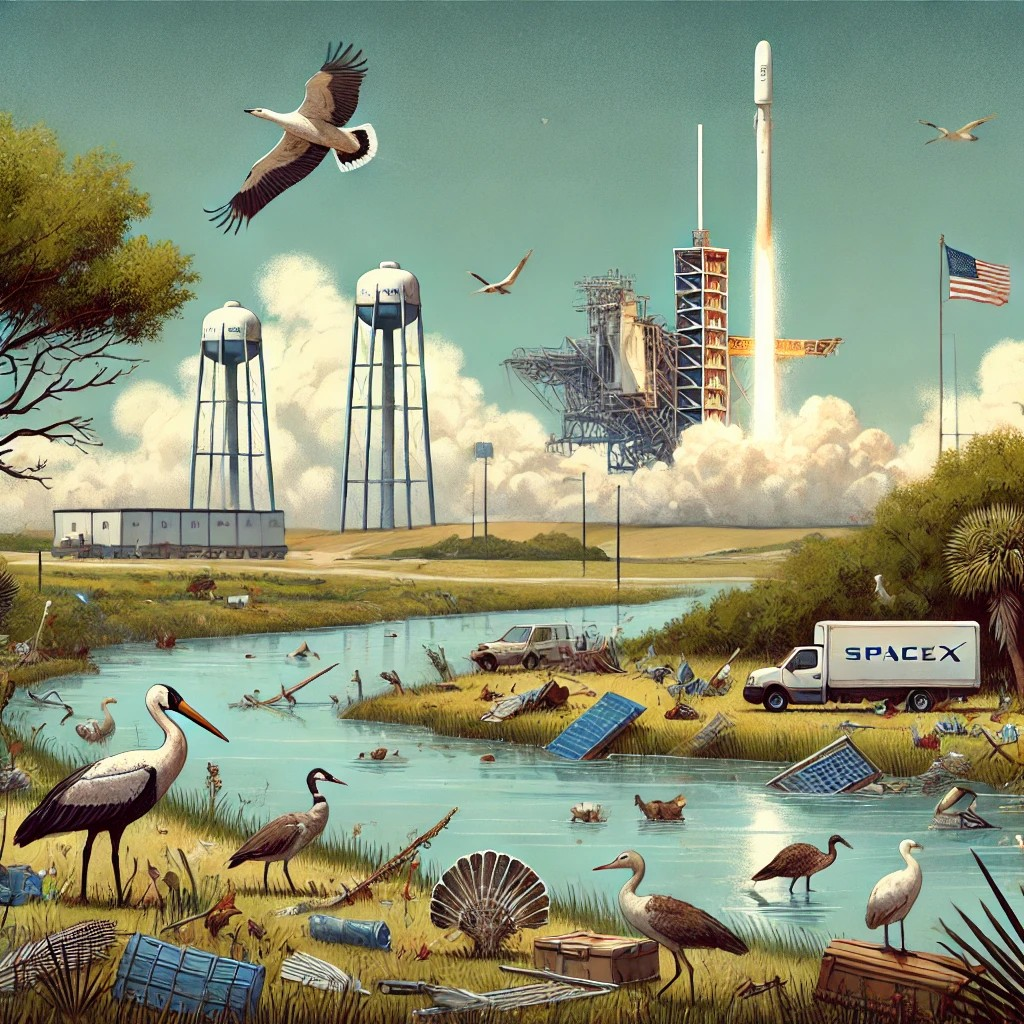
As SpaceX pushes forward with its bold plans to reach Mars, environmentalists are raising alarms about the impact of the company’s rocket launches on sensitive ecosystems in Texas. The test site, located within a major wildlife preserve, has already seen damage from debris and contamination caused by launch activities. This lesson examines the tension between SpaceX’s technological ambitions and the environmental challenges they face. Explore the ethical dilemmas of balancing progress and preservation in this high-stakes pursuit of space exploration.
| SpaceX wants to go to Mars. To get there, environmentalists say it’s trashing Texas |
Warm-up question: Have you ever heard about environmental concerns related to big construction projects or industrial activities? What do you think about balancing technology and nature?
Listen: Link to audio [HERE]
STEVE INSKEEP, HOST:
SpaceX – Elon Musk’s company – is preparing for another test launch of the largest rocket ever made. It’s called Starship. It is bigger than the rockets that took the first people to the moon, and the company hopes it could lift off as soon as Sunday from a test site in south Texas. Regulators, though, have delayed this launch up to now because they’re concerned about the environmental damage that could be done to the surrounding area. NPR’s science correspondent Geoff Brumfiel is here. Geoff, good morning.
GEOFF BRUMFIEL, BYLINE: Good morning.
INSKEEP: What’s the problem?
BRUMFIEL: Well, the first thing to know is that SpaceX’s launchpad is actually in the middle of a major wildlife preserve down there in Texas. It’s home to hundreds of thousands of shorebirds, sea turtles and other species. And the launchpad is right up against a sand flat where birds love to nest. I was out there last month with Justin LeClaire, a conservation biologist with the nonprofit Coastal Bays Bends and Estuaries Program. And as we walked through the dunes next to the pad, he pointed out lots of debris.
JUSTIN LECLAIRE: So you can see some rebar poking up through the grass all over, over here. It was basically, you know, a minefield of debris out here after that first flight test.
BRUMFIEL: That first flight test, the rocket was so powerful it actually blew up its own launchpad. And to keep that from happening again, SpaceX sprays nearly 200,000 gallons of water in this sort of incredible massive fountain under the rocket during the launch. So that prevents the pad from blowing up, but it’s created a new problem – the water isn’t contained. It just flows out onto the flats.
LECLAIRE: Quite a lot does spill off. Either it’s projected off, or it kind of runs off.
INSKEEP: OK. I’m trying to get my brain around that amount. It’s hard to conceive of that number. But it’s not a bucket full. It’s not a bathtub. It’s an unbelievable flow of water. Is this allowed?
BRUMFIEL: No. Under the Clean Water Act, SpaceX needs to have a special industrial wastewater permit. NPR reviewed documents and correspondence between the company and regulators and found they were told multiple times to get the permit by the EPA earlier this year. But they kept launching, even after the EPA told them twice this violated the law. Finally, in July, they did apply for the permit from Texas regulators, but they’ve been fined roughly $150,000 by state and federal regulators for the violations, and that’s what’s been holding up this launch.
INSKEEP: OK. I do want to note we’re talking about wetlands, and this is water. Is this water in some way hazardous?
BRUMFIEL: Now, SpaceX has put out a lengthy statement about this whole situation. They say this is a paperwork issue. The water being used is drinking water. And that is true, but experts I spoke to said it’s not true that the water is drinkable after it comes in contact with the exhaust of the largest rocket ever built. In its permit application, SpaceX submitted some tests it had done, and those showed high levels of dissolved solids – zinc and something called hexavalent chromium. None of this you want to drink according to experts, and it’s not particularly good for the environment. Still, it does appear regulators are willing to let this next launch go forward so long as SpaceX does some testing and shares its results after the launch.
INSKEEP: What happens now?
BRUMFIEL: So this next flight is really high stakes. The rocket’s giant booster is going to come back and try and land at the launchpad. That’s important for SpaceX for their plans to make Starship reusable. Of course, if it goes wrong, that means more debris is going to end up spread across the wetlands when the booster explodes.
INSKEEP: Wow. Geoff, thanks so much for the update.
Vocabulary and Phrases:
- Sand flat: A flat, sandy area, often near a beach or wetland, where water can flow or birds can nest.
- Debris: Pieces of broken materials, such as rock, metal, or other fragments, that are left over after something is destroyed or damaged.
- Rebar: Steel bars or rods used to reinforce concrete in construction projects.
- Minefield: A dangerous area or situation filled with potential hazards, used metaphorically here to describe an area full of debris.
- Get my brain around: To try to understand something that seems difficult or complex.
- Correspondence: Written communication, such as letters or emails, exchanged between people or organizations.
- Hazardous: Dangerous or harmful, especially to health or safety.
- Submitted: To present or give something, such as a document, for approval or consideration.
- High stakes: A situation involving a lot of risk or potential for serious consequences.
Comprehension Questions:
- Why is SpaceX’s launchpad location causing environmental concerns?
- What debris did Justin LeClaire find near the launchpad after the first test flight?
- Why did SpaceX get fined by regulators, and what role did correspondence play in the delay of the launch?
- What makes the next SpaceX launch a high stakes event for the company?
- Why might the water used by SpaceX during launches be considered hazardous?
Discussion Questions:
- How do you think companies like SpaceX should balance their projects with the environmental impact on areas like sand flats and wildlife habitats?
- What do you think about SpaceX continuing to launch rockets even after they were told they needed special permits? Should they have submitted the permit earlier?
- Do you think governments and regulators should be stricter or more lenient when it comes to big projects that could harm the environment?
- If a rocket launch causes damage to the environment, like spreading debris or hazardous water, who do you think should be responsible for cleaning it up?
- Why do you think high stakes situations, like this next SpaceX launch, can create both excitement and concern?
 LanguageLeap