California lawmakers have passed a groundbreaking bill that would require new cars to include speed assistance technology, warning drivers when they exceed the speed limit by 10 miles per hour. While safety advocates argue this measure could significantly reduce traffic fatalities, critics are concerned about potential distractions and government overreach. This lesson explores the details of the proposed legislation, its impact on road safety, and the ongoing debate between innovation and driver freedom. Perfect for English learners, this lesson includes key vocabulary, comprehension questions, and discussion prompts to deepen your understanding of technology’s role in modern driving.
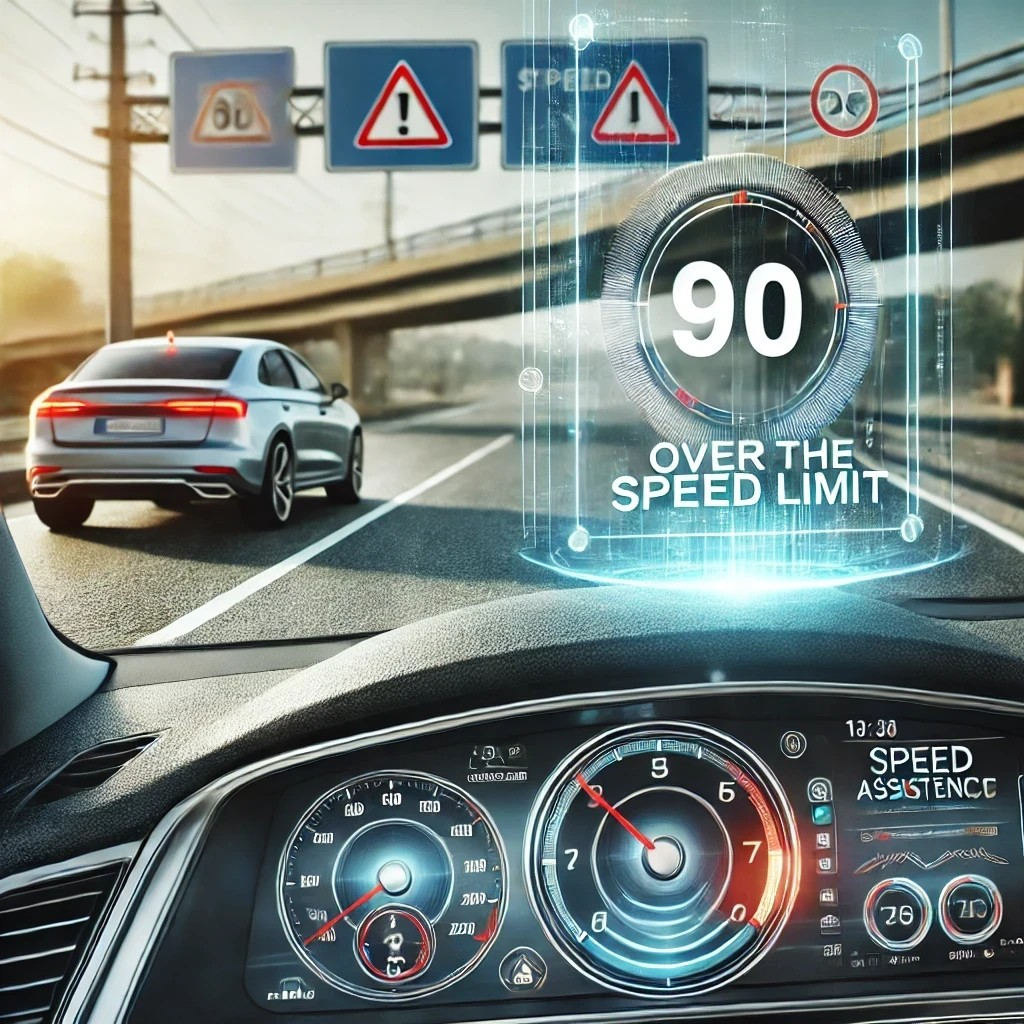
| Should your car warn you that you’re speeding? California lawmakers vote yes |
Warm-up question: Have you ever experienced your car giving you a warning, like drifting out of a lane or speeding? How did it affect your driving?
Listen: Link to audio [HERE]
Read: MARY LOUISE KELLY, HOST: Your car probably tells you when you’re running out of gas. It might tell you when you drift out of your lane. Now, a bill in California would require your car to warn you when you are speeding. Safety advocates say so-called speed assistance technology can reduce traffic deaths, but critics say California lawmakers are the ones moving too fast. NPR’s Joel Rose reports.
JOEL ROSE: When State Senator Scott Wiener introduced his bill to limit speeding, he expected some pushback.
SCOTT WIENER: It did touch a nerve because when it comes to driving in the U.S., there’s a culture of freedom – I can do what I want to do.
ROSE: Still, the intensity of that response caught Wiener, a Democrat from San Francisco, by surprise.
WIENER: The day that I announced the original version of the bill, one of my very best friends in the world texted me to tell me what a terrible idea it was, and then 10 minutes later, his boyfriend texted me to say, thank you for getting my boyfriend to slow down.
ROSE: To understand why the bill was so divisive, it helps to know how speed assistance technology works. There’s an active version, which can prevent you from driving over the speed limit, but there’s also a passive version of speed assistance that only warns the driver when they’re going too fast. After the pushback, Wiener decided to change his bill from active to passive.
WIENER: So we listened, and we heard. And the bill would not have passed with the active speed limiter, and it did pass with the passive speed limiter.
ROSE: The bill approved by the California Legislature over the weekend would require all new cars sold in the state to warn drivers if they’re going more than 10 miles per hour over the speed limit. California would be the first state in the country to mandate speed assistance technology, starting with the 2030 model year. The bill has big backers, like the National Transportation Safety Board. Here’s NTSB Chair Jennifer Homendy last year.
JENNIFER HOMENDY: Twelve thousand people are dying on our nation’s roads annually due to speeding-related crashes. Nobody has a right to speed. Nobody has a right to break the law.
ROSE: But to critics, this bill is still too much, too soon.
JAY BEEBER: The technology is not perfect. This is problematic. You’re going to have a lot of false positives.
ROSE: Jay Beeber is with the National Motorists Association, a driver advocacy group. He says it’s easy for speed assistance technology to get confused, especially between highways and nearby surface streets with vastly different speed limits. Beeber thinks that will annoy and potentially distract drivers.
BEEBER: Unfortunately, our cars right now are kind of in the business of distracting us. I think this increases distracted driving.
ROSE: The auto industry doesn’t like the speed assistance bill either. Karen Bailey-Chapman is with the Specialty Equipment Market Association, a trade group. California is a huge market for carmakers, and Bailey-Chapman says the state is trying to bully its way into setting policy for the whole country.
KAREN BAILEY-CHAPMAN: It’s another example of California’s overreach. We believe that the authority for regulations stands firmly within the federal government.
ROSE: But the bill’s sponsor, Scott Wiener, says California can’t wait for federal regulators. He compares the situation to the early 1960s, when Wisconsin moved to require seat belts more than six years before the federal government did.
WIENER: How many lives have been saved because Wisconsin stepped out ahead of the federal government in 1962 and required seat belts, which started a domino effect nationally?
ROSE: Wiener’s speed assistance bill now goes to California Governor Gavin Newsom. He has until the end of the month to decide whether he’ll sign it into law. Joel Rose, NPR News.
Vocabulary and Phrases:
- Drift: To slowly move or shift away from a position, often unintentionally.
- Advocate: A person who publicly supports or recommends a particular cause or policy.
- Pushback: Resistance or opposition to an idea, proposal, or action.
- Touch a nerve: To provoke an emotional reaction, often by addressing a sensitive issue.
- Divisive: Something that causes disagreement or hostility between people.
- Mandate: An official order or requirement to do something.
- False positive: A result that indicates a condition is present when it is not.
- Overreach: The act of going beyond what is acceptable or appropriate, often seen as excessive control.
Comprehension Questions:
- What new requirement would California’s proposed bill introduce for cars sold in the state?
- How did pushback from the public affect the original version of the bill?
- Why do advocates for the bill, like the NTSB, believe this technology is important?
- What concerns do critics like Jay Beeber have about speed assistance technology?
- Why do some people view California’s efforts as overreach, according to the transcript?
Discussion Questions:
- Have you ever used technology in your car, like a lane assist or speed warning feature? How did it affect your driving habits?
- Why do you think people might have pushback against technology that limits or controls how they drive?
- How do you feel about states like California introducing their own laws, like this one, before the federal government? Do you think this is overreach or necessary?
- Why do you think the issue of speed assistance technology can be so divisive? What are the pros and cons of having it in every car?
- If speed assistance technology leads to false positives, do you think it could become more of a distraction than a help for drivers?
 LanguageLeap