In a pivotal moment for economic policy, Federal Reserve Chair Jerome Powell has announced that it may soon be time to lower interest rates, signaling a shift in the ongoing battle against inflation. This lesson examines Powell’s rationale for this potential policy change, the economic indicators influencing the decision, and the possible implications for consumers and investors. Perfect for English learners, this lesson includes key vocabulary, comprehension questions, and engaging discussion prompts to help you understand the complexities of monetary policy and its impact on everyday life.
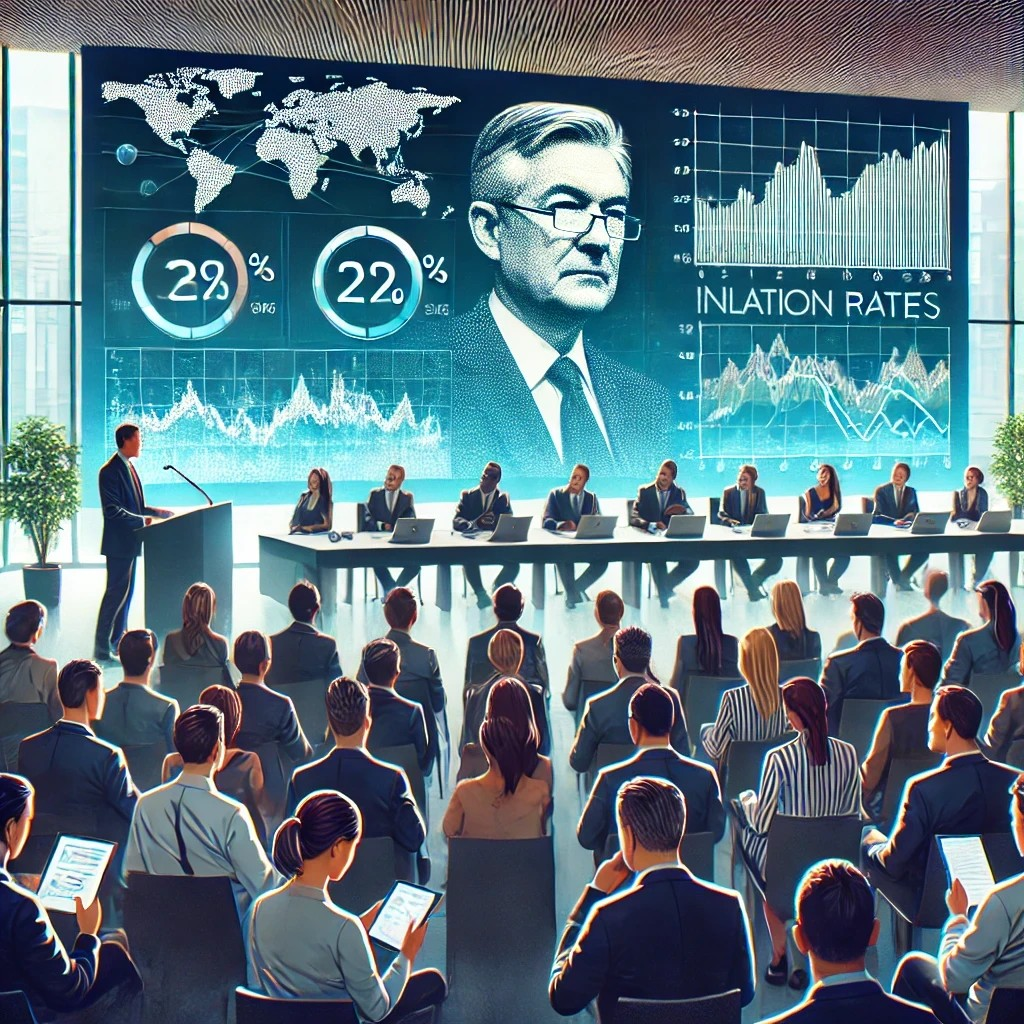
| ‘The time has come’ to lower interest rates: Fed Chair Jerome Powell |
Warm-up question:
How has inflation affected your purchasing decisions? Have you noticed that inflation has slowed?
Listen: Link to audio [HERE]
Read:
MARY LOUISE KELLY, HOST: We have reached a turning point in the battle against inflation. Federal Reserve Chairman Jerome Powell signaled today that interest rates will soon start coming down.
JEROME POWELL: The upside risks to inflation have diminished. The downside risks to employment have increased. The time has come for policy to adjust.
KELLY: That is important for anyone trying to get a car loan or finance a business or carrying a balance on their credit card. We’re going to talk this through now with NPR’s Scott Horsley, Hey, Scott.
SCOTT HORSLEY, BYLINE: Hi, Mary Louise.
KELLY: So the Fed, as you well know, has kept interest rates at the highest level in more than two decades for a while now, more than a year. What’s behind this change?
HORSLEY: Well, inflation has cooled down a lot. It’s not all the way back to the Fed’s target of 2%, but Powell says he’s confident it’s headed that way. At the same time, the job market has also cooled off. The unemployment rate has inched up to 4.3%. So now the balancing act between fighting inflation and protecting jobs has shifted, and Powell says that means it’s time to think about lowering interest rates.
KELLY: And how is this going down? What’s been the reaction?
HORSLEY: Well, investors liked what they heard. They want lower interest rates. The Dow Jones industrial average jumped more than 460 points today. The broader S&P 500 index rose more than 1%. Powell made these remarks at a closely watched conference in Jackson Hole, Wyo. Expectations were as high as the Teton mountains in the background. Powell came through with this very clear message that rates are going to start coming down.
This was a marked contrast with previous years, when Powell has used Jackson Hole as a platform to underscore the Fed’s determination to get prices under control, even if that meant raising interest rates really high, the way they did. Today, Powell reiterated that he knows just how painful this period of high inflation has been.
POWELL: Inflation brought substantial hardship, especially for those least able to meet the higher costs of essentials like food, housing, and transportation. High inflation triggered stress and a sense of unfairness that linger today.
HORSLEY: And Powell noted this was not just an American problem. You know, prices soared throughout the world, mainly as a result of pandemic disruptions and then Russia’s invasion of Ukraine. Now those inflationary forces are unwinding, which is why the Fed can think about cutting rates.
KELLY: And did he put a date on this? When are we actually go to see interest rates come down?
HORSLEY: Well, the Fed’s next policy meeting is in mid-September, and markets think a rate cut at that point is pretty much guaranteed. How big a cut and how many more cuts we get this year is going to depend on how the economy performs. Right now, investors think the Fed will start with a relatively modest cut. But if the job market shows more signs of weakness, we could see a more aggressive rate reduction. A lot’s going to depend on the August jobs report, which comes out two weeks from today. That’ll be about a week and a half before that September Fed meeting.
KELLY: OK. But to this whole fear that you’ve been nodding to, that – soaring prices, inflation, is there a danger that cutting interest rates will allow inflation to flare up again?
HORSLEY: Yes, and that’s why the Fed’s been so cautious up until now. It didn’t want to cut rates prematurely and then have prices spiral up again. Powell said, one thing that has helped in the fight against inflation is that Americans never lost confidence that the central bank would do what it takes to get prices under control. That confidence is the product of decades in which the Fed was allowed to operate independently, free from political pressure. Of course, former President Trump has questioned the value of Fed independence, but the lesson of the 1970s is don’t let the politicians meddle with monetary policy.
KELLY: Thank you, Scott.
Vocabulary and Phrases:
- Diminish: To become or cause something to become less in size, importance, or value.
- Balancing act: A situation in which someone tries to give care or attention to two or more activities at the same time.
- Contrast: A noticeable difference between things or people.
- Underscore: To emphasize or highlight something.
- Reiterated: Said something again or repeated to make the meaning as clear as possible.
- Linger: To stay somewhere beyond the usual or expected time.
- Unwinding: The process of reducing or ending a previously implemented policy or position.
- Modest: Relatively small, limited, or moderate in amount.
- Nod to: An acknowledgment or recognition of something.
- Flare up: To suddenly start or become worse.
- Prematurely: Happening or done too soon, before the appropriate time.
Comprehension Questions:
- What recent change did Federal Reserve Chairman Jerome Powell announce regarding interest rates?
- Why has the Federal Reserve decided it might be time to lower interest rates?
- How did investors react to Powell’s announcement about interest rates?
- What did Powell underscore about the impact of high inflation?
- What are some of the risks of cutting interest rates too soon, according to the discussion?
Discussion Questions:
- Why do you think it’s a balancing act for the Federal Reserve to manage both inflation and employment?
- How do changes in interest rates affect everyday people, like those looking to buy a car or a home?
- What are the challenges of making economic decisions, such as lowering interest rates that have effects that can linger for a long time?
- Is it important for organizations like the Federal Reserve to be independent and free from political pressure?
- If inflation starts to flare up again after interest rates are lowered, what do you think the Federal Reserve should do next?
 LanguageLeap