Can you imagine going a whole month without using any plastic? That’s the challenge put forth by the Plastic Free Foundation, urging people worldwide to eliminate single-use plastics from their lives. This lesson delves into the origins of Plastic Free July, initiated by Rebecca Prince-Ruiz, and explores the unexpected benefits of reducing plastic use. Join us as we follow NPR producer Claire Murashima’s journey to live without plastic for a week, learning practical tips and strategies for a more sustainable lifestyle. Perfect for English learners, this lesson includes essential vocabulary, comprehension questions, and engaging discussion prompts to deepen your understanding of environmental consciousness and plastic reduction.
| How to live without plastics for a month, according to the founder of a global movement |
Warm-up question:
Have you ever tried to change a daily habit to be more environmentally friendly? What was it, and how did it go?
Listen: Link to audio [HERE]
Read:
A MARTÍNEZ, HOST:
Can you go a whole month without using any plastic? Well, that’s the challenge issued by the Plastic Free Foundation, a nonprofit based in Australia. This month, they’re calling on people all over the world to avoid single-use plastics. About a quarter of those plastics will end up as litter, according to Oxford University’s Our World in Data, and also take anywhere from 20 years to even as long as centuries to decompose. NPR producer Claire Murashima is accepting the Plastic Free Challenge. She’s planning to go without it for just a week, starting tomorrow, and she joins us now to talk about it. Claire, it’s the first I’m hearing of Plastic Free July. So what did this idea come from?
CLAIRE MURASHIMA, BYLINE: Yeah, it was started by an Australian woman named Rebecca Prince-Ruiz, and she had toured a recycling facility in her town in Western Australia in 2011, and she was just amazed by the amount of plastic that was going through the facility. So she challenged some of her co-workers and friends to cut out plastic for the next month.
MARTÍNEZ: One whole month plastic-free – how did that go?
MURASHIMA: She found a few unexpected benefits. Like, it just helped her slow down her life. For example, instead of getting to-go coffee and drinking it while she was commuting to work, she would sit at a cafe and be more mindful of the coffee that she was drinking. And instead of buying garlic bread at the store, like she used to do, she would make it with her son, and she found, you know, having more quality time was good. Here’s how she put it.
REBECCA PRINCE-RUIZ: I think plastic in some ways, it’s a symbol of how busy we’ve become, of the throwaway society that we’ve become.
MURASHIMA: Today, Prince-Ruiz estimates that millions of people will take part in Plastic Free July.
MARTÍNEZ: Wow. I was pretty amazed when I read the stat from Our World in Data, that Americans on average use five pounds – five pounds – of plastic a week. I’m looking around at myself, Claire. I mean, I probably use that much in a week, too. So I think I might do it unconsciously because plastic is pretty much everywhere. So how are you preparing for this challenge?
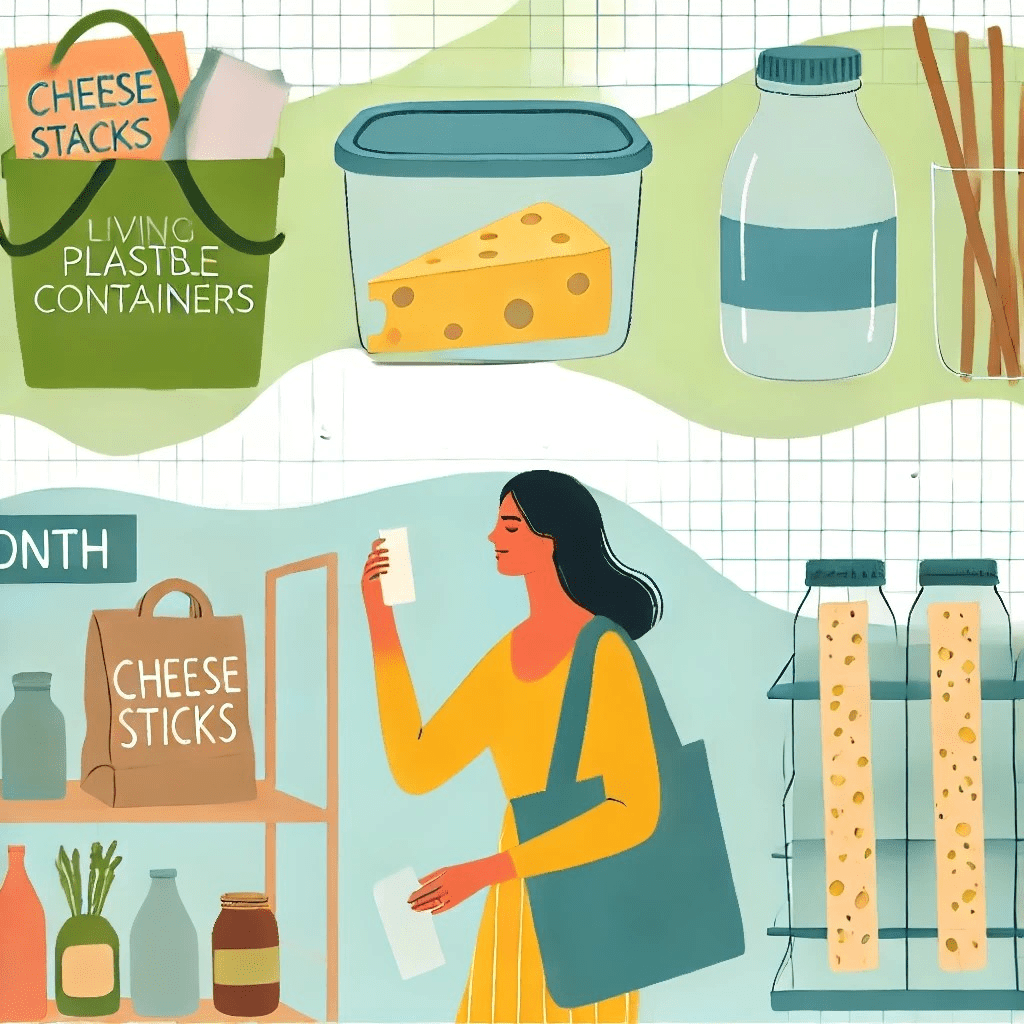
MURASHIMA: It’s certainly going to be a large adjustment for me and my lifestyle. Basically, my goal is not to buy any new plastic things. So when I go to the grocery store, I’m going to bring my own containers and go in the bulk section. I plan to completely cut out my food delivery habit, and when it’s impossible to avoid buying a plastic thing, like food wrapped in plastic, I will try to make that food myself. I’m thinking here about my cheese stick habit. And they’re wrapped in plastic, so I’m going to try to attempt to make my own cheese sticks, as well as granola bars.
MARTÍNEZ: Claire, I will be very proud of you if you can pull off making your own cheese. Now, did Rebecca Prince-Ruiz give you any tips on how to have a successful plastic-free week?
MURASHIMA: Yes – always have reusable containers nearby. She also told me not to do this challenge alone. So I’ve enlisted the help of a few friends, as well as my mom and dad and maybe A Martínez, MORNING EDITION host. And if this is your first time doing Plastic Free July, she says don’t try to do everything at once.
MARTÍNEZ: Now, can you think of any situations in which it might be kind of impossible to avoid plastic because there’s probably some – at least a few out there.
MURASHIMA: Yeah, I mean, maybe not impossible, but certainly a challenge. For example, I’m thinking about filling prescriptions, bringing a Mason jar to my pharmacist and just asking if they can do it in there. They might do it. They might not – stay tuned to find out.
MARTÍNEZ: All right. So will you come back in a week and tell us how you did?
MURASHIMA: Absolutely. And in the event that I do consume any new plastic, I’ll bring it to the studio so we can do a little plastic audit of how much I consumed.
MARTÍNEZ: That is NPR’s Claire “Plastic-Free” Murashima, about to embark on a plastic-free week. Claire, good luck.
Vocabulary and Phrases:
- Decompose: To break down or decay over time.
- Toured: To visit a place for the purpose of learning about it.
- Mindful: Being aware and attentive to the present moment.
- Bulk: Large quantities of goods, typically not individually packaged.
- Habit: A regular practice or routine.
- Pull off: To succeed in achieving or accomplishing something difficult.
- Enlisted the help of: To ask for and obtain assistance from someone.
- Stay tuned: To keep watching or listening for more information.
Comprehension Questions:
- What challenge is the Plastic Free Foundation issuing to people around the world?
- Who started the idea of Plastic Free July, and what inspired her?
- What unexpected benefits did Rebecca Prince-Ruiz find from trying to live without plastic for a month?
- How does Claire Murashima plan to prepare for her plastic-free week?
- What tips did Rebecca Prince-Ruiz give Claire for having a successful plastic-free week?
- Why might it be challenging to avoid using plastic entirely?
Discussion Questions:
- What are some common items in your daily life that contain plastic? How easy or difficult would it be to avoid using them?
- What are some ways people can reduce their plastic use without drastically changing their lifestyle?
- How might being more mindful, like taking time to sit and drink coffee instead of getting it to-go, impact your day-to-day life?
- Have you ever tried to make something at home instead of buying it packaged in plastic? What was your experience like?
- How important do you think community and support from friends and family are when trying to change a habit or take on a challenge like Plastic Free July?
 LanguageLeap