Once known for its dimly lit stores and strong cologne scents, Abercrombie & Fitch has undergone a significant transformation. This lesson delves into how the brand has successfully reinvented itself, shifting its target demographic and embracing a flexible, trend-responsive strategy. We’ll explore the changes implemented since 2018, the impact on sales and reputation, and the broader implications for branding and marketing. Perfect for English learners, this lesson includes key vocabulary, comprehension questions, and engaging discussion prompts to deepen your understanding of business adaptation and brand evolution.
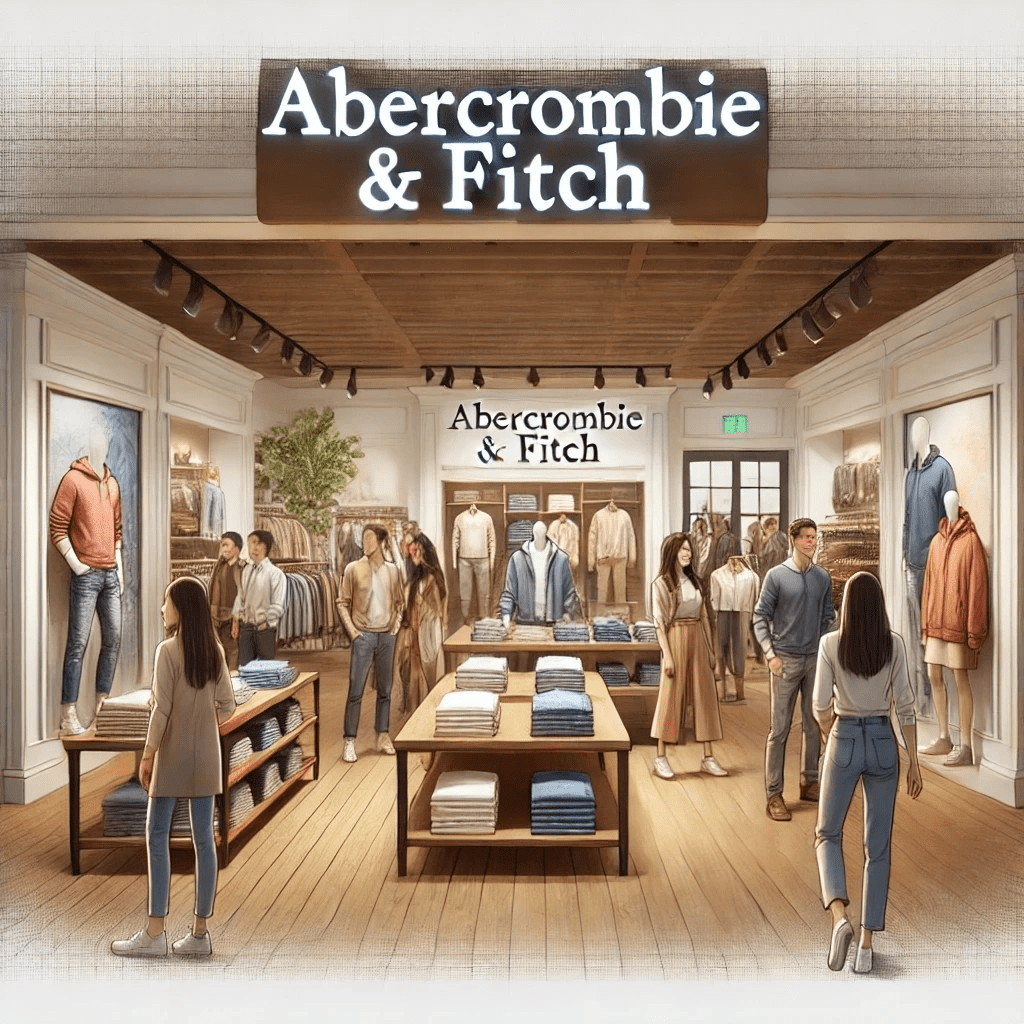
| Officials at Abercrombie & Fitch have been successful at turning the business around |
Warm-up question:
Have you ever noticed a brand you like changing its style or image over time? How did those changes affect your opinion or loyalty to that brand?
Listen: Link to audio [HERE]
Read:
A MARTÍNEZ, HOST:
If you’re older than, say, 20, you might remember what it was like inside American mall staple Abercrombie & Fitch in the early to mid-2000s. Now, if you don’t remember, I will take you back. It was dark. It smelled really strongly of cologne. And it wasn’t surprising to have shirtless male employees welcoming customers at the door. It was from a different era. Now they’ve changed things up. Chantal Fernandez wrote about the rebrand – or as she calls it, a debrand – for New York Magazine’s the Cut.
CHANTAL FERNANDEZ: Since 2018, they’ve reevaluated everything about the business and weren’t too precious about keeping anything from that past era. So the cinematic advertising or the logo T-shirts, let’s reevaluate everything and think really about what is the market opportunity for us now? And instead of college kids, they extended their sort of, like, target customer to the millennials that they had reached in the 2000s.
MARTÍNEZ: So they’re kind of growing up with their customers who’ve also grown up?
FERNANDEZ: They call their target customer 25 years old. But it goes all the way up to 40, I think is sort of where they’ve extended, which is really impressive for a brand that had such a different reputation before.
MARTÍNEZ: So what would you say is Abercrombie’s style now? I mean, do they have a style?
FERNANDEZ: I think what’s genius about their strategy now is that they don’t. They’re really perceptive of the trends that are happening in the market, what people are seeing on TikTok, what young people are maybe seeing online that they would like to buy but it’s $500, it’s $1,000. You know, the luxury market has gotten really expensive. And they’re delivering a version of that that’s decently made, reasonably priced. And I think they can sort of chase any trends in there. In writing the story, I went to Columbus, and I went to their headquarters and spoke to the chief marketing officer, the chief product officer and asked them what is the aesthetic now? And they really couldn’t answer that, and that’s the point. The point is to not be pinned down by anything.
MARTÍNEZ: So by being vague, they can just kind of be nimble.
FERNANDEZ: Yes. And I think that also speaks to the fact that boring clothing is underrated. People are constantly telling me how frustrated they are by shopping. Things are too expensive. The quality is bad. They just want something simple that they can really rely on in their closet. And that seems like a really simple thing to deliver but it’s not. And I think Abercrombie has figured that out and is offering it to people, and that’s part of this massive success. You know, in the first quarter of 2024, sales were up, like, more than 30% year over year.
MARTÍNEZ: Yeah. And they’ve taken some pretty serious hits on their reputation in the last few years. There was a Netflix documentary about alleged racist hiring practices at their stores. So, Chantal, I mean, have they kind of gotten past that now? Is everything forgiven now?
FERNANDEZ: I think that the documentary came – when it came in 2022, enough had changed at Abercrombie that it felt like a documentary about a different era of the company. And, you know, a lot of those practices are tied to the CEO, Mike Jeffries, who left in 2014. I also think the customer is maybe accustomed to sort of dark, toxic corporate stories.
Like, this isn’t the first one – it is not the last one. The company has made strides to distance itself from that past. It has new leadership, things have changed. And I think for customers that’s not the first thing on their mind when they’re shopping. I think its part of it. They care about price, they care about quality, they care about style and then, I think, those other things come into play.
MARTÍNEZ: That is Chantal Fernandez. Her article in New York Magazine’s the Cut is titled “The Ubranding Of Abercrombie.” Chantal, thank you.
Vocabulary and Phrases:
- Staple: A main or important element of something, often used regularly.
- Cologne: A type of light perfume for men.
- Rebrand: To change the corporate image of a company or product.
- Perceptive: Having or showing sensitive insight or understanding.
- Aesthetic: A set of principles underlying the work of a particular artist or artistic movement; relating to beauty or the appreciation of beauty.
- Pinned down: Restricted or confined to a particular idea or course of action.
- Nimble: Quick and light in movement or action; agile.
- Alleged: Claimed or asserted to be true, especially without proof.
- Accustomed: In the habit of or used to something.
- Make strides: To make significant progress or advancements.
- Come into play: To have an effect or become important.
Comprehension Questions:
- Why might it be challenging to avoid using plastic entirely? How did Abercrombie & Fitch’s store environment and brand image in the early 2000s differ from now?
- What changes has Abercrombie & Fitch made to its target customer demographic?
- How does the current strategy of Abercrombie & Fitch differ in terms of their product style and market trends?
- What were some of the challenges Abercrombie & Fitch faced regarding its reputation?
- How has Abercrombie & Fitch’s sales performance changed in recent years?
Discussion Questions:
- What are some benefits and challenges of a company choosing not to have a specific style or aesthetic?
- How important is it for a brand to adapt to changing market trends and customer demographics? Can you think of other brands that have done this successfully?
- Discuss the impact of negative publicity on a company’s brand. How can companies recover from such events?
- Why might consumers prioritize price, quality, and style over a company’s past controversies?
- How do changes in leadership influence a company’s direction and public perception?
 LanguageLeap