In a surprising twist, the world of toy collectibles has been rocked by a series of high-profile Lego heists in the greater Los Angeles area. Thieves have targeted these iconic toy bricks, particularly the valuable minifigures, leading to significant financial losses for retailers. This lesson explores why these tiny collectibles have become such a hot commodity, the impact of these thefts on the market, and the measures being taken to combat this unusual crime wave. Perfect for English learners, this lesson includes essential vocabulary, comprehension questions, and engaging discussion prompts to deepen your understanding of current events and crime trends. Join us to uncover the motives behind these daring Lego heists and their broader implications.
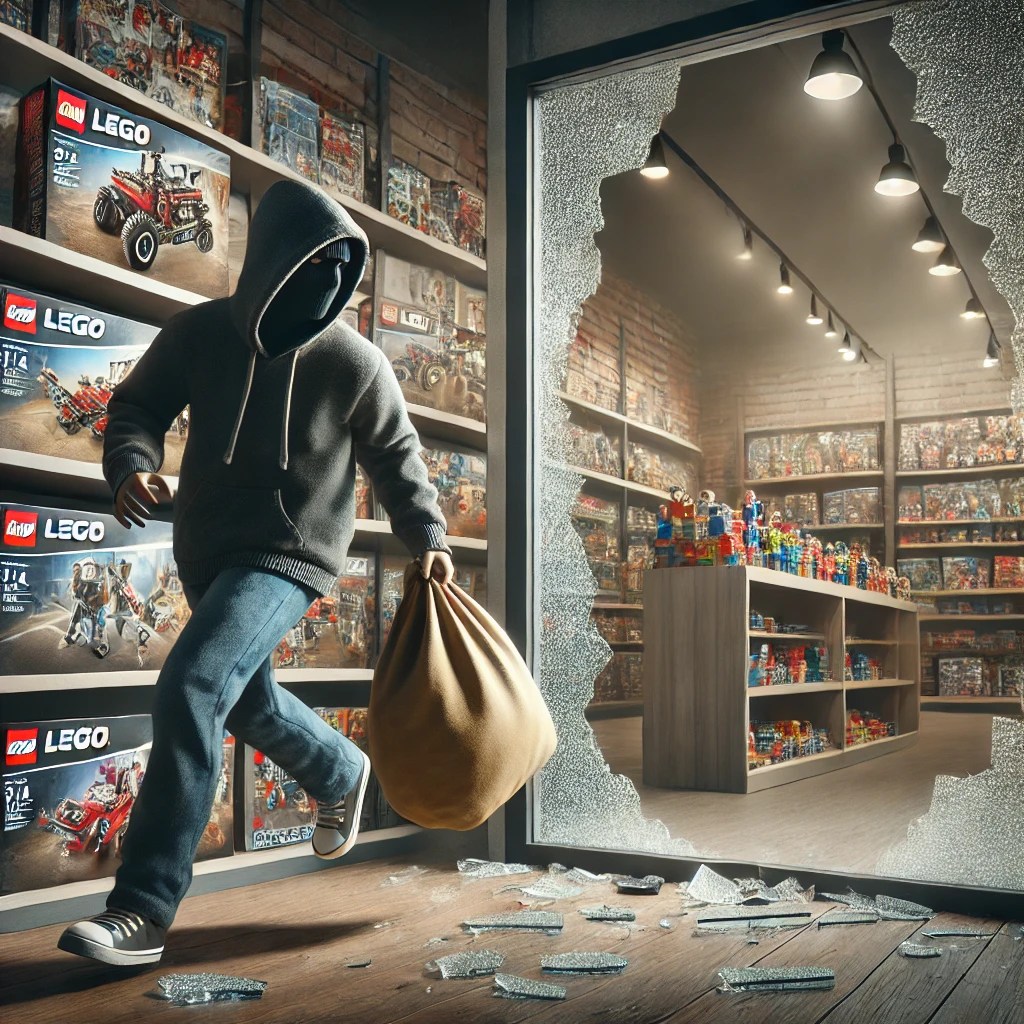
| A spate of high-profile Lego heists have taken place. But why? |
Warm-up question:
Have you ever collected anything that became surprisingly valuable over time? What was it, and how did its value change?
Listen: Link to audio [HERE]
Read:
ADRIAN FLORIDO, HOST:
A string of Lego heists has hit the greater Los Angeles area. Yes, Legos, the toy bricks. In recent months, police say Lego larcenists have swiped hundreds of thousands of dollars’ worth breaking into small businesses or stealing them from big box stores. The thieves are targeting a very specific type of Lego – the minifig. Reporter Daniel Miller wrote a story about this for the LA Times. Hi, Daniel.
DANIEL MILLER: Hey, thanks so much for having me.
FLORIDO: OK, so what is a minifig?
MILLER: The minifig is the little Lego figurine that’s about 1.5 inches tall. And they come in a variety of different themes. You’ve got firefighters, policemen. Then, of course, you’ve got “Star Wars” characters and Marvel characters and some of those ones tied to very well-known IP. Those are the ones that thieves covet.
FLORIDO: What’s made them such a valuable target for thieves?
MILLER: Basically, since the pandemic, the collectible Lego market has been on a bull run. You know, in 2020 and 2021, people had plenty of time on their hand, and they started amassing these larger and larger collections. And prices went up as a result. And the most valuable Lego minifigs can sell for more than $1,000.
FLORIDO: Wow.
MILLER: And yeah, it’s an astounding figure. You know, there’s a very limited edition Spider-Man minifig, and those are worth more than $5,000 apiece. These are really remarkable numbers. But as the prices have gone up, thieves have been paying attention, too.
FLORIDO: These are little toys about the size of the tip of your finger. Tell us about these Lego heists. What’s been happening?
MILLER: There have been seven Lego heists in Southern California since April, and we obtained security footage of at least one of these crimes. And in the video, you see a hooded man break the front glass of a store and quickly run into the store with a black garbage bag and fill it up with fistfuls of minifigures and dash out. The entire episode lasts about one minute, and in that case, this was the burglary of a shop in Whittier, Calif. About $10,000 of minifigures were stolen.
FLORIDO: Are these people who are just huge fans of minifigs? Are they reselling them? Like, what’s going on here?
MILLER: The authorities have said very little about the people involved in these crimes, so we don’t actually know if they are Lego collectors – although in talking to people who are involved in either the investigations or just closely following the industry, we have a sense that they are not, in fact, collectors, and instead are criminals who see an opportunity. And in talking to people, we learned that there’s a pretty healthy black market for high-end Legos. And these, you know, pilfered items are being sold on Facebook Marketplace. They’re being sold on eBay. It would seem that the people who buy them have effectively no idea that they’re buying stolen goods.
FLORIDO: Is the company saying anything about this string of thefts?
MILLER: Lego is certainly aware of the trafficking of stolen merchandise. I reached out to the company for comment, and I was directed to a website maintained by Lego that helps consumers identify fake Lego stores, among other aids. You know, I think this is something that’s really captivated the Lego fan community. This is sort of a cloistered world, and, you know, getting national media attention is surprising. And I think it’s also especially surprising to see these brazen crimes being carried out over and over again.
FLORIDO: Well, I’ve been speaking with Daniel Miller, a reporter for the LA Times. Thanks for joining us.
Vocabulary and Phrases:
- A string of: A series or sequence of similar events occurring closely together.
- Heist: A robbery or theft, especially one involving a lot of planning.
- Larcenist: A person who commits theft.
- Swipe: To steal something.
- Covet: To desire something belonging to someone else.
- Bull run: A period during which the prices of assets rise continuously.
- Amassing: Gathering or collecting a large amount of something.
- Astounding: Extremely surprising or impressive.
- Fistfuls: A large quantity of something that can be held in a fist.
- Pilfered: Stolen, typically referring to small or petty theft.
- Brazen: Bold and without shame.
Comprehension Questions:
- What are Lego minifigs, and why are they being targeted by thieves?
- How has the market for collectible Legos changed since the pandemic?
- Describe one of the Lego heists mentioned in the transcript.
- What is the estimated value of the most valuable Lego minifigs?
- How are the stolen Lego minifigs being sold, according to the authorities?
- What measures is Lego taking to address the issue of stolen merchandise?
Discussion Questions:
- What factors do you think contribute to certain items becoming valuable collectibles?
- Discuss the ethical implications of buying items from online marketplaces without knowing their origins. Is it the consumer’s responsibility to avoid purchasing stolen goods?
- How can companies like Lego protect their products and their customers from theft and black-market sales?
- What might be some long-term effects on the collectible market if thefts like these continue to happen?
- How does media attention on crimes, like the Lego heists, impact public perception and the actions of both law enforcement and companies involved?
 LanguageLeap